How peace, security and trust shape Tanzania–Mozambique relations
DAR ES SALAAM: LONG before economic diplomacy, investment promotion and regional trade became defining features of relations between Tanzania and Mozambique, the two neighbouring countries built a partnership anchored in political solidarity, mutual trust and a shared commitment to Africa’s liberation.
Today, Tanzania’s High Commissioner to Mozambique, CP Hamad Khamis, says those enduring foundations remain as relevant as ever, providing the political stability, strategic confidence and institutional framework needed to advance economic transformation, regional integration and sustainable development.
In the fourth part of the Daily News Diplomatic Bench interview series, High Commissioner CP Hamad Khamis discusses how the strong political ties between Tanzania and Mozambique continue to create opportunities for closer economic cooperation and regional integration.
The High Commissioner says the close ties between Tanzania and Mozambique are supported by regular political dialogue, strong defence and security cooperation and effective institutions that continue to strengthen collaboration in trade, investment, infrastructure, energy and other key sectors.
“Tanzania and Mozambique enjoy excellent, brotherly and strategic relations founded on a unique historical bond, mutual respect and shared values,” High Commissioner CP Khamis says.
He adds: “Today, this historic friendship has evolved into a comprehensive strategic partnership encompassing political cooperation, defence and security, trade, investment, energy, transport, agriculture, education, tourism and people-to-people exchanges.”
The High Commissioner says the relationship is distinguished by decades of political trust rather than commercial interests alone.
That strong foundation, he says, has enabled the two countries to respond to regional challenges together while pursuing shared development and prosperity.
Political ties between Tanzania and Mozambique continue to be reinforced through regular engagement at the highest level, which High Commissioner CP Hamad Khamis says has helped maintain momentum in bilateral cooperation.
He cites Mozambican President Daniel Chapo’s working visit to Tanzania from July 2 to 4 this year as the latest example.
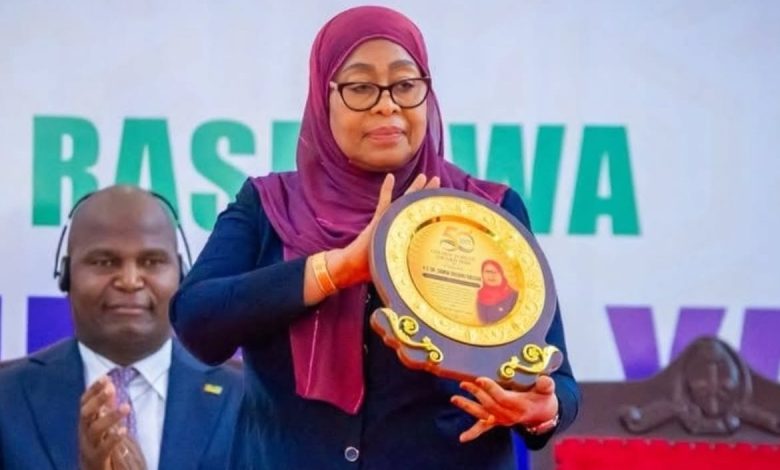
During the visit, President Chapo held talks with President Samia Suluhu Hassan, attended the 50th Dar es Salaam International Trade Fair as Guest of Honour, laid the foundation stone for Mozambique’s new embassy in Dar es Salaam and paid a courtesy call on Mama Maria Nyerere.
The visit followed earlier meetings between the two leaders in 2024 and 2025, which led to the signing of several memoranda of understanding in strategic sectors.
According to the High Commissioner, such engagements are not merely ceremonial but provide political direction, strengthen mutual confidence and help convert bilateral commitments into practical cooperation.
“They demonstrate the strong political will of both Heads of State to transform our historic friendship into a modern strategic partnership that delivers tangible socio-economic benefits while contributing to regional peace, stability and prosperity,” he says.
While political trust remains the foundation of Tanzania–Mozambique relations, High Commissioner CP Hamad Khamis says security cooperation has become increasingly important as both countries respond to evolving cross-border threats.
He says Tanzania and Mozambique recognise that challenges such as terrorism, organised crime and maritime insecurity require a coordinated response.
As a result, the two countries have strengthened cooperation through intelligence sharing, joint planning and regular consultations between their security agencies.
The partnership also covers efforts to combat violent extremism, human trafficking, irregular migration, drug trafficking, illegal fishing, maritime crime and wildlife trafficking, reflecting a shared commitment to regional peace and stability.
“This cooperation is built on the understanding that peace and stability are shared responsibilities,” he says.
The High Commissioner says the cooperation is supported by long-standing agreements on defence, policing and home affairs, as well as more recent arrangements to strengthen migration management and cross-border coordination.
High Commissioner CP Hamad Khamis says the two countries have established practical mechanisms to coordinate their security cooperation, including the Joint Permanent Commission on Defence and Security, regular intelligence exchanges and cross-border meetings involving regional and district authorities.
He also points to Tanzania’s continued security cooperation in support of stabilisation efforts in Cabo Delgado following its participation in the Southern African Development Community Mission in Mozambique (SAMIM).
The High Commissioner says lasting peace cannot be achieved through security operations alone.
Addressing the root causes of insecurity, including limited economic opportunities and social challenges, is equally important.
“Sustainable security requires not only military and lawenforcement responses but also economic development, youth employment, education and community engagement,” he says.
He adds that Tanzania and Mozambique also work together through regional and international organisations to promote peace, security and sustainable development across Southern Africa.
As members of the Southern African Development Community (SADC), the African Union (AU) and the United Nations (UN), the two countries regularly coordinate positions on regional peace, security and development issues.
ALSO READ: How shared heritage is shaping Tanzania–Mozambique ties
At the regional level, he highlights close cooperation within SADC on peace and security initiatives, stabilisation efforts in northern Mozambique and coordinated responses to transnational crime and emerging security threats.
At the continental level, he says Tanzania and Mozambique continue to work closely within the African Union to advance Agenda 2063, champion African-led solutions to continental challenges and promote the implementation of the African Continental Free Trade Area (AfCFTA).
Globally, their partnership extends to the United Nations, where the two countries collaborate on peacekeeping, climate action, sustainable development, ocean governance and broader multilateral diplomacy.
He also points to the growing importance of cooperation between the East African Community (EAC) and SADC in strengthening transport corridors, improving customs coordination and connecting regional value chains across Eastern and Southern Africa.
“Our objective is to transform regional cooperation into tangible benefits for our citizens through increased connectivity, investment and shared prosperity,” High Commissioner CP Khamis says.
Strong institutions sustaining cooperation According to High Commissioner CP Hamad Khamis, one of the defining strengths of Tanzania–Mozambique relations is cemented in the institutional frameworks that translate political commitments into practical action.
Foremost among them is the Joint Permanent Commission (JPC), established under the General Cooperation Agreement signed in 1977.
He says the commission remains the principal mechanism for reviewing bilateral relations, overseeing the implementation of agreed initiatives and identifying new opportunities for cooperation.
Through presidential engagements, ministerial consultations and JPC meetings, Tanzania and Mozambique have concluded more than 30 memoranda of understanding covering defence and security, trade, investment, transport, tourism, agriculture, immigration, energy and air services.
These institutional arrangements, he notes, have strengthened political trust while improving coordination on issues of mutual interest.
They also reinforce confidence among investors and development partners by demonstrating policy continuity and a long-term commitment to bilateral cooperation.
High Commissioner CP Khamis says the common border should increasingly serve as a bridge for cooperation rather than a line of separation.
He notes that both governments are prioritising the modernisation of border infrastructure, closer customs and immigration coordination, stronger action against illegal cross-border activities and the development of border economic zones.
Among the initiatives under discussion is the establishment of a Joint Economic Commission, which is expected to facilitate implementation of the planned One-Stop Border Post between Mtambaswala in Tanzania and Negomano in Mozambique.
He points out that the two countries are already connected through five official border crossings, creating opportunities to expand formal trade, tourism and investment while improving services for border communities.
As Tanzania and Mozambique deepen cooperation across multiple sectors, he maintains that political trust remains the indispensable foundation.
Peace, effective institutions and sustained political dialogue, he says, create the environment in which businesses invest, infrastructure expands and regional integration advances.
“The historical relationship between Tanzania and Mozambique provides an exceptional foundation of trust,” he says.
“The challenge before us is to translate that political goodwill into stronger economic cooperation.”
In his view, the same spirit of solidarity that once united the two countries during Southern Africa’s liberation struggle should now drive a new phase of partnership focused on building a more secure, integrated and prosperous region.
“Our partnership must remain people-centred by creating employment, supporting business growth, expanding educational opportunities and improving livelihoods,” he says.
More than six decades after the partnership was forged, Tanzania and Mozambique continue to demonstrate that political friendship, supported by strong institutions and sustained dialogue, remains a powerful force for peace, regional stability and long-term development.