How modern markets transform lives in Zanzibar
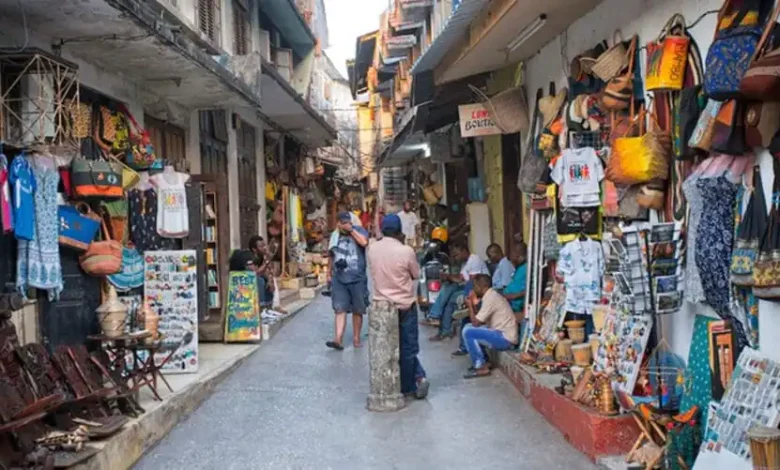
ZANZIBAR: “I USED to worry about rain, mud and theft,” says Ms Faiza Mohamed Juma, a vegetable trader at Mwanakwerekwe Market.
“Today, I open my stall knowing my goods are safe, customers are comfortable and business is better.”
Her voice echoes across Zanzibar as the islands mark 62 years since the 1964 Revolution, a milestone not only of history, but of visible change.
From Unguja to Pemba, traders, farmers and small entrepreneurs say the construction of modern markets has restored dignity to their daily work and strengthened livelihoods that form the backbone of the local economy.
Markets at the heart of everyday life
In Zanzibar now, markets are more than trading spaces. They are social centres, employment hubs and lifelines for thousands of households.
Farmers bring their produce, traders find customers and families depend on the income earned between the stalls.
Recognising this central role, the Revolutionary Government of Zanzibar has placed strong emphasis on building and upgrading modern markets with quality infrastructure, safety standards and essential services, transforming spaces that were once overcrowded and informal into organised commercial centres.
The aim, officials say, is to align markets with modern economic, health and safety demands, while boosting the competitiveness of local products in national and international markets.
A promise made, a promise delivered
Before the 2020 General Election, President Hussein Ali Mwinyi, after touring several dilapidated markets, publicly pledged to change the situation.
He said it was unacceptable for traders to conduct business in unsafe and undignified conditions.
Among the markets he promised to rebuild were Mwanakwerekwe, Jumbi, Chuini and Mombasa Shimoni, projects that have since reshaped Zanzibar’s commercial landscape, just within a short time of two years.
Mwanakwerekwe Modern Market: A regional trading hub
The Mwanakwerekwe Market, now a two-storey, internationally rated facility, stands as a flagship project.
Built by the Jeshi la Kujenga Uchumi (JKU) at a cost of over 35.8bn/-, the market can now accommodate more than 5,000 traders, up from the previous 3,000.
It features 15 warehouses, parking for 120 vehicles, breastfeeding rooms, shops, butcheries, slaughter facilities, modern storage areas, worship spaces for men and women, kitchens and cold rooms, bringing order and efficiency to what was once a congested trading zone.
“This market has changed everything,” says Mr Salum Omar Salum, a meat vendor.
“Customers trust the cleanliness and sales have increased.”
Jumbi, Chuini and Mombasa: Markets that create jobs
The Jumbi Market, a two-storey complex costing over 24.3bn/-, accommodates 4,000 traders and includes warehouses, parking, childcare facilities and modern slaughter areas.
At Chuini, the government invested more than 43bn/- to create space for 2,300 traders, while generating over 5,000 jobs during construction and operation.
Meanwhile, the Mbogamboga Mombasa Market, built by RANS under the supervision of the Zanzibar Buildings Agency (ZBA), cost 16.6bn/-.
The single-storey market hosts over 200 traders, an auction area, a poultry section, 91 shops, offices, firstaid facilities, dining areas, 18 toilets and 58 CCTV cameras for security.
President Mwinyi: “Markets are engines of growth”
Opening the Mombasa Market during the 62nd Revolution celebrations, President Mwinyi reaffirmed the government’s commitment to providing traders with clean, safe and efficient business environments.
“The construction of modern markets is part of our strategy to improve the business climate and increase incomes for small and medium traders,” he said.
He announced plans to build another modern market at Kibandamaiti, alongside a new bazaar at Kwahajitumbo, expanding opportunities for traders across the islands.
The President also assured traders that relocations were not meant to disadvantage them, but to improve their working conditions.
“We are not moving you for bad reasons,” he said. “We want you to work in dignified environments like others.”
ALSO USED: How Mwinyi reinterprets Zanzibar Revolution
Financing development, empowering entrepreneurs
President Mwinyi praised the Ministry of Finance and Planning for issuing guarantees that enabled the government to borrow and fund major development projects.
He also commended the Zanzibar Social Security Fund (ZSSF) for investing in strategic projects including markets, affordable housing and parking facilities.
The President urged ZSSF to continue investing in largescale infrastructure, including future marine transport and railway projects, which he said would further stimulate economic growth.
The Minister for Finance and Planning, Dr Juma Malik Akili, said modern markets help reduce post-harvest losses, add value to agricultural products, create jobs and increase incomes for both individuals and the nation.
Traders speak with one voice
For traders, the benefits are already clear. “These markets show how far Zanzibar has come,” says Ms Halima Khamis Ali, a small-scale trader.
“As we celebrate 62 years of the Revolution, we can see development with our own eyes.”
Many traders used the occasion to urge fellow citizens to continue upholding peace, unity and solidarity, noting that stability remains the foundation of Zanzibar’s development gains.
Markets as pillars of the Revolution’s legacy
Sixty-two years after the Revolution, modern markets stand as symbols of progress, linking the revolutionary promise of dignity and opportunity with today’s economic realities.
With continued cooperation between government, traders and citizens, Zanzibar’s markets are not only places of exchange, but enduring engines of growth, social stability and shared prosperity.
As the celebrations continue, the voices from the stalls say it best: development, when done right, is felt in everyday life.