How local innovation is turning classrooms into virtual science laboratories
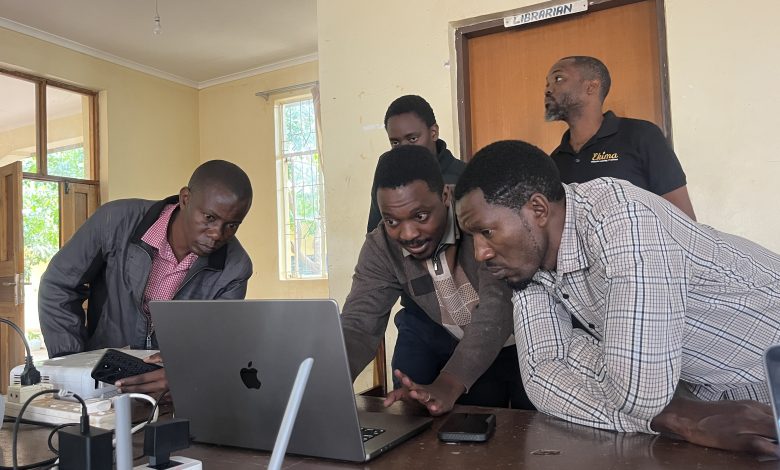
DAR ES SALAAM: WHEN Physics teacher Frank Asubisye begins explaining the refraction of light at Kilakala Secondary School in Morogoro, he no longer fills the blackboard with sketches of light rays passing through glass and water. Instead, a digital animation appears on a smart screen, showing the light beam bending as it moves between different materials. Within moments, students begin discussing what they observe rather than struggling to imagine it.
The lesson reflects a wider shift taking place in Tanzanian classrooms, where digital technologies are helping teachers present complex scientific concepts through animations, simulations and virtual experiments.
“For years I spent valuable time drawing diagrams, yet many students still struggled to understand,” Asubisye says. “Now they can see science happening. They participate more actively because the concepts become easier to grasp.”
This transformation is being driven by Smart Darasa, a Tanzanian digital learning platform developed to improve science education by providing virtual laboratories, interactive lessons and multimedia learning resources. The innovation has become one of the most visible examples of how locally developed technology can address long-standing challenges in education.
Its growth also reflects the role of the Tanzania Commission for Science and Technology (COSTECH), which is marking four decades of promoting research, innovation and technology development.
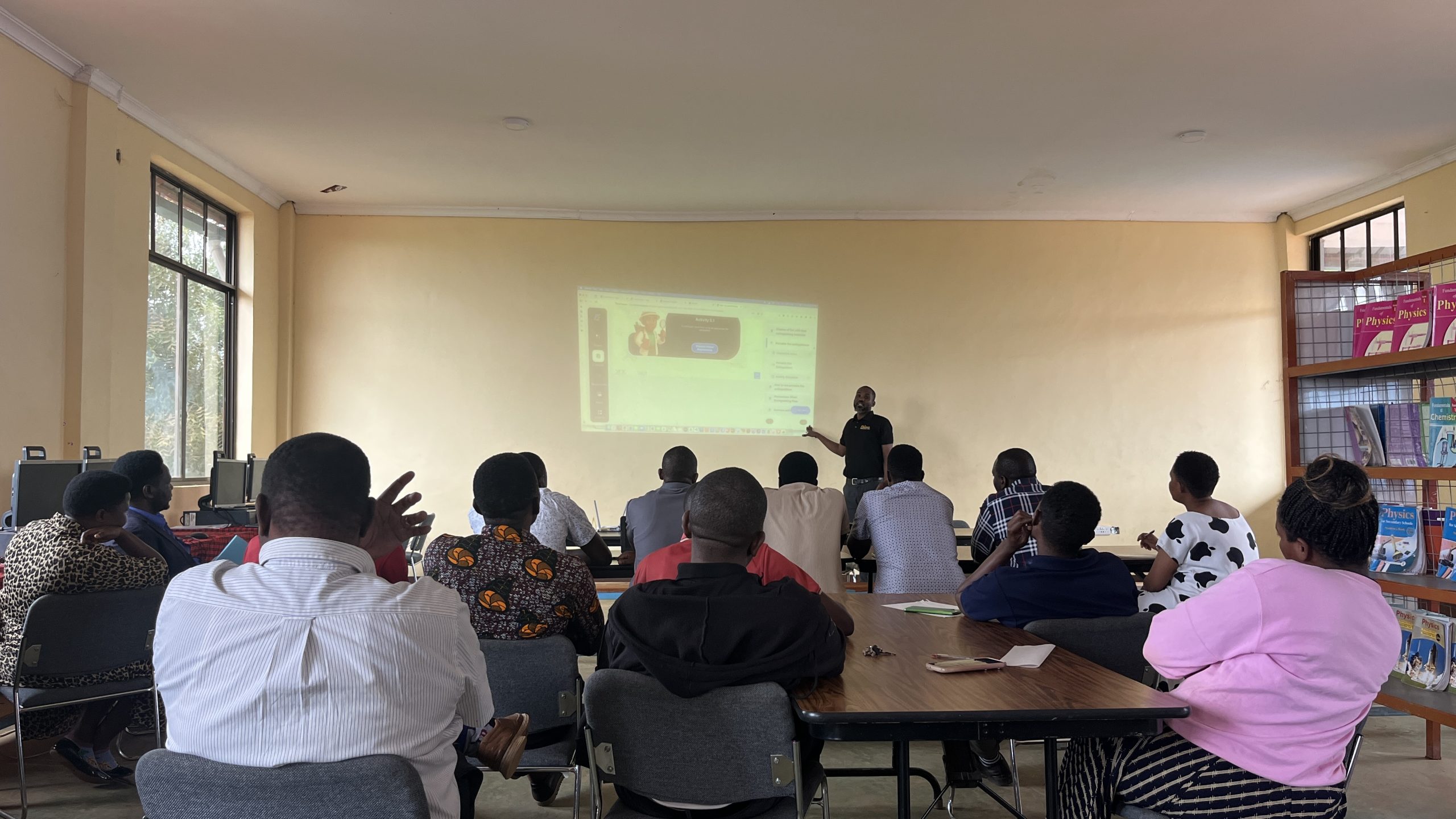
Science education has long faced structural constraints across Tanzania. Many schools, particularly in rural and underserved communities, lack laboratories and equipment needed for practical experiments. As a result, teachers often rely on theoretical explanations while students memorise concepts without observing them in practice.
The absence of practical learning has contributed to weak performance in science subjects and reinforced perceptions that physics, chemistry and biology are inherently difficult.
Constructing laboratories for every school requires substantial investment and time. For innovators behind Smart Darasa, the challenge prompted a different question: could digital technology bring laboratory experiences into ordinary classrooms?
The answer became a platform combining virtual laboratories, instructional videos, simulations, animations and interactive assessments accessible through computers, tablets and smartphones.
Rather than replacing teachers, the platform provides tools that enable them to demonstrate experiments and scientific processes that many schools cannot physically perform.
According to the development team, the goal was to move students beyond memorisation towards genuine understanding by making science visual, interactive and practical.
Developing the platform required more than technical expertise. Like many earlystage innovations, it needed financing, mentorship and business support before reaching schools.
COSTECH became one of the earliest institutions to support the initiative after recognising its potential to improve science learning.
Initial funding enabled developers to transform the concept into a working digital product. Subsequent support through the MAKISATU programme expanded both the workforce and the platform’s educational content.
Beyond financial assistance, incubation through the Dar Teknohama Business Incubator (DTBI) provided business mentoring, technical guidance and management training that strengthened the company’s operations.
The combination of technical development and business incubation later helped Smart Darasa secure international support through the Mastercard Foundation EdTech Fellowship, providing additional resources to expand the platform.
Today, Smart Darasa has evolved beyond digital classroom content into a broader educational ecosystem under the initiative known as Ekima (Elimu Kidigitali Mahali Popote), integrating artificial intelligence, immersive technologies, video simulations and both two-dimensional and three-dimensional educational animations.
The initiative has also generated employment opportunities for young Tanzanian professionals working in software development, animation, digital content production and educational technology. The platform’s impact is becoming increasingly visible in classrooms.
At Yombo Dovya Secondary School in Dar es Salaam, teachers say digital demonstrations have transformed students’ attitudes towards science.
Instead of listening to lengthy explanations, learners observe chemical reactions, electrical circuits and physical forces through simulations that closely resemble real laboratory experiments.
Teachers report that visual learning improves participation because students engage directly with the material rather than relying solely on imagination.
The shift also aligns with Tanzania’s competence-based curriculum, which encourages learner-centred teaching instead of traditional lecture methods.
For example, lessons on projectile motion now use animated simulations showing an object’s trajectory in real time. Electricity lessons allow students to build and modify virtual circuits, observing immediately how changes affect current flow.
Although virtual laboratories cannot completely replace physical experimentation, educators say they significantly improve conceptual understanding where laboratory facilities are unavailable.
Digital assessments have also simplified classroom management. Online quizzes provide instant feedback, enabling teachers to identify learning gaps before examinations while reducing time spent marking scripts manually.
Digital learning is also gaining momentum outside major cities.
In Kishapu District, Shinyanga Region, Smart Boards are introducing interactive teaching methods to schools that previously relied almost entirely on chalkboards.
Mathematics and Computer teacher Makunja Nyambeya says technology has increased classroom participation by combining videos, graphics and animations with conventional teaching.
Previously, digital equipment was mainly reserved for Advanced Level classes. Today, interactive teaching tools are reaching students across multiple grade levels.
Students themselves describe noticeable differences. Form Six student Shalom Malaki says lessons delivered through Smart Boards attract greater attention because visual demonstrations make difficult concepts easier to understand.
Instead of passively listening, learners analyse animations, discuss observations and participate throughout lessons.
Educational researchers have long argued that active participation improves knowledge retention compared with passive memorisation, particularly in science education where abstract concepts often require visual demonstration.
Despite the progress, significant barriers remain before digital learning can become universal.
Reliable internet connectivity remains inconsistent in many schools, limiting access to online educational resources.
Some government-issued tablets distributed several years ago have deteriorated through prolonged use, forcing teachers to depend on personal smartphones to continue delivering digital lessons.
Demand for Smart Boards continues to outpace supply, while many educators require ongoing training to keep pace with rapidly evolving technologies.
Teachers emphasise that successful digital transformation depends not only on equipment but also on professional development.
Without sufficient digital skills, even well-equipped classrooms may fail to realise the full benefits of educational technology.
ALSO READ: COSTECH highlights the protection of youth innovation rights
Continuous technical support, reliable connectivity and regular equipment maintenance therefore remain essential components of sustainable digital learning.
For COSTECH, Smart Darasa illustrates a broader objective: transforming research and innovation into practical solutions addressing national development priorities.