How IIT Madras Z’bar is building a new hub for science and technology
ZANZIBAR: WHEN the Indian Institute of Technology Madras (IIT Madras) opened its first international campus in Zanzibar in 2023, the decision was more than an expansion of a prestigious Indian institution. It was a bold experiment: could a small island in the Indian Ocean become a gateway for advanced science, technology and innovation for Africa? Less than three years later, the answer is increasingly visible.
From its temporary campus in Bweleo, IIT Madras Zanzibar has grown from a small group of pioneering students into an institution attracting learners, academics, professionals and partners from across Africa and beyond.
Its latest international training programme for African government auditors is perhaps the clearest indication yet that the campus is beginning to serve a purpose far beyond conventional higher education.
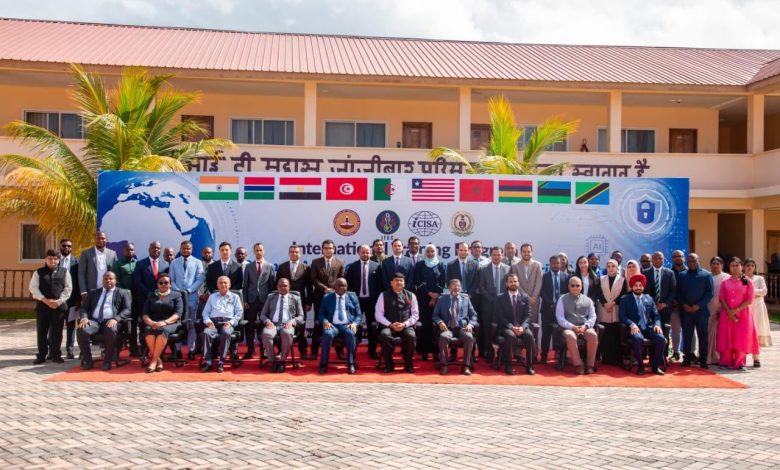
The two-week Certification Course on Data Science, Artificial Intelligence and Cybersecurity for Audit Professionals has brought together 30 senior audit professionals from eight African countries — Algeria, Egypt, Tunisia, Liberia, Morocco, Mauritius, The Gambia and Tanzania.
Initiated by the Comptroller and Auditor General of India and jointly organised with IIT Madras Zanzibar, the programme is designed to help African auditors understand how artificial intelligence (AI), data science and cybersecurity can be applied to modern public-sector auditing.
For Zanzibar, such a gathering represents an important shift in perception. The island is no longer simply hosting an international university campus. It is becoming a meeting point where African professionals can acquire skills needed to navigate an increasingly digital economy.
Ms Mwatima Rashid Issa, IIT Madras Zanzibar Public Relations Officer, describes the programme as an international collaboration aimed at strengthening professional knowledge, skills and networks among government auditors.
The significance extends beyond the classroom. As governments increasingly depend on digital platforms and datadriven systems, auditors must understand not only financial records but also algorithms, data security and technologyrelated risks.
This is precisely the type of capacity Zanzibar and Africa will need if their ambitious development visions are to become reality. Zanzibar Development Vision 2050 places science, technology, innovation and information and communication technologies at the centre of the island’s long-term transformation.
The vision calls for stronger ICT human capital, technology-focused innovation, expanded research and development, and an education system that prepares young people for emerging technologies such as artificial intelligence, robotics, big data and blockchain.
IIT Madras Zanzibar fits naturally into that ambition. The campus began operations in October 2023 with Bachelor’s and Master’s programmes in Data Science and Artificial Intelligence. It was formally inaugurated by President of Zanzibar Dr Hussein Ali Mwinyi on November 6, 2023, becoming the first international campus of any IIT.
Its early progress has been striking. In July 2025, the institution celebrated its first graduation, with 16 students completing the inaugural MTech programme in Data Science and Artificial Intelligence.
By July 2026, another 19 students had graduated from MTech programmes in Data Science and AI and Ocean Structure Engineering. The university says almost half of its graduates are from East Africa, while women account for about 30 per cent.
Student numbers have also expanded. IIT Madras Zanzibar now has more than 129 students, with Tanzanian students accounting for about 51 per cent and others coming from African countries including Kenya, Ethiopia and Zambia.
The campus has also expanded its academic portfolio, introducing a Bachelor’s programme in Chemical Process Engineering in 2025. The international character of the campus is becoming one of its greatest strengths.
Its students and academic community have included people from Tanzania, India, Nepal, Kenya and the Middle East, while its programmes are open to students from around the world. That diversity is important at a time when Africa is facing a serious shortage of advanced scientific and technological capacity.
UNESCO estimates that Africa produces only about one per cent of global scientific research. Sub-Saharan Africa has around 90 researchers per million inhabitants, compared with a global average of 1,420, while African countries invest an average of only about 0.59 per cent of GDP in research and development, far below the global average.
The digital divide is equally challenging. The World Bank says Sub-Saharan Africa continues to lag in digital infrastructure and usage. Although 84 per cent of people lived in areas with 3G coverage and 63 per cent had 4G coverage by 2021, only 22 per cent were actually using mobile internet services. These gaps make institutions such as IIT Madras Zanzibar potentially important strategic assets.
ALSO READ: COSTECH commends Tanzanian students’ remarkable innovation in science and technology
Africa is entering a period in which millions of young people will need advanced digital skills. The World Bank estimates that 230 million digital jobs could exist in Sub-Saharan Africa by 2030, yet the region already faces a significant shortage of digital skills. IIT Madras Zanzibar therefore arrives at a critical moment.
Its challenge now is to move beyond producing graduates and become a stronger centre for research, innovation, entrepreneurship and solutions to African problems, from climate change and agriculture to health, cybersecurity, the blue economy and smart public services.
Its growing international attention suggests that this journey has already begun. What started in Zanzibar as the first overseas campus of one of India’s most respected technological institutions is gradually becoming something larger: a bridge between India’s technological expertise and Africa’s enormous need for scientific and digital capacity.
For Zanzibar’s Vision 2050, that bridge could prove invaluable. And for Africa, a technology-focused university rooted on an island in the Indian Ocean may ultimately demonstrate that the continent does not have to wait for technological transformation to come from elsewhere. It can build the knowledge, skills and institutions needed to shape its own digital future.