How cover crops farmers build climate-resilient coffee farms
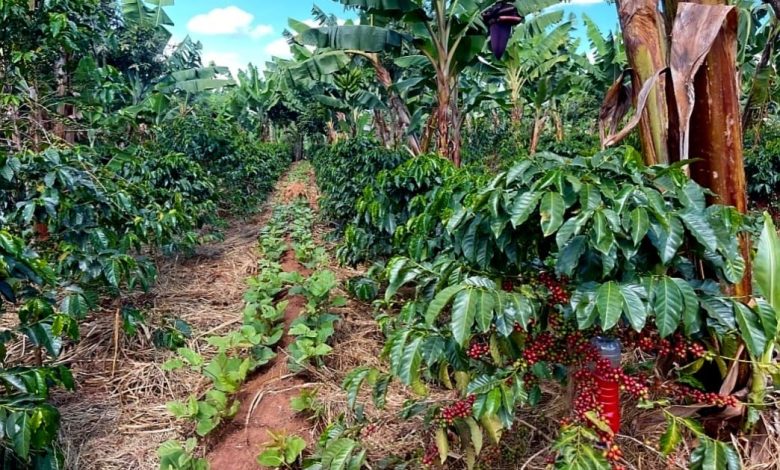
DAR ES SALAAM: As changing weather patterns increasingly threaten soil health and coffee productivity, agricultural experts are encouraging farmers to adopt ground-cover practices to protect their farms and sustain production.
One approach promoted through the Coffee & Climate Toolbox involves planting suitable vegetation between coffee rows to reduce soil exposure to rainfall and sunlight, conserve moisture and improve soil structure.
“Healthy coffee production starts with healthy soil. When farmers keep the soil covered, they are not only reducing erosion but also helping to conserve moisture, improve soil structure and create a better environment for the coffee plant’s roots.”
For Godfrey Wilgod, Agronomy Coordinator at Hanns R. Neumann Stiftung (HRNS) Tanzania, soil protection is an important part of preparing coffee farms to withstand the growing effects of climate change.
Across coffee-growing communities, farmers are increasingly experiencing unpredictable rainfall, intense downpours, rising temperatures and prolonged dry spells. Although these conditions directly affect coffee trees, the soil supporting their growth is also exposed to considerable damage.
During heavy rainfall, exposed topsoil can be washed away, carrying essential nutrients needed for healthy plant development. Conversely, prolonged dry conditions accelerate moisture loss and increase soil temperatures, creating unfavourable conditions for coffee roots.
These challenges have drawn attention to the importance of managing the spaces between coffee trees, where planting cover crops can help protect the soil and improve farm conditions.
Cover cropping, also known as living mulch, involves growing suitable annual or perennial vegetation between coffee rows to shield the ground from direct exposure to sunlight and rainfall. Maintaining vegetation cover helps reduce erosion, retain soil moisture and improve the overall condition of farmland.
The practice is among the climate-smart agricultural approaches promoted through the Coffee & Climate Toolbox, a knowledge platform developed to provide coffee farmers, trainers and agricultural extension workers with practical guidance on adapting production to changing climatic conditions.
Rather than concentrating exclusively on coffee trees, the Toolbox promotes management practices that strengthen the entire farming system, including soil, water and the surrounding farm environment.
Evidence of how this approach can be applied in coffee production comes from Mbozi District in Songwe Region, where the Tanzania Agricultural Research Institute (TARI-Uyole) assessed the use of Canavalia ensiformis, a leguminous plant, as a cover crop in coffee fields.
When planted between coffee rows, Canavalia produces foliage that covers exposed ground, reducing the direct impact of rainfall and sunlight. Its fallen leaves decompose, adding organic matter to the soil, while its root system can support water infiltration and improve soil structure.
Preliminary findings from the assessment indicate that the practice could contribute to improvements in soil fertility.
Soil analysis from the sampled coffee field recorded total nitrogen levels of 0.10 per cent in areas without Canavalia, compared with 0.19 per cent in intercropped areas. Organic carbon increased from 1.2 per cent to 1.65 per cent, while available phosphorus rose from 6.1 to 6.48 milligrams per kilogramme.
These findings suggest that introducing Canavalia between coffee rows could improve certain soil properties. However, the results were obtained from a limited field assessment and should not be interpreted as a guarantee that similar improvements will occur in every coffee-growing environment.
Beyond the laboratory findings, the assessment also documented observations of improved soil cover and moisture retention among farmers at Pamoja AMCOS. Such observations are relevant to producers facing increasingly unpredictable weather, reinforcing the importance of protecting the soil as part of routine coffee farm management.
According to Wilgod, the contribution of cover crops extends beyond providing vegetation between coffee trees. When properly selected and managed, they can help address several soil-management challenges at the same time.
Vegetation cover reduces direct exposure to sunlight, helping limit moisture loss, while plant roots support water infiltration. As leaves decompose, they contribute organic matter, which improves soil structure and provides a suitable environment for beneficial organisms, including earthworms and microorganisms.
Another potential benefit is weed management. Cover crops occupy spaces where unwanted vegetation would otherwise grow, helping suppress weed development. This can reduce the labour required for weeding and, over time, potentially lower farmers’ dependence on herbicides and synthetic fertilisers.
However, the benefits depend on appropriate management. Cover crops can compete with coffee trees for water, nutrients, sunlight and other resources if they are not carefully selected and controlled.
TARI-Uyole therefore recommends monitoring soil moisture and adjusting planting density and management practices according to local conditions. The institute also points to the need for further assessment, including repeated observations across growing seasons, to establish the longer-term effects of cover cropping on soil fertility.
For Wilgod, these considerations demonstrate why soil protection should be treated as a continuous investment rather than a seasonal farming activity.
“For coffee farmers, soil protection is not a one-season activity. It is about building a farming system that can continue supporting coffee production even as farmers face changing rainfall patterns, higher temperatures and other climate-related challenges,” he explains.
This approach is particularly important because cover crops are most effective when incorporated into a broader soil-management strategy. Other practices, including mulching, compost application, rainwater management and appropriate nutrient management, can complement vegetation cover to improve soil health and strengthen farm resilience.
The Coffee & Climate Toolbox provides practical guidance on these and other climate-smart approaches, helping farmers translate agricultural knowledge into techniques they can apply under their own farming conditions.
Wilgod said farmers needed solutions that were practical and adaptable to their circumstances.
“Farmers need practical solutions that they can see, understand and apply in their own fields. Cover crops are one example of how climate-smart practices can become part of everyday coffee farming,” he says.
As Tanzania’s coffee industry responds to climate-related challenges, protecting the natural resources that support production is becoming increasingly important.
Improved coffee varieties, better farm management and access to agricultural inputs remain essential to increasing productivity. However, these interventions depend on healthy soil, which provides the foundation for coffee tree growth and sustained production.
The experience from Mbozi illustrates how maintaining vegetation between coffee rows can contribute to protecting this foundation. Although further assessments and appropriate farm-level management are necessary, the findings highlight the potential of cover crops as part of efforts to improve soil conditions.
For farmers, the lesson is that climate resilience depends not only on the crops they plant but also on how they manage and protect the land supporting those crops.
Keeping the soil covered may therefore be a relatively simple intervention with long-term benefits, helping conserve moisture, reduce erosion, improve soil structure and strengthen the resilience of coffee farms against changing weather conditions.
Farmers, extension workers and other coffee stakeholders can access practical guidance on soil management and climate-smart coffee production through the Coffee & Climate Toolbox at https://www.toolbox.coffee/en-tz/categories/soil-management.