Hammer Q turns Futopia Beach into living archive of Zanzibar’s musical soul
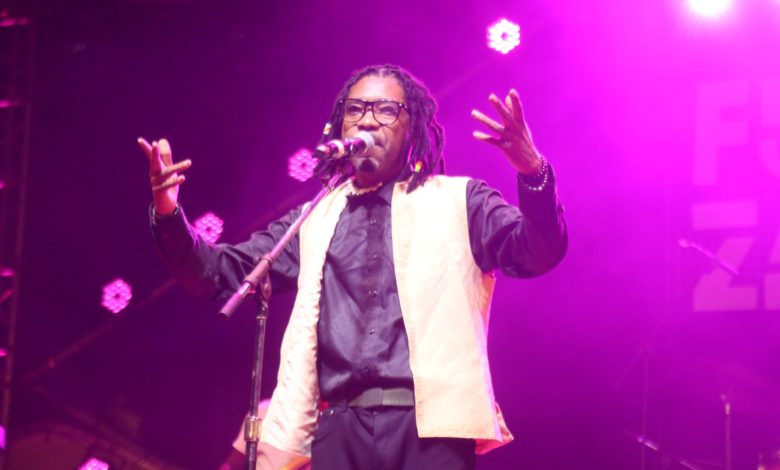
ZANZIBAR: BY the time Hammer Q stepped onto the stage at the second edition of Futopia Festival, Fumba Beach had already experienced two days of colour, movement and contemporary musical energy.
Then the atmosphere changed.
Hammer Q did not arrive to compete with the festival’s exuberance. Instead, he offered something more intimate, a performance built on voice, feeling and a deep connection with the audience.
He began with “Lady”.
Almost immediately, the pace softened. His voice travelled gently across Fumba Beach, carrying the song’s romantic warmth into the evening. There was no rush in his delivery. He allowed the melody to breathe, giving the audience space to listen, feel and eventually sing along.
And they did.
Hundreds of voices joined his, turning the performance into something more personal than a conventional stage show. For a moment, the distance between performer and audience seemed to disappear. Hammer Q sang to the crowd, and the crowd answered him.
It was a quiet demonstration of the strength of his voice and of his understanding of live performance.
But the journey was only beginning.
Hammer Q moved into contemporary taarab with “Pembe la Ng’ombe”, bringing another layer of his musical identity to the stage.
Then, in one of the evening’s most memorable moments, he asked his band to stop playing.
The instruments fell silent.
What followed was simple and powerful. Hammer Q continued, leading the audience through the song while hundreds of voices filled the space once occupied by the band.
The crowd was no longer simply watching the performance. It had become part of it.
The song carried a timeless message about the responsibility that comes with speech, that words, once released, cannot easily be reclaimed.
From there, Hammer Q reached further into Zanzibar’s musical memory.
ALSO READ: Manqoba rues profligate Yanga despite win
He performed “Zuwena”, the celebrated song associated with the late Marijani Rajabu, giving it his own interpretation while preserving its distinctive character. In his hands, the song did not feel like a piece of history being revisited. It felt alive again.
He followed with “Kimaso Maso” by Issa Matona, bringing the richness of traditional Zanzibari taarab into the setting of a contemporary music festival.
In the space of one performance, Hammer Q moved through romance, contemporary taarab, traditional taarab and the modern sound of Zenji Flava.
He did not treat them as separate worlds.
He allowed them to speak to one another.
There is only one Hammer Q
After his performance, Hammer Q reflected on his career and the perception that he had disappeared from the music scene.
For him, however, the question is less important than the work itself.
“I focus on the music.”
From the beginning, he said, his purpose has remained simple: to make music.
What audiences may interpret as absence, therefore, may simply be an artist continuing to create away from the centre of attention.
His Futopia performance offered a clear reminder of that.
He did not appear as an artist trying to reclaim a lost moment. He appeared as an artist fully comfortable in the present.
The conversation also touched on the apparent difference between the Hammer Q audiences remember from his Bongo Flava years and the artist now moving confidently through taarab.
His response was simple:
“There is only one Hammer Q.”
For him, musical evolution does not require abandoning the past.
The artist who once performed Bongo Flava is the same artist now embracing taarab. The vocabulary may have grown, but the identity remains.
At Fumba Beach, he demonstrated that idea through the music itself.
“Lady”, “Pembe la Ng’ombe”, “Zuwena” and “Kimaso Maso” belonged to different musical spaces and generations, yet they sat naturally within the same performance.
When the band stopped, the music continued
Hammer Q also spoke about the relationship between playback and live performance.
His view was practical rather than judgmental.
Playback, he explained, can depend on the resources available for a performance.
“If the budget is small, I will perform with playback,” he said. “I cannot simply decide that I will stop working.”
For organisers seeking a fuller live experience, however, he offers another possibility: performing with his band.
“If you want me to give you more through my work, then bring my band,” he said.
At Futopia, the value of that arrangement was clear.
ALSO READ: 10-man Simba silence Kagera Sugar
The band provided the musical foundation, but Hammer Q also showed that a strong performer can step beyond it. When the instruments stopped, his voice remained enough to carry the moment, because the audience carried it with him.
Let every artist find their own way
The discussion also turned to the growing use of playback among contemporary performers.
Hammer Q chose not to criticise his fellow artists.
“That is not my problem,” he said.
His position was that every performer must find the approach that works for their music, circumstances and audience.
“To tell someone that they must perform live is not necessarily right,” he said.
It was a generous perspective, particularly coming from an artist who had just demonstrated the emotional power of live singing.
Rather than telling others how they should perform, Hammer Q simply showed what he can do when given the opportunity.
And the audience understood.
A meeting of musical generations
Perhaps the most beautiful aspect of Hammer Q’s Futopia performance was the way it brought different generations of Zanzibar’s music into the same space.
“Lady” offered intimacy.
“Pembe la Ng’ombe” brought contemporary taarab to a modern festival audience.
“Zuwena” opened a window into the musical legacy of Marijani Rajabu.
“Kimaso Maso” connected traditional taarab with listeners of today.
Together, the songs told a larger story about Zanzibar’s musical culture.
Its music is not a straight journey from the old to the new. It is a living conversation between generations, a culture in which traditions can be remembered, reinterpreted and given new life.
Hammer Q stood comfortably within that conversation.
His performance showed that embracing a new musical direction does not mean turning away from where one came from.
Sometimes, it means carrying the past forward.
The music answered for him
By the end of the performance, the question of whether Hammer Q had disappeared from the music scene felt almost beside the point.
He had answered it without argument.
The answer was in the warmth of “Lady”.
It was in the silence that followed when his band stopped.
It was in hundreds of voices rising to meet his.
And it was in the ease with which he moved between contemporary sounds and songs rooted in Zanzibar’s musical heritage.
Hammer Q may not measure his career by how often he appears in the spotlight.
He measures it through the music.
“I focus on the music.”
At Fumba Beach, the music spoke beautifully for itself.
The audience did more than listen. It became part of the performance, singing, responding and carrying the songs with him.
For a few moments, the stage and the crowd felt like one space.
There was the voice, the music, the sea and hundreds of people singing together.
And perhaps that was the most fitting way for Hammer Q to tell his story — not by insisting that he had never disappeared, but by simply standing on stage and letting the music remind everyone that he is still here.