Growth-focused 62.33tri/- budget
- Charts progress, lays Vision 2050 foundation
DODOMA: THE government yesterday unveiled a 62.33tri/- national budget for the 2026/27 financial year, designed to improve the lives of Tanzanians, strengthen the economy and lay the foundation for the implementation of the Tanzania Development Vision 2050.
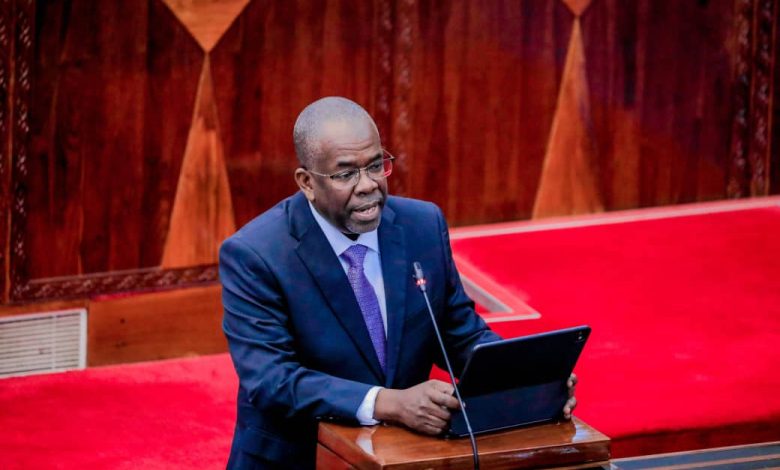
Presenting the budget in the National Assembly in Dodoma, Minister for Finance Ambassador Khamis Mussa Omar described it as the first budget under Vision 2050, aimed at accelerating economic transformation through strategic investments, digital reforms, industrial development and enhanced domestic revenue mobilisation.
The budget is aligned with the Fourth Five-Year National Development Plan (2026/27–2030/31) and is guided by the theme: “Building a Resilient Economy through Digital Transformation, Strategic Investment and Sustainable Fiscal Policies for Inclusive Economic Growth.” Amb Omar said the spending plan seeks to ensure that development benefits reach ordinary citizens through job creation, improved social services, agricultural transformation and increased support for productive sectors.
Among its key targets, the budget aims to raise economic growth to 6.3 per cent in 2026 from 5.9 per cent in 2025, while maintaining inflation between 3 and 5 per cent. It also seeks to increase domestic revenue collection to 17.1 per cent of GDP and tax revenue to 13.7 per cent of GDP.
“The government believes that creating a friendly and predictable environment for investors and entrepreneurs is critical for expanding economic opportunities and generating employment,” the minister said.
To improve the business climate, the government plans to simplify regulatory procedures, strengthen the use of information and communication technology (ICT) and improve coordination among regulatory agencies to reduce disruptions to business operations.
The budget also places strong emphasis on financial inclusion and consumer protection. Amb Omar said the Bank of Tanzania (BoT) has introduced measures to protect customers from unfair charges and penalties, while encouraging greater participation in the formal financial system.
A major highlight of the budget is the government’s push towards a cash-lite economy through expanded use of digital payment systems.
Beginning in the 2026/27 financial year, digital platforms will increasingly be used for payments in transport services, education, tourism, real estate and agricultural marketing, particularly for strategic crops such as coffee, tea, cotton, tobacco, cashew nuts and sisal. According to the minister, transactions processed through the Tanzania Instant Payment System (TIPS) increased significantly in 2025, reflecting growing public confidence in digital financial services.
The government also plans to expand the use of Lipa Namba and QR code payment systems among small traders, including food vendors, market traders and bodaboda operators. Industrialisation and value addition remain central pillars of the budget.
The government intends to promote processing of agricultural produce, livestock products, fisheries resources and minerals before export to increase export earnings, create jobs and strengthen local industries.
“Such investments are expected to boost incomes, create employment and increase the country’s competitiveness,” Amb Omar said. Recognising that more than 65 per cent of Tanzanians live in rural areas, the budget prioritises agricultural transformation, rural revitalisation and targeted investments in less-developed regions.
The goal is to reduce development disparities while creating economic opportunities closer to where people live. The budget also seeks to empower youths and women through entrepreneurship, investment and productive economic activities.
ALSO READ: Zanzibar targets 7.5pc economic growth in 2026
On taxation, the government has proposed a series of reforms aimed at increasing domestic revenue, promoting industrial production, attracting investment, supporting clean energy and formalising the informal sector. The measures are expected to generate an additional 1.72tri/- in revenue.
Among the sectors targeted is the edible oil industry, where VAT exemptions have been maintained for cooking oil produced using locally grown oilseeds. In the cotton, textile and apparel sector, VAT exemptions on garments manufactured using locally produced cotton have also been retained to encourage domestic production.
To promote clean energy, the government has proposed reduced import duties on selected electric vehicles and VAT exemptions on equipment used for electric vehicle charging stations and smart LPG metres. Small businesses are also set to benefit. New enterprises will receive a one-year income tax exemption from the date they obtain a Taxpayer Identification Number (TIN), while the turnover threshold under the presumptive tax system has been increased from 100m/- to 200m/-.
The government has also proposed higher excise duties on selected products and activities, including fuel-powered motorcycles, used motor vehicles, beauty products, artificial flowers, plastic footwear and gambling. To strengthen tax administration, the government plans to expand the use of digital systems and modern ICT tools.
As part of the reforms, 20 laws will be amended, including those governing VAT, Income Tax, Excise Duty, Tax Administration, the Tanzania Revenue Authority (TRA), Local Government Finance and Investment and Special Economic Zones. The government will also continue using customs duties and other levies to protect local industries, promote value addition and attract investment.
These measures are expected to generate more than 408.97bn/-. Despite the ambitious revenue measures, the budget is projected to record a deficit of 7.71tri/- due to the gap between expected revenue and planned expenditure.
“To bridge this gap, the government will utilise both domestic and external borrowing in line with the Medium-Term Government Debt Management Strategy,” Amb Omar said. The government plans to borrow 15.54tri/-, including 6.56tri/- from the domestic market, 6.55tri/- through concessional external loans and 2.43tri/- from other external sources.