Govt warns against inflated subsidised fertiliser prices
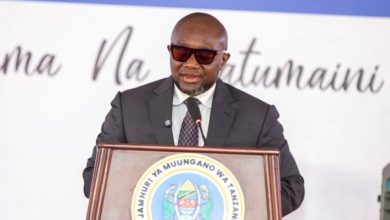
RUVUMA: VICE-PRESIDENT Deogratius Ndejembi has warned traders against selling subsidised fertiliser above government indicative prices, directing authorities to ensure the stipulated rates are strictly observed.
The warning follows complaints from farmers in Madaba District, Ruvuma Region, over rising prices of the vital agricultural input.
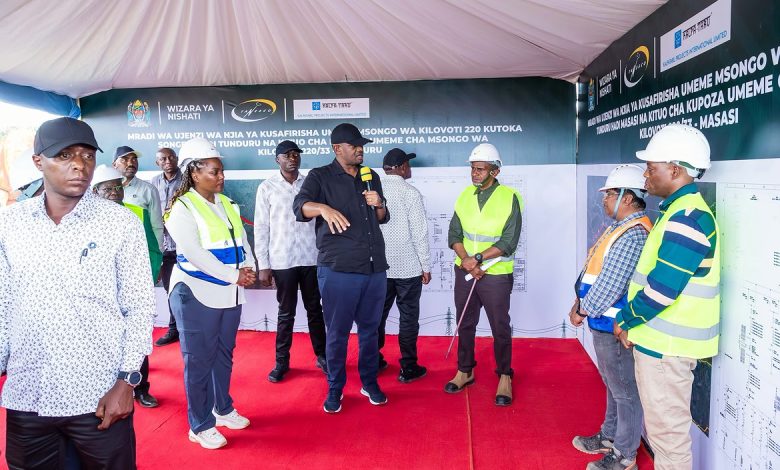
Mr Ndejembi issued the directive on Tuesday while inspecting progress on the MtyangimboleDabaga Water Project, worth 5.6bn/-, which is 96 per cent complete and expected to serve more than 19,000 people in three villages.
Speaking on the availability of fertiliser, the VP said the government will not tolerate farmers being charged above the indicative prices for subsidised fertiliser.
He directed the agriculture minister to investigate and explain the reasons behind the price increases.
“Government indicative prices must be observed in Madaba and other areas to ensure farmers benefit from subsidies intended to reduce production costs,” said Mr Ndejembi.
Commenting on maize prices for 2026, Mr Ndejembi urged farmers to prepare for the next farming season by increasing production.
He assured them of the government’s commitment to ensuring the availability of subsidised fertiliser and addressing challenges relating to markets and maize prices to protect farmers from incurring losses.
For his part, Minister for Agriculture Daniel Chongolo said the ministry will continue overseeing the National Food Reserve Agency (NFRA) to ensure it fulfils its role in promoting favourable crop prices and providing farmers with reliable markets.
Responding to remarks by Minister for Industry and Trade Judith Kapinga, who is also the Mbinga Rural Member of Parliament, on the construction of crop storage warehouses and a flour processing factory, Mr Chongolo said the infrastructure was essential for adding value to cereal crops, including maize and enabling farmers to earn better incomes.
Mr Chongolo assured farmers in Mbinga and Ruvuma Region at large that the government will continue providing fertiliser subsidies to reduce production costs.
“The subsidy has reduced fertiliser prices by an average of 63,000/- to 65,000/- per bag, while the market price of a 50-kilogramme bag of DAP is approximately 158,000/-,” said Mr Chongolo.
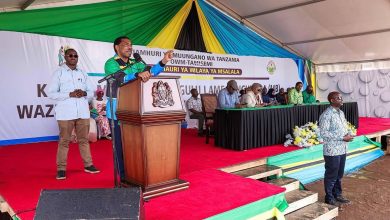
During the visit, the Vice-President also inspected water storage tanks and other infrastructure under the Mtyangimbole-Dabaga Water Project and met residents, who had an opportunity to raise challenges affecting them.
He said the project’s implementation demonstrated how the sixth-phase government, under President Dr Samia Suluhu Hassan, continues to bring essential services closer to the people and improve their living standards.
In a separate engagement during his visit to the region, Mr Ndejembi urged officials responsible for development projects in Songea to stop tolerating contractors who fail to fulfil their contractual obligations.
He expressed dissatisfaction with delays in the construction of Manzese A and B markets in Songea Municipality. The project, whose contract commenced in 2025 with an implementation period of 18 months, was scheduled for completion in September 2026.
However, its implementation has been delayed despite the contractor receiving an advance payment of 3bn/-.
“Let us change and be accountable for public funds. What purpose do high-level meetings serve? I am not pleased with the practice of officials continuing to hold meetings to appease contractors instead of taking action to ensure projects are completed on time,” said Mr Ndejembi.
ALSO READ: Ndejembi’s appointment highlights constitutional continuity
He directed the minister responsible for the Prime Minister’s Office – Regional Administration and Local Government (PMORALG) to take action over negligence in supervising the project, stressing that public officials must be accountable for the responsibilities entrusted to them.
He also directed the Prevention and Combating of Corruption Bureau (PCCB) to investigate the company awarded the contract, including how it had utilised the advance payment, to establish why the contractor had failed to fulfil its obligations despite receiving taxpayers’ money.
“The government cannot tolerate negligence that continues to cause inconvenience to citizens while substantial amounts of public money have been spent without projects being completed on time,” he said.