Govt rescue boats set new course for safer travel, stronger Lake Victoria economy
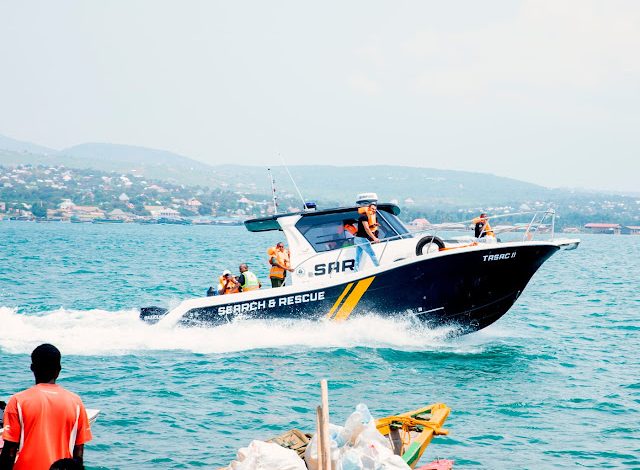
MWANZA: FOR generations, Lake Victoria has been both a lifeline and a challenge for thousands of Tanzanians living on its islands.
Every day, residents depend on boats to access schools, hospitals, markets, government offices and fishing grounds. While the lake supports livelihoods and connects communities, it has also witnessed tragic accidents caused by harsh weather, overcrowded vessels and delayed emergency response.
However, that situation is changing. The government’s investment in modern search and rescue boats is ushering in a new era of maritime safety, giving island communities renewed confidence while strengthening public services, trade and economic activities across Tanzania’s Lake Zone.
For residents whose lives depend on water transport, the new rescue vessels represent more than equipment they represent security.
Families travelling across the lake can now have greater confidence that emergency teams have improved capacity to respond quickly when accidents occur.
Beyond saving lives, the initiative is expected to transform service delivery in remote island communities.
Government officials will be able to reach areas more efficiently to monitor development projects, supervise public institutions and deliver essential services. Healthcare is among the major beneficiaries.
Faster emergency response can save lives during marine accidents and medical emergencies, while improved transport will enable health workers to reach remote communities and assist patients requiring urgent care.
Education services are also expected to improve as education officers gain easier access to island schools, allowing better supervision, teacher support and monitoring of learning programmes. The investment will equally strengthen economic activities.
Traders who rely on water transport will benefit from safer and more reliable journeys, reducing delays that affect business operations.
Fishermen, who form the backbone of many lakeside economies, will be able to transport fish to markets more efficiently, improving incomes and reducing losses. Farmers will also gain better access to trading centres for their produce.
The rescue boats are expected to discourage the use of unsafe vessels that have contributed to past accidents.
Combined with improved safety awareness, stronger emergency preparedness will encourage more people to travel across the lake for business, education and social services.
The initiative is part of the government’s broader strategy to improve infrastructure and public service delivery in island communities, ensuring citizens in remote areas have access to opportunities similar to those available on the mainland.
Residents of Ukerewe District, fishermen and other lake users have welcomed the investment, describing it as a timely intervention that could significantly reduce deaths from marine accidents.
Acting Officer-in-Charge of the Tanzania Shipping Agencies Corporation (TASAC) in Mwanza Region, Engineer Paul Musokwa, said the investment reflects the government’s commitment to making maritime transport safer and improving emergency response capacity.
ALSO READ: TASAC rescue boat conducts trials on the lake Tanganyika
He explained that the government has procured three modern vessels for Lake Victoria, including two specialised Search and Rescue (SAR) boats and one ambulance boat for emergency medical transportation of accident victims.
“We have also installed communication towers on Lake Victoria to improve communication coverage for fishermen while they are on the lake and enable them to report emergencies promptly, including boat accidents and sinking incidents,” Eng Musokwa said.
The communication system is expected to reduce response times by allowing distress calls to reach rescue teams faster. Through TASAC, the government received the two SAR boats worth 4.5bn/- under the Lake Victoria Maritime Communications and Transport Project.
Built in Turkey by Loca Muhendislik, the vessels arrived through the Port of Dar es Salaam before being transported to Mwanza for deployment.
Eng Musokwa said the boats are part of the Lake Victoria Search and Rescue Services Strengthening Project, implemented by TASAC with funding from the World Bank.
“The objective of this project is to strengthen the capacity of institutions responsible for search and rescue operations so that they can respond quickly to emergencies occurring in maritime transport, thereby reducing loss of life and other related impacts,” he said.
The project has also involved upgrading rescue stations, installing modern communication equipment and training personnel involved in emergency operations.
These measures are designed to create a stronger rescue system capable of protecting thousands of people who depend on the lake daily.
Ukerewe District Commissioner Mr Christopher Ngubiagai described the investment as a major milestone for a district whose economy largely depends on Lake Victoria.
“I sincerely thank President Samia Suluhu Hassan for enabling us to receive rescue boats and an ambulance boat for Lake Victoria. This is a significant investment that will improve safety and bring substantial benefits to our people,” he said.
Mr Ngubiagai explained that fisheries contribute about 75 per cent of Ukerewe District’s locally generated revenue, making safe water transport essential for economic sustainability.
He added that beyond fishing, the lake supports trade, passenger transport and public service delivery.
Strengthening rescue services, therefore, protects both human lives and economic activities.
“No one can reach Ukerewe without using water transport. Therefore, improved rescue services will increase public and investor confidence in travelling safely across Lake Victoria,” he said.
He noted that before the arrival of the new rescue boats, emergency operations were often difficult due to limited equipment and capacity.
“The arrival of these boats has strengthened confidence that Lake Victoria is safe for economic activities and marine tourism. We commend the government and President Samia Suluhu Hassan for this investment, which will greatly benefit the people of Ukerewe, Mwanza and the entire Lake Zone,” he said.
The District Commissioner urged residents to continue following maritime safety regulations, including wearing life jackets, avoiding overloaded boats and respecting weather warnings to prevent avoidable accidents.
Residents of Bwiro Island said they had lived with fear when travelling during strong winds and storms, especially when rescue operations took too long to reach accident scenes.
They said improved rescue services have restored confidence and contributed to reducing marine accident risks.
Mwanza resident Silvester Kingo praised the government for deploying modern rescue equipment, saying faster responses by TASAC officers and government officials have improved chances of saving lives.
Another Ukerewe resident, Denis William, welcomed the new rescue boats but appealed for additional services to be permanently based in the district to further reduce response times.
“In the past, rescue operations were extremely difficult. Sometimes it took several days or even weeks to complete an operation. We are grateful to the government for providing us with a modern rescue boat, but we appeal for this service to be permanently based in Ukerewe District so that victims can be reached more quickly,” he said.
As economic activities continue expanding around Lake Victoria, stakeholders say safe and reliable marine transport will remain essential.
Investments in rescue equipment, communication technology and skilled personnel are not merely costs but long-term investments in human life, economic growth and public confidence.
For thousands of island residents, Lake Victoria remains the highway connecting homes, businesses and opportunities. With improved rescue capacity, every journey across the lake is becoming safer.
The government’s investment in modern search and rescue services marks an important step towards protecting lives while supporting healthcare, education, trade and sustainable development.
For communities whose future depends on the lake, the initiative represents more than emergency response it represents hope, confidence and a safer future for Tanzania’s Lake Zone.