Govt moves to address fuel prices

DODOMA: THE government has stepped in to address rising fuel prices, with Prime Minister Mwigulu Nchemba saying authorities will convene a meeting to ensure the commodity remains affordable and does not escalate the cost of living.
Speaking in the National Assembly in Dodoma yesterday while presenting his office’s income and expenditure proposal for the 2026/27 fiscal year, Dr Nchemba said the government is also prioritising the use of domestic natural gas to cushion the impact of global price shocks.
“We are seeing fuel prices rising. We will sit, as the government, to see how we can address this and ensure that citizens access the commodity at an affordable price,” he told lawmakers.
He said despite global and regional security challenges, particularly in the Middle East, the government has maintained oversight of fuel supply to ensure availability and relative price stability.
“This has enabled economic and social activities to continue without major disruption,” he said.
Dr Nchemba noted that the government is strengthening systems for the importation, storage and distribution of petroleum products, including expanding fuel reception and storage capacity at the ports of Dar es Salaam and Mtwara.
He said construction of a fuel reception and storage facility with a capacity of 308,110 tonnes at the Dar es Salaam Port is 30 per cent complete.
In Mtwara, storage capacity has increased from 29,280 tonnes to 110,221 tonnes, enabling the port to handle vessels carrying up to 30,000 tonnes.
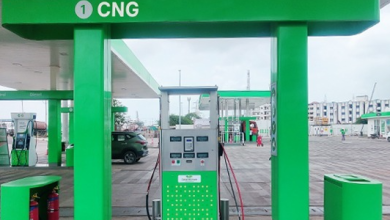
The Premier also said the government is actively promoting a shift from fuel to compressed natural gas (CNG) for vehicles.
To support this transition, the Ministry of Works and the Ministry of Energy have been instructed to create standard specifications and develop the necessary infrastructure. He said the government is expanding the use of natural gas to improve electricity availability.
Progress includes extending the natural gas distribution network significantly from 184.8 km to 243.6 km within a year and completing 14 CNG filling stations to support vehicles using natural gas.
The Prime Minister also provided an update on the East African Crude Oil Pipeline (EACOP) from Hoima in Uganda to Chongoleani in Tanga, noting that the project is now 81 per cent complete, up from 52 per cent record.
ALSO READ: Zungu orders Minister- Parliament Committee’s talks on the surge in fuel prices
“This marks significant progress. As I directed during my recent visit, once completed, priority in employment should be given to those who worked during the construction phase to sustain the expertise gained,” he said.
Meanwhile, Speaker of the National Assembly Mussa Azzan Zungu directed Energy Minister Deogratius Ndejembi to meet with the Parliamentary Standing Committee on Energy to deliberate on fuel price trends and supply.
“The Committee Secretary will organise the meeting, after which the government will present a report on the state of fuel and prices,” he said, stressing the critical role of fuel in implementing national development plans.
The directive followed concerns raised by Members of Parliament over rising fuel prices and availability. Motorists are already feeling the impact, with fuel prices rising sharply in the latest review.
According to a statement released by the Energy and Water Utilities Regulatory Authority (EWURA), new prices that took effect yesterday show petrol in Dar es Salaam retailing at 3,820/- per litre, while diesel is priced at 3,806/-.
This marks an increase of 956/- for petrol from 2,864/- recorded in March and a rise of 948/- for diesel compared to the previous month that was trading at 2,858/-.
EWURA attributed the price surge to the ongoing Middle East conflict involving the United States, Israel and Iran, which began in February.
“Attacks on oil fields, storage facilities and refineries, coupled with Iran’s closure of the Strait of Hormuz, a route that handles about 20 per cent of globally transported oil have disrupted supply,” the statement said.
The regulator added that the situation has also pushed up shipping costs due to a shortage of cargo vessels, alongside higher insurance premiums.
EWURA noted that the increase reflects a broader global trend, with Tanzania taking measures to safeguard supply while attempting to cushion consumers from severe economic impacts.
The authority has urged citizens to use fuel efficiently, while assuring the public that current petroleum reserves remain sufficient to meet domestic demand.
Under the new pricing, Dar es Salaam records petrol at 3,820/- per litre, while Kyerwa (Ruberwa) in Kagera Region has the highest price at 4,092/- per litre. At these rates, consumers can purchase approximately two to two-and-a-half litres of petrol with 10,000/-.