Tanzania boasts of strong Union

AS the Union between Tanganyika and Zanzibar turns 59 tomorrow, the government has said that the ties have continued to be strong, assuring commitment by both sides to continue addressing the remaining contentious issues.
Minister of State in the Vice-President’s Office (Union and Environment), Dr Selemani Jafo told the National Assembly here yesterday that it is the responsibility of all citizens to protect, maintain and cherish the Union.
“The government recognises the Union as our national value and identity in the international sphere, we should hence, protect, maintain and cherish it,” he said.
The Minister said that this year the Union turns 59 since its formation and it has continued to be strong,
“We should be proud of this,” said Minister Jafo while tabling the ministry’s 2023/2024 budget where he asked lawmakers to approve 14.7bn/- in recurrent and development expenditures.
He said in the joint meetings held in 2022/2023 financial year; eight issues were discussed of which four of them were resolved.
They include complaints by Zanzibar traders on double taxation on PAY as You Earn (PAYE) and Withholding Tax.
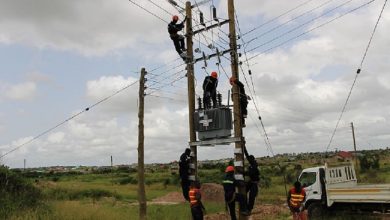
Others are financial agreement for the loan for construction of Abeid Aman Karume Aiport (Terminal III) and high power tariff from Tanzania Electricity Supply Company TANESCO to Zanzibar Electricity Corporation (ZECO).
The Minister on the other hand said that, the remaining four issues being worked upon include the distribution of revenue from the Zanzibar shares in the East African Currency Board and the Bank of Tanzania profit, recommendations of the Joint Finance Commission, motor vehicles registration and importation of sugar produced in Zanzibar into Mainland market.
“I would like to assure the Parliament that both governments are committed to work on the remaining issues and those which will arise in the future,” he said.
Earlier, Deputy Minister Office of the Vice-President, Union and Environment, Khamis Hamza Khamis told the National Assembly that the government was committed to solving the remaining issues.
“The efforts of solving the union vexes is not stuck nor has it been disrupted because until now we have succeeded to solve more issues than the ones remaining,” he said.
Mr Khamis said to date the two governments have discussed, resolved, and removed from the list of union vexes 22 issues.
He said this in response to a question posed by Same West MP David Mathayo, who wanted to know which union contentious issues have been solved and which ones remain.
Mr Khamis responded that some of the issues resolved include the costs of unloading cargo at the Dar es Salaam Port for cargo arriving from Zanzibar, as well as the exploration and extraction of oil and natural gas.
He said to discuss issues and solutions; both governments have adopted open and independent procedures for holding joint meetings conducted by the Joint Committee for dealing with Union issues.
Before the committee was formed in 2005, the government was resolving matters through various commissions and committees for investigating issues and recommending appropriate measures.
In a follow-up question, MP Mathayo asked which law was used to resolve the issue of oil and gas exploration, even though the constitution states that it is a union matter.
Responding, Mr Khamis said it was true that the exploration and extraction of oil and natural gas was a challenge and there was a time when there was tension, but due to the wisdom of leaders who manage the union and the committees dealing with resolving vexes, they reached a good place to solve this matter using the law.
According to a book on resolved union vexes available on the Vice-President’s website, on oil and natural gas exploration and extraction, there was an argument on how to share revenue from such resources when available.
After negotiations, the two governments decided to bring into play the Aberdeen University Petroleum and Economic Consultants (AUPEC) from Britain to provide technical advice on the distribution of the resource revenue.
AUPEC completed the work and proposals were submitted to the governments.
It further read that the Petroleum Act No. 21 of 2015 was enacted and gave Zanzibar the authority to establish an instrument to manage petroleum activities and natural gas issues, in September 2016, Zanzibar’s Ministry of Lands, Housing, Water and Energy formulated the Zanzibar Oil and Gas (Upstream) Policy that among other things, acknowledged the existed gap regarding manpower, legal and institutional framework.