From colonial legacy to strategic economic alliance: A new era for Africa, France
DAR ES SALAAM: THE Africa Forward Summit, recently held in Nairobi, Kenya, remains fresh in the minds of many who follow African development, investment and the evolving legacy of colonial relationships.
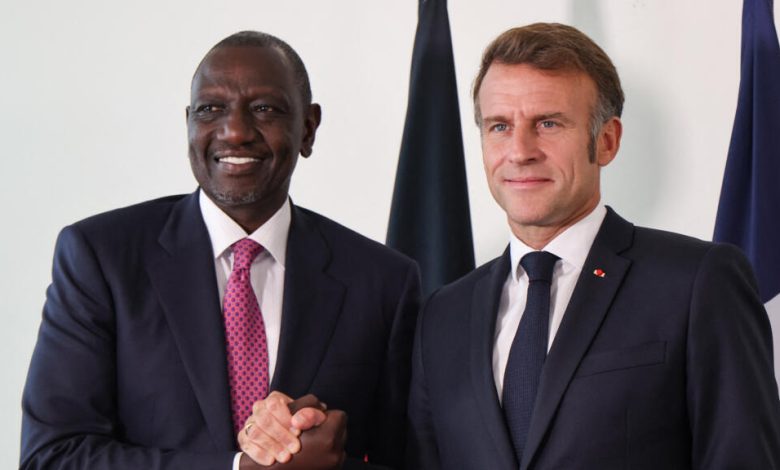
Co-hosted by French President Emmanuel Macron and Kenyan President William Ruto, the summit sought to redefine relations between France and Africa at a time when the continent is becoming increasingly influential in global economics and geopolitics.
Beyond the speeches and investment pledges, however, the summit raised a fundamental question: can France genuinely build a new partnership with Africa while overcoming the historical baggage of its colonial past?
For more than six decades since African independence, relations between France and Africa have remained among the most complex and strategically significant in international affairs.
What began as a colonial relationship evolved into political alliances, military cooperation, economic ties and, increasingly, disputes over sovereignty and influence.
The Nairobi summit was historic because it was the first major France-Africa summit to be held in a leading Anglophone African country rather than a Francophone former French colony.
The choice of Kenya was more than symbolic; it reflected France’s effort to reposition itself as a partner to the entire continent rather than only its traditional sphere of influence.
Following independence in the 1950s and 1960s, France retained significant influence across many former colonies in West and Central Africa through military agreements, economic networks, political alliances, and monetary arrangements such as the CFA franc.
This system, widely known as Françafrique, has long been criticised as a form of neo-colonialism that perpetuated dependency after formal colonial rule ended.
For decades, French governments intervened in African affairs, supported allied political elites, and protected strategic economic interests.
French companies became dominant players in sectors such as energy, mining, telecommunications, transport, and infrastructure.
While these relationships produced benefits for some countries, they also generated resentment, particularly among younger Africans who increasingly viewed them as unequal and outdated.
France was often perceived less as a development partner and more as a defender of systems that limited African autonomy.
That perception has intensified in recent years. In countries such as Mali, Burkina Faso, and Niger, military-led governments have expelled French troops and openly challenged France’s traditional role in regional security. Against this backdrop, the Nairobi summit represented more than diplomacy it was an attempt at political renewal.
President Macron openly acknowledged that France’s traditional approach to Africa was no longer sustainable. He admitted that for too long, many had viewed Africa as Europe’s “backyard” and argued that such thinking belongs to the past.
ALSO READ: PM meets Kenya’s Ruto at Africa–France Cooperation Summit opener
Throughout the summit, Macron emphasised that Africa no longer seeks charity, paternalism, or lectures from Europe. Instead, it seeks investment, partnership and opportunities for shared prosperity.
His message rested on four principles: equality, coinvestment, sovereignty and mutual strategic interests.
This represents an important shift. For decades, much of Europe’s engagement with Africa entered on aid and security cooperation.
In Nairobi, Macron presented a different vision one that sees Africa as a centre of innovation, entrepreneurship, industrialisation and technological growth.
He argued that Europe’s future prosperity and strategic resilience are increasingly linked to Africa’s success. Supporting African development, therefore, is no longer simply an act of solidarity but a shared economic interest.
The summit also produced significant investment commitments. Participants announced pledges worth approximately 23 bn Euro, including 14 bn Euro from French companies and 9 bn Euro from African investors.
Although such commitments will ultimately be judged by implementation rather than announcements, they signal a growing recognition that investment not aid must become the foundation of future cooperation.
France’s changing approach is also a response to broader transformations occurring across Africa. The continent is home to the world’s youngest population, rapidly growing cities and increasingly connected digital economies.
At the same time, African governments have diversified their international partnerships, strengthening ties with China, India, Turkey, the Gulf states and other emerging powers.
China’s growing presence has been particularly influential.
Through large-scale investments in infrastructure, mining, manufacturing and telecommunications, Beijing has reshaped Africa’s economic relationships and challenged the dominance once enjoyed by European powers.
Macron acknowledged in Nairobi that France now faces stronger competition from countries often viewed as more aggressive and commercially driven in their engagement with Africa.
At the same time, African leaders are becoming more vocal in demanding reforms to global governance, trade, and financial systems.
One of the most significant interventions at the summit came from Nigerian President Bola Tinubu, who argued that Africa does not seek charity but fairness. His remarks reflected growing frustration among African leaders regarding the structure of the international financial system.
Tinubu highlighted how many African countries continue to face excessively high borrowing costs despite strong economic potential.
Countries are frequently categorised as high-risk destinations, making access to affordable capital difficult and limiting development opportunities.
His broader message echoed a central theme of the summit: Africa’s future lies not in exporting raw materials but in industrialisation, value addition and regional economic integration.
African economies must capture a larger share of the value generated from their resources rather than exporting them for processing elsewhere.
This perspective aligns closely with Macron’s own call for Africa to become not only a source of raw materials but also a hub for manufacturing and industrial processing.
Such a transformation would create jobs, strengthen domestic industries, and accelerate economic growth. Many Africans continue to question France’s intentions.
Public discussions surrounding the summit revealed persistent skepticism, with some observers suggesting that France is merely repackaging old influence strategies under new language.
Others worry that investment-led engagement could create new forms of economic dependency if not carefully managed.
These concerns cannot be dismissed. Genuine partnership requires more than speeches and investment announcements. It requires meaningful structural change. Looking ahead, any durable Africa-France partnership must rest on several key principles.
First, economic cooperation must move beyond resource extraction toward industrialisation. Africa possesses many of the critical minerals required for the global energy transition and digital economy. Yet much of the value-added processing still occurs outside the continent.
Future cooperation should prioritise local manufacturing, technology transfer, industrial parks and stronger African participation in global supply chains. Second, reform of international finance is essential.
African countries continue to face disproportionately high borrowing costs despite significant growth opportunities.
France and its European partners can support fairer sovereign risk assessments, strengthen development finance institutions, and promote investment mechanisms that lower financing barriers.
Third, respect for sovereignty must become non-negotiable. France’s reputation in parts of Africa has been damaged by perceptions of political interference and military intervention.
Future relations must be grounded in mutual respect and recognition of African leadership in addressing the continent’s challenges.
Finally, investment in people must take priority. Africa’s greatest asset is not its minerals or natural resources but its population.
The continent’s youthful demographics represent one of the most significant economic opportunities of the twenty-first century.
Educational partnerships, research collaboration, digital infrastructure, entrepreneurship financing and skills development should form the foundation of future cooperation. Ultimately, Africa requires a relationship with France that moves beyond colonial memory without ignoring history.
The past cannot be erased, but neither should it permanently define the future. France must continue confronting difficult aspects of its colonial legacy, while African governments must seize emerging opportunities with confidence and pragmatism.
What Africa increasingly seeks is dignity, reciprocity and respect. The Africa Forward Summit may ultimately be remembered as the moment France formally acknowledged that the old era had ended. Yet declarations alone will not transform relations.
The real test will be whether investment translates into genuine partnership, whether financing becomes fairer, whether African industries grow stronger, and whether sovereignty is respected in practice rather than merely celebrated in speeches.
Africa is no longer a passive actor in global affairs. It is becoming more confident, more assertive, and more strategic.
France must adapt to this new reality as an equal partner or risk losing influence to those who recognise the continent’s changing dynamics more quickly.
The future of AfricaFrance relations will no longer be shaped exclusively in Paris. Increasingly, it will be shaped in Nairobi, Dar es Salaam, Abuja, Kigali, Lagos, Dakar, Johannesburg, and across a continent that is no longer waiting to be spoken for—but is increasingly speaking for itself.