

Foundation trains teachers to detect early autism signs
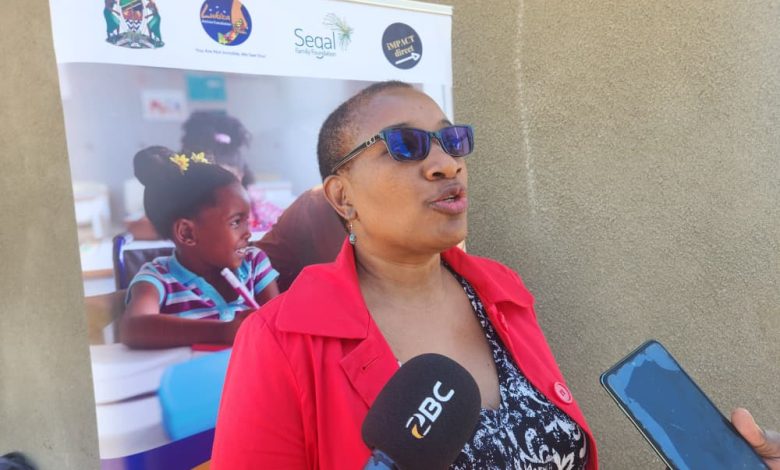
DAR ES SALAAM: THE Lukiza Autism Foundation has equipped Mwenge Primary School teachers with skills to spot red flags of autism thereby enabling them to guide and advice parents on seeking timely medical assessment.
The session, which brought together twenty teachers, is part of the Foundation’s ongoing ‘Ustawi kwa kila mtoto’ project, which aims at raising awareness and equipping pre-primary school teachers with the knowledge to recognise early signs of autism.
The training was led by Consultant Pediatric Neurologist and Senior Lecturer at Muhimbili University of Health and Allied Sciences (MUHAS), Dr Edward Kija.
Speaking after the training, Dr Kija said that teachers play a critical role in spotting developmental challenges since schools are often the first environment where such issues become evident.
“Teachers are the first line of support for many children. If they can recognise the red flags of autism early, they can advise parents to seek assessment at health facilities. This early intervention gives children a better chance of learning and developing effectively,” he said.
Dr Kija said that the training guided teachers to observe three key developmental areas where early signs of autism may appear including speech and language development, non-verbal communication, and social interaction.
“On speech and language, a two-year-old child is expected to recognise their name and follow simple instructions such as “sit down,” “go outside,” or “close the door.” Children with autism may fail to respond or respond inconsistently,” he said.
He added, “By the age of two, a child should have at least 100 words and begin joining words together. Failure to speak or combine words by this age is a red flag.”
On non-verbal communication, Dr Kija said that children naturally use gestures to communicate, such as waving goodbye, pointing at objects or offering a handshake. “If a child over the age of two does not use these gestures, this is also a red flag,” he said.
Also on social interaction, he said children usually seek to play and interact with their peers, but children with autism often prefer to play alone, isolate themselves or remain near others without engaging in joint play.
“This is another red flag teachers should pay attention to,” he said.
Dr Kija further urged teachers to advise parents to take children showing such signs to health facilities for assessment.
He stressed that international research consistently shows early detection and timely therapy greatly improve communication skills, learning, and social behaviours in children with autism.
ALSO READ: Government calls for anti-autism measures
On her part, the Foundation Founder and Executive Director, Hilda Nkabe, said the education provided by the foundation will enable teachers to support a child better so they can receive an education according to their ability.
“Teachers have the opportunity to understand that a child might have a developmental challenge. Therefore, the education they receive enables them to support the child better so that the child can receive an education according to their ability,” she said.


509416 53887Wow, cool post. Id like to write like this too – taking time and real effort to make a very good article but I procrastinate too much and never seem to get started. Thanks though. 970372