

Failing to understand gold means failing to understand money
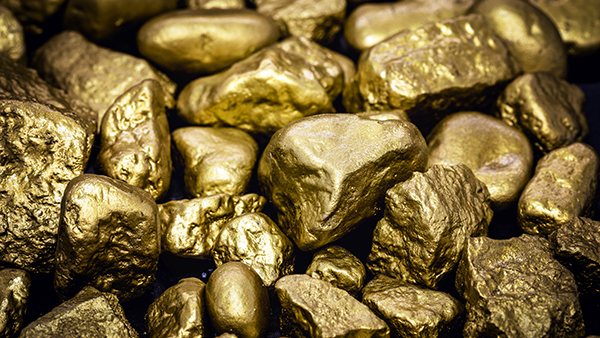
DAR ES SALAAM: WHY the world’s oldest metal of value remains vital for economic prosperity. Gold, still a major source of forex earnings in Tanzania, is more than just a precious metal; it embodies the true worth of money and carries the heart of economic stability.
For millennia, civilisations have risen and fallen, empires have expanded and collapsed and currencies have come and gone.
Yet one asset has remained remarkably stable gold. Even before the advent of paper money, cryptocurrencies, or digital payments, gold was widely regarded as humanity’s universal store of value.
Gold historically financed kingdoms, supported international trade, protected family wealth and formed the backbone of global monetary systems.
Nowadays, many see gold simply as jewelry or an investment, overlooking its deeper importance. The truth is, without understanding gold, we cannot truly grasp the concept of money and by extension, how economies generate, sustain, or wipe out wealth.
A common misconception in modern finance is thinking of gold as just another investment like stocks, bonds, or real estate.
Unlike these assets, gold does not pay dividends, interest, or rental income. It does not generate cash flows or corporate earnings.
Instead, gold serves a much more basic economic role. Gold serves as a store of value and a benchmark for assessing the purchasing power of different currencies.
Its purpose is not to create wealth on its own but to preserve purchasing power when currencies weaken.
Understanding this distinction is essential because it shapes perceptions of inflation, monetary policy and overall financial stability among individuals, investors and governments.
History provides strong evidence of gold’s special role in money. In simplified terms, nearly 2,000 years ago, a Roman centurion earned about one ounce of gold per month.
That ounce could buy a high quality Italian suit, leather sandals and a fine belt similar to an upper-class wardrobe.
Today, one ounce of gold can still buy a premium suit, quality shoes and accessories. This consistency is not due to gold becoming more valuable; instead, it reflects how paper currencies have gradually lost purchasing power over centuries. Gold has maintained what money was originally meant to preserve value across generations.
This historical consistency reveals a common misconception in economics, and here is where those serving at the central bank need to understand well: Inflation is not just about prices increasing but primarily about money losing its value.
When governments increase the money supply more rapidly than economic output, each unit of currency can buy less.
Prices seem to go up, but the real issue is the drop in money’s purchasing power. Gold itself is not causing inflation; it merely uncovers it.
A rapid increase in gold prices in paper currency usually indicates waning confidence in the currency rather than any abrupt change in gold.
ALSO READ: Tanzania seizes 4,402.20g of gold worth 1.2bn/- from smugglers
The turning point in modern monetary history came in 1971, when the United States ended the convertibility of the US dollar into gold, thereby terminating the Bretton Woods monetary system.
Before then, currencies were indirectly linked to gold, which imposed discipline on governments because excessive money creation required corresponding gold reserves.
Once this link was severed, currencies became fiat money, money whose value depends primarily on public confidence and government authority rather than on a tangible asset.
Fiat currencies have undoubtedly enabled governments to respond quickly to financial crises, recessions, pandemics and wars. They provide flexibility that rigid gold standards could never offer.
However, this flexibility also introduces temptation. Governments often cover expanding fiscal deficits by borrowing and increasing the money supply instead of relying on productivity improvements or higher tax revenues.
Over time, continuous money creation erodes purchasing power, especially if economic output does not grow in tandem.
Although many people might not notice immediately, they will eventually experience the impact through higher expenses for food, housing, healthcare and education, along with decreasing real wages.
This gradual decline in purchasing power is one of the biggest hidden wealth transfers in modern economies.
Savers with cash see their purchasing power diminish annually, whereas those owning appreciating assets like real estate, stocks and gold tend to perform significantly better. To non-economists, inflation functions as an invisible tax, hitting middle-income households and those on fixed salaries or pensions the hardest.
Understanding gold helps people see this silent wealth transfer. Perhaps the strongest proof of gold’s lasting importance is not from gold enthusiasts but from central banks.
Recently, central banks globally have been accumulating recordbreaking gold reserves, and Tanzania is a part of this trend.
Countries such as China, India, Turkey, Poland, Kazakhstan and other emerging economies have significantly boosted their gold reserves.
Their behaviours reveal more than their official declarations. If gold were genuinely outdated, why would central banks and similar institutions keep acquiring it in record amounts? The motivations are driven by strategic reasons rather than sentiment.
One, gold offers diversification beyond heavy reliance on the US dollar. Two, unlike foreign currency reserves, physical gold cannot be frozen by foreign governments or impacted by geopolitical sanctions.
Three, gold acts as a safeguard against increasing sovereign debt, fiscal imbalances and long-term currency depreciation.
In today’s increasingly fragmented geopolitical environment, monetary independence has become a vital national asset, with gold playing a key role in supporting that independence.
These developments offer valuable insights for developing economies such as Tanzania. Gold should not be solely viewed as an export commodity generating foreign exchange.
Despite Tanzania being among Africa’s leading gold producers, the national discussion mainly focuses on mining revenues, royalties and export figures, rather than exploring gold’s broader importance in the country’s monetary stability.
Policymakers should recognise that gold bolsters reserve adequacy, boosts investor confidence, enhances a country’s creditworthiness and offers resilience in times of global financial shocks.
For Tanzania, unlocking the full potential of gold means shifting focus from mere extraction to activities like value addition, refining, trading and strategic reserve management.
Building a strong local precious metals market, enhancing gold refining capabilities, promoting transparent trading platforms and fostering responsible small-scale mining could turn gold into a key element of long-term economic resilience.
In Tanzania, gold should be regarded not just as a mineral resource but also as a crucial financial asset that supports macroeconomic stability.
The private sector also has significant lessons to learn. Many households rely solely on cash savings, buying units from institutions such as UTT and the like, not realising that inflation slowly erodes their value.
Businesses frequently underestimate inflation’s impact on working capital, investments and long-term profits.
Financial literacy programmes should explain the connections between money creation, inflation, interest rates, exchange rates and gold.
An informed society can make better decisions regarding saving, borrowing and investing.
This does not mean that all investors should accumulate large amounts of gold or stop investing in productive ventures.
Economic growth mainly stems from entrepreneurship, innovation, infrastructure, education, manufacturing and technology, not from hoarding precious metals.
ALSO READ: Tanzania strikes gold at GGML mine as 80 percent of its leaders are Tanzanians
While businesses create wealth by producing goods and adding value, gold primarily serves to preserve existing wealth.
These functions complement each other rather than compete. Economies require productive investments for growth and stable money to sustain that growth’s value.
The biggest risk is misunderstanding gold’s role entirely. People who see it as just an old relic overlook millennia of monetary history.
On the other hand, those who think gold alone can create prosperity neglect the significance of productive enterprise and innovation.
A balanced view sees gold as a monetary anchor, while productive assets drive economic growth. Ultimately, all societies rely on trust in institutions, governments, financial systems and currencies.
Gold has lasted over five thousand years because it is not dependent on political promises, election results, or central bank policies.
Its scarcity cannot be legislated or printed into existence. It subtly gauges the strength of monetary systems by maintaining purchasing power when confidence in paper money declines. The key policy takeaway is very simple.
As the global economy faces increasing debt, ongoing inflation, geopolitical conflicts and changing monetary policies, gold remains a key financial indicator, guiding nations through uncertainty.
Countries that recognise this fact are more likely to maintain stability, shield household assets and develop robust financial systems.
Conversely, neglecting this understanding could lead to misconceptions about gold and the fundamental nature of money.
The lesson remains timeless and more applicable today: Gold’s worth is not solely because it shines; instead, it highlights the value of everything else.
Knowing about gold helps us understand money, which is essential for comprehending the basics of strong and resilient economies.



It’s a pity you don’t have a donate button! I’d definitely donate to this brilliant blog! I suppose for now i’ll settle for book-marking and adding your RSS feed to my Google account. I look forward to brand new updates and will talk about this blog with my Facebook group. Talk soon!
Somebody essentially help to make seriously posts I would state. This is the very first time I frequented your website page and thus far? I surprised with the research you made to create this particular publish extraordinary. Great job!
This really answered my problem, thank you!
I like this post, enjoyed this one appreciate it for posting.
This is a very good tips especially to those new to blogosphere, brief and accurate information… Thanks for sharing this one. A must read article.
I have recently started a blog, the information you provide on this site has helped me tremendously. Thank you for all of your time & work. “The only winner in the War of 1812 was Tchaikovsky” by Solomon Short.
I have learn some good stuff here. Definitely worth bookmarking for revisiting. I wonder how so much attempt you set to create one of these magnificent informative site.
강릉출장안마로 장거리 출장이나 여행의 피로를 풀어보세요. 강릉 전 지역 어디든 찾아가는 전문 아로마 마사지·스포츠 마사지 서비스를 제공합니다. 비즈니스 출장객, 관광객, 강릉 지역 주민 모두 편리하게 이용할 수 있는 강릉출장안마 서비스입니다. 지금 문의하세요.
You really make it seem so easy with your presentation but I find this matter to be actually something which I think I would never understand. It seems too complex and extremely broad for me. I am looking forward for your next post, I’ll try to get the hang of it!
Well I sincerely liked studying it. This information provided by you is very constructive for correct planning.
Only wanna input on few general things, The website style is perfect, the written content is really wonderful : D.
Hi, i think that i saw you visited my site so i got here to “go back the favor”.I am attempting to in finding things to enhance my web site!I suppose its adequate to use a few of your ideas!!
certainly like your website but you have to check the spelling on several of your posts. Several of them are rife with spelling problems and I find it very bothersome to tell the truth nevertheless I’ll surely come back again.
I’ve been absent for a while, but now I remember why I used to love this blog. Thanks, I’ll try and check back more frequently. How frequently you update your website?
Real superb info can be found on weblog.
Great beat ! I wish to apprentice even as you amend your web site, how could i subscribe for a blog site? The account aided me a appropriate deal. I have been tiny bit acquainted of this your broadcast offered vibrant transparent concept
I believe you have noted some very interesting points, thanks for the post.
I like what you guys are up also. Such smart work and reporting! Carry on the excellent works guys I’ve incorporated you guys to my blogroll. I think it will improve the value of my website 🙂
Really Appreciate this post, is there any way I can get an email every time you publish a fresh post?