Experts call for urgent action as BBTD spreads across seven regions
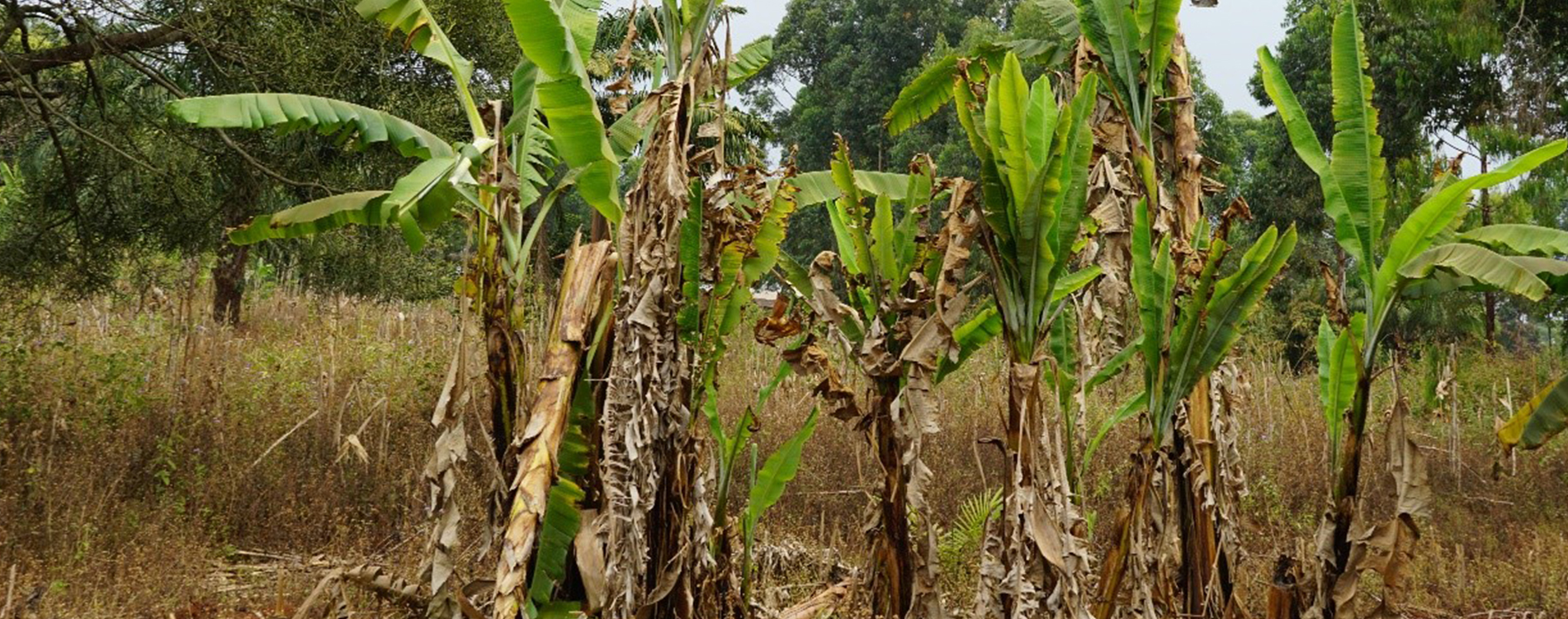
MOSHI: A DEADLY banana disease, Banana Bunchy Top Disease (BBTD), has been identified spreading in some regions of Tanzania, raising alarms among experts and posing a significant threat to the nation’s food security.
A plant pathologist at the International Institute of Tropical Agriculture (IITA) Moshi, George Mahuku, confirmed that the disease, which has no cure, has been detected in seven regions ravaging banana plantations.
The only solution is to uproot and destroy infected plants Through farmer learning events, IITA is educating farmers on proper preventive measures, including cultural practices to help curb the disease’s spread.
“We have no treatment for the disease, so the only option is to adopt the principle of ‘prevention is better than cure,” Mr Mahuku said.He emphasised that just like many viral diseases, BBTD has no available preventive treatments such as herbicides or pesticides.
The BBTD, a viral disease that has been present in Egypt, Burundi and the Democratic Republic of Congo (DRC), is now severely impacting banana production in Tanzania.
The 145-year-old disease threatens the country’s agricultural sector, food security and the livelihoods of millions of smallholder farmers.
Mr Mahuku explained that the disease spreads primarily through the transplanting of infected plantains from affected areas and by small sap-sucking insects called aphids.
He emphasized that the only effective solution is to destroy all affected plants, clear the fields and wait for at least three months before replanting with crops that have been approved by agricultural experts and recognized institutions.
“The only solution is to uproot all affected plantains, clear the farms and wait for three months before introducing new, expert-approved crops,” Mr Mahuku said.
Speaking during a visit to several farms in Moshi, an expert researcher from the Tanzania Plant Health and Pesticides Authority (TPHPA), Mr Hamadi Lyimo said that the disease was first detected in Buhigwe District, Kigoma Region, in 2020, along the shores of Lake Tanganyika in the western part of the country.
ALSO READ: IITA to help farmers combat new banana disease
He said the disease likely crossed into Tanzania from Burundi, where it had already affected farms after spreading from the DRC, where it was first detected in the 1960s.
By 2021, the disease had spread to Northern Tanzania, affecting banana crops in Moshi urban and rural districts of Kilimanjaro.
It then spread to other mainland regions, including Dar es Salaam, Coast, Morogoro, Mbeya, Kigoma, Mwanza and even areas in Dodoma where banana plantations are sparse.
The extension officer for Ng’ambo and Msalanga wards in Moshi District, Mr Sufiani Mganga explained that before the disease outbreak, farms in these areas produced over 6 tonnes of bananas per year.
He said with BBTD attack, the banana production has plummeted to less than half a tonne. “This explains why banana prices have been soaring, much to the surprise and frustration of consumers,” Mr Mganga explained.
Mr Mganga said the greatest challenge at the moment is to convince farmers to uproot their infected plantains.
“Farmers rely on their crops for both food and income, but delaying action will only worsen the situation. If the disease is not controlled, the entire crop could be wiped out in Kilimanjaro,” he warned.
One local farmer, Allen William from Ng’ambo, whose entire banana plantation was destroyed by the disease, said he has encouraged his neighbours to also uproot their plants to prevent further spread.
The BBTD was first identified in Fiji in 1879, later spreading to Egypt around 1900, and then to Sri Lanka and Australia by 1913. In East Africa, the disease began in the DRC in the 1960s, before spreading to Burundi and crossing Lake Tanganyika into Kigoma in 2020.