Experts call for innovative financing to unlock fisheries potential
DAR ES SALAAM: FINANCING the fisheries sector requires innovative solutions beyond conventional bank loans to address the unique needs and risks facing fishers, fish farmers, traders, processors and other players across the value chain, experts have said.
They said financial institutions should consider asset-based financing, working capital, digital financial services, insurance, guarantees, group lending and value-chain financing to widen access to capital, particularly for women and youth.
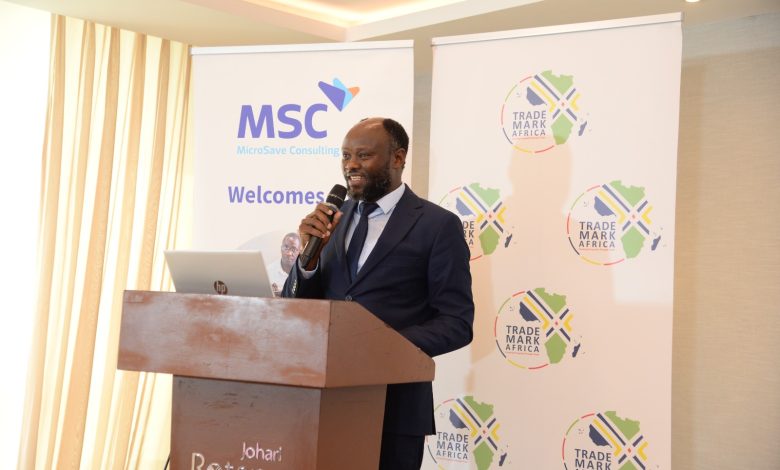
The experts made the remarks in Dar es Salaam today at a workshop on knowledge dissemination and financial partnerships to support Tanzania’s fisheries value chain.
The workshop was held under the Women and Youth Economic Empowerment in Fisheries through Inclusive Market Access (WYEEFIMA) programme, implemented by TradeMark Africa (TMA) and the African Continental Free Trade Area (AfCFTA) Secretariat in partnership with the Mastercard Foundation.
TMA Country Director Elibariki Shammy said the fisheries sector should be viewed as a broad economic ecosystem involving input suppliers, fishers, fish farmers, aggregators, traders, transporters and processors.
“It is about business, jobs, food security, trade, investment and livelihoods,” he said, stressing the importance of ensuring that financing solutions reflect the realities of businesses operating across the entire value chain.
Mr Shammy said fisheries businesses could be seasonal and vulnerable to climate change, fluctuations in fish stocks and market conditions, while many small enterprises lacked adequate financial records and collateral.
“These are some of the reasons financial institutions may perceive the sector as risky,” he said, calling for candid discussions between financial institutions and fisheries stakeholders to develop practical solutions.
He said the sector needed a combination of financing products, including working capital and asset financing, digital financial services, insurance, guarantees and value-chain financing.
Zanzibar Ministry of Blue Economy Director of Fisheries Development Musa Ramadhani Said argued that there was a need to link fisheries stakeholders with financial institutions and develop financing mechanisms that considered the assets and circumstances of fishers.
He said improving production capacity alone was insufficient unless stakeholders could also access processing facilities and lucrative domestic and international markets.
Mr Said called for stronger collaboration among the government, financial institutions and private-sector players to create an enabling environment for fisheries businesses.
Director of Aquaculture Development at the Ministry of Livestock and Fisheries (mainland), Dr Nazael Madala, said the fisheries sector presented significant economic opportunities, noting that it currently contributed 2.2 per cent to national income and was growing by about 6.2 per cent.
He said about 6.5 million people, equivalent to roughly 10 per cent of Tanzanians, were directly or indirectly involved in fisheries-related activities.
Dr Madala said limited access to finance remained among the major challenges preventing the sector from reaching its full potential.
He said the government had begun working with financial institutions to provide more accessible financing, citing a programme launched by President Dr Samia Suluhu Hassan in Mwanza in 2024 to support cage fish farming.
Under the programme, he said, borrowers could access financing without the hard collateral traditionally required by banks.
He said the approach had demonstrated that people without conventional collateral could successfully undertake fisheries businesses when provided with appropriate financial support.
Dr Madala said some financial institutions had since established dedicated services for fisheries and fish farming, encouraging more lenders to expand such products.
He also urged financiers to consider the entire value chain, from production and storage to transportation, markets and insurance, rather than financing individual activities.
WYEEFIMA Programme Manager for Access to Finance at Microsave Consulting Company, Ms Elizabeth Gathu, said the programme would explore group guarantees through cooperatives and associations because many participants lacked conventional collateral required to access financial products.
She said the initiative would also promote credit financing and micro-insurance to address weather- and climate-related risks facing fisheries businesses.