

Energy poverty needs urgent action -Ndejembi
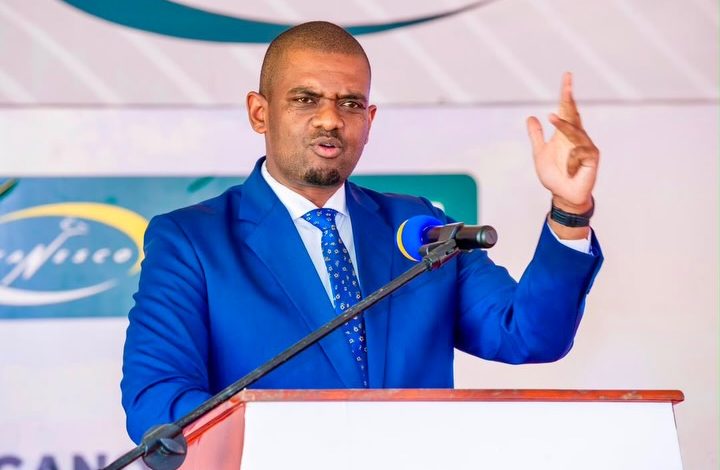
DAR ES SALAAM: MINISTER for Energy, Deogratius Ndejembi has urged African countries to prioritise clean cooking and rural electrification, warning that energy poverty has evolved into a major public health, environmental and economic challenge requiring urgent action.
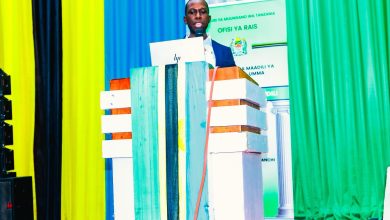
Speaking yesterday during a high-level dialogue held on the sidelines of the ongoing Africa50 General Shareholders’ Meeting (GSM) and Infra for Africa Forum in Dar es Salaam, Mr Ndejembi said millions of Africans still depend on traditional cooking fuels such as charcoal, firewood and kerosene, exposing households, particularly women and children, to harmful indoor air pollution and serious health risks.
The dialogue examined how Africa can utilise its vast natural gas reserves to expand energy access, power industries, strengthen regional integration and promote sustainable economic growth.
“Clean cooking is no longer a topic that needs to take time. It is an urgent development priority. It is not just an energy issue, but also a public health, environmental, gender equality and economic development issue,” he said.
The dialogue examined how Africa can utilise its vast natural gas reserves to expand energy access, power industries, strengthen regional integration and promote sustainable economic growth.
Mr Ndejembi said about 2.1 billion people worldwide still lack access to clean cooking fuels, with nearly one billion of them living in Africa, most in Sub-Saharan Africa.
He said Tanzania has made significant progress, increasing access to clean cooking from about six per cent before 2021 to approximately 28 per cent currently, largely through government initiatives that have expanded the availability of Liquefied Petroleum Gas (LPG).
ALSO READ: Youths and clean cooking: The missing link in Africa’s Energy Future
Annual LPG imports have now reached about 459,000 metric tonnes. Despite the gains, he acknowledged that seven out of every 10 Tanzanian households still rely on charcoal for cooking.
“There is still immense work ahead,” he said, noting that expanding clean cooking would reduce household air pollution, protect the environment, improve public health and enhance the quality of life, especially for women.
Nigeria’s Minister of State for Petroleum Resources (Gas), Ekperikpe Ekpo, said his country aims to transition five million households from charcoal and other high-emission cooking fuels to Liquefied Petroleum Gas (LPG) by 2030.
“In Nigeria, under the direction of President Bola Ahmed Tinubu, our target is to move five million homes from charcoal and heavy-emission sources to clean cooking LPG by 2030,” he said.
Mr Ekpo said the government is distributing 27,000 filled LPG cylinders in each state, together with six guaranteed refills, to help low-income households adopt cleaner cooking technologies while improving public health and reducing environmental degradation.
It really makes you think about how foundational energy access is to so many aspects of life, from health to economic development. It’s fascinating to see how different countries are tackling it. Lately, I’ve been playing a game called Infinite Craft , just to see how wild the crafting combinations can get-like combining random elements to create something totally unexpected, kind of like how they’re trying to combine natural resources with innovative solutions for clean energy. It’s cool to think about how creativity plays a role even in serious global challenges. What other overlooked factors do you think play a significant role in achieving widespread clean energy access?