Empowered women leaders hold key to Zanzibar’s inclusive democratic future, sustainable development
ZANZIBAR: ON a warm morning in Zanzibar, 24-year-old Amina Mohamed Omar quietly settles into her seat inside a lecture room at Zanzibar University (ZU), notebook in hand and determination written across her face.
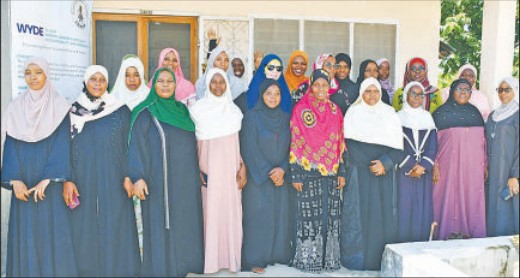
Around her are dozens of women from different backgrounds, each sharing a common purpose—to learn, grow and prepare themselves for leadership.
For Amina, the occasion represents much more than attending another training session. For years, she has watched important decisions affecting her community being made by others, despite those decisions shaping her own future and the future of countless women. Like many women in Zanzibar, she has rarely had the opportunity to participate in the rooms where policies are discussed and decisions are reached.
Now, however, that reality could begin to change. Amina is among the first beneficiaries of the Women Leaders for Equality, Accountability and Democracy (W-LEAD) programme, a new initiative launched by the Tanzania Media Women’s Association, Zanzibar (TAMWA-ZNZ).
The programme seeks to equip women with the knowledge, confidence and practical experience needed to take up leadership positions and become active participants in democratic governance. Her story mirrors the experiences of many women across Zanzibar. Although women account for approximately 51 per cent of the population, they occupy only 38 per cent of leadership positions.
This gap reflects longstanding social, cultural and economic challenges that have historically restricted women’s access to leadership opportunities. Through the W-LEAD programme, TAMWA-ZNZ aims to address these barriers by creating opportunities that encourage more women to participate meaningfully in decision-making processes at every level.
According to TAMWA-ZNZ Director, Ms Nairat Abdulla Ali, the programme is designed to strengthen women’s confidence while providing them with practical leadership skills and opportunities. She explained that the initiative is intended not only to encourage women to participate in leadership but also to empower them to influence decisions affecting their communities and the nation.
The programme will provide specialised leadership and governance training to 100 women across Zanzibar. Participants will receive practical knowledge in civic engagement, accountability, governance and public leadership, enabling them to better understand democratic processes and prepare themselves for leadership responsibilities.
In addition to classroom learning, the programme places considerable emphasis on practical experience. Sixty young women will be attached to public institutions, private organisations and civil society organisations where they will gain first-hand exposure to leadership, administration and governance.
For many participants, these placements will provide valuable opportunities that have previously been unavailable. For Amina, the significance extends beyond acquiring new knowledge.
She says she has always wanted to contribute meaningfully to her community but often lacked the opportunity to make her voice heard. Through W-LEAD, she now believes she has the chance not only to express her ideas but also to participate in shaping decisions that affect people’s lives.
One of the programme’s distinguishing features is its commitment to inclusion. Women with disabilities, who frequently face multiple forms of exclusion, are being deliberately included to ensure they receive equal opportunities to develop leadership skills and participate fully in public life.
TAMWA-ZNZ believes that strengthening women’s participation in leadership is not simply about achieving gender equality.
ALSO READ: Preparing Tanzania’s youths for the age of Artificial Intelligence
The organisation views inclusive leadership as an essential ingredient for stronger institutions, improved governance and sustainable national development. The initiative also aligns with major international and regional commitments promoting gender equality.
These include the Maputo Protocol of 2003 and Africa Agenda 2063, both of which advocate equal participation of women and men in leadership and decision-making, with the long-term objective of achieving 50- 50 representation. Ms Ali has also called upon educators to become active partners in nurturing future women leaders.
She believes teachers and university lecturers occupy influential positions that enable them to inspire female students to view leadership as an attainable goal rather than believing such positions belong exclusively to men.
Supporting this perspective, Zanzibar University Gender Desk Coordinator, Saidi Sleiman Ali, emphasised the importance of effectively implementing the proposed leadership curriculum within institutions of higher learning. He noted that universities require deliberate strategies that prepare women for leadership responsibilities while encouraging greater participation in elections for parliamentary, political and other public offices.
Women’s rights expert and former TAMWA Zanzibar Director, Dr Mzuri Issa Ali, believes the programme’s greatest contribution may be its ability to transform public perceptions about women in leadership.
She explained that empowering women while they are still pursuing university education enables them to build confidence and acquire skills before entering wider society. Such preparation can gradually reshape longstanding attitudes regarding women’s leadership capabilities.
An important component of WLEAD involves developing a specialised leadership curriculum that will eventually be introduced within universities. The curriculum will be developed collaboratively through consultations involving teachers, lecturers, university administrators and students.
This participatory approach aims to ensure that the content reflects the practical realities, challenges and opportunities facing aspiring women leaders. Dr Mzuri believes this inclusive development process will help dismantle stereotypes that have discouraged women from pursuing leadership positions for many years. Students themselves are also advocating practical learning approaches.
Salam Saleh, a student at Zanzibar University, believes leadership education should extend beyond theoretical classroom instruction. She argues that discussions, leadership simulations, practical exercises and active participation will better prepare students by building confidence, strengthening communication skills and providing valuable experience before assuming leadership roles.
While developing individual leadership capacity remains central to WLEAD, the programme also seeks to create wider institutional and societal change. Through extensive gender equality awareness campaigns, the initiative aims to reach more than 100,000 people across Zanzibar, encouraging communities to embrace equal participation of women and men in leadership and governance.
ALSO READ: Police recover seven stolen motorcycles
The programme will further strengthen five civil society organisations and three political parties by supporting the adoption of gender-responsive policies that promote greater inclusivity. In addition, sixty women’s rights advocates will receive specialised training to monitor and respond effectively to cases of gender-based violence, recognising that safe environments are essential for women’s meaningful participation in public life.
Recognising the important role played by the media in shaping public opinion, TAMWA Zanzibar will also train thirty journalists to report professionally and responsibly on issues relating to women’s leadership. Improved media coverage is expected to sustain public discussion while highlighting achievements, challenges and opportunities associated with women’s participation in leadership.
The W-LEAD programme is being implemented through a partnership involving TAMWA Zanzibar, the Zanzibar National Association of the Blind (ZANAB), the State University of Zanzibar (SUZA) and Zanzibar University. Financial support is being provided by the European Union under the Women and Youth Democratic Engagement (WYDE) programme, with implementation scheduled to run from 2026 until 2027.
At the heart of W-LEAD lies a clear vision: building a Zanzibar where women and men participate equally in shaping democratic, accountable and inclusive societies. As Zanzibar continues progressing socially, economically and politically, initiatives such as W-LEAD represent more than another development programme.
They signify growing recognition that sustainable development depends upon ensuring every capable citizen, regardless of gender or disability, has an equal opportunity to contribute to leadership and decision-making.
For women like Amina Mohamed Omar, the programme marks the beginning of a new chapter. It offers hope that future generations of women will no longer observe leadership from the sidelines but will confidently occupy seats at decision-making tables, helping shape policies, strengthen democratic institutions and contribute to building a more inclusive, balanced and progressive Zanzibar for everyone.