EAC, UN agencies plan structured partnership for regional development
ARUSHA: THE East African Community (EAC) and four United Nations agencies have agreed to establish a structured partnership framework to strengthen coordination and joint action on regional health and development priorities.
The proposed framework is expected to provide a coordinated mechanism for aligning regional priorities with practical interventions aimed at improving the health, livelihoods and wellbeing of East Africans.
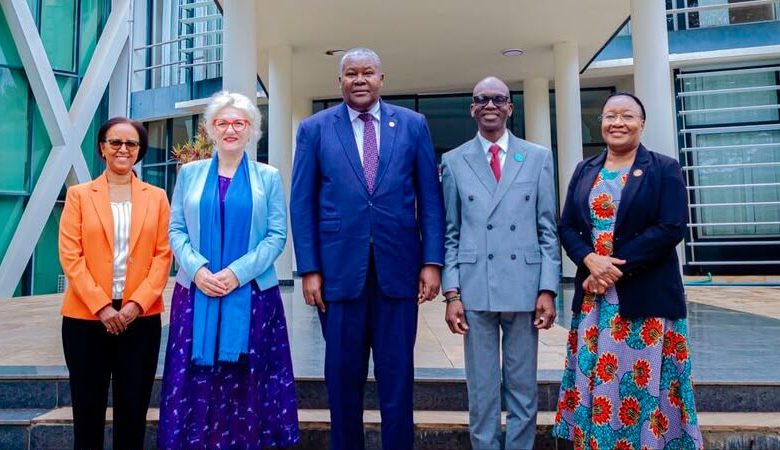
The agreement was reached during a recent high-level meeting between the EAC Secretary General, Ambassador Stephen Mbundi, and senior officials from the Joint United Nations Programme on HIV/ AIDS (UNAIDS), United Nations Population Fund (UNFPA), United Nations Children’s Fund (UNICEF) and World Health Organisation (WHO) at the EAC headquarters in Arusha.
The UN delegation was led by UNFPA Regional Director for Eastern and Southern Africa Lydia Zigomo and included WHO Regional Director for Africa Dr Mohamed Yakub Janabi, UNICEF Regional Director for Eastern and Southern Africa Etleva Kadilli and UNAIDS Deputy Regional Director for Eastern and Southern Africa Medhin Tsehaiu.
Welcoming the delegation, Amb Mbundi commended the longstanding cooperation between EAC Organs and Institutions and the UN agencies.
He said the proposed framework would consolidate existing areas of cooperation, improve regional coordination and support more coherent action on issues affecting the lives and livelihoods of people across East Africa.
Amb Mbundi stressed the need to formalise the partnership through a Memorandum of Understanding (MoU) that would clearly define the areas of cooperation and provide a framework for implementation.
He directed the EAC and the UN agencies to fast-track preparations, with the framework expected to be completed within three months.
The Secretary-General also underscored the importance of increasing public awareness of the EAC integration process and demonstrating its practical benefits to citizens.
He said regional cooperation should ultimately be reflected in tangible improvements in people’s lives and livelihoods.
Health and human capital development emerged as key areas for strengthened cooperation during the meeting.
ALSO READ: EAC inflation eases but underlying pressures persist
The participants highlighted the need for sustained investment in reproductive, maternal, newborn, child and adolescent health (RMNCAH), HIV prevention and response, gender equality, adolescent and youth health and universal health coverage (UHC).
They said such investment was essential to strengthening human capital and enabling East Africa to harness the potential of its predominantly young population.
The meeting also stressed the importance of sustainable financing and supportive legal and policy frameworks in improving health outcomes and promoting inclusive development.
The four UN agencies reaffirmed their commitment to working with the EAC and Partner States to protect and build on progress already made in RMNCAH, HIV, UHC, gender and adolescent and youth health.
The EAC and the agencies have previously collaborated in strengthening regional coordination in these areas through initiatives including regional forums on RMNCAH, HIV and health data management.
The partners have also supported the development of regional minimum standards for integrated RMNCAH and HIV services.
The proposed partnership framework is expected to build on these initiatives by providing a more coordinated platform through which the EAC, UN agencies and Partner States can align their efforts, strengthen regional capacity and translate agreed priorities into practical programmes.
The initiative also comes as the EAC seeks to deepen regional integration by ensuring that cooperation at the regional level delivers measurable benefits in health, human capital development and other areas directly affecting citizens.
If finalised as planned, the framework will provide a clearer basis for sustained collaboration between the EAC and the four UN agencies while helping Partner States coordinate interventions around shared regional priorities.