DUCE, Trinity College Dublin launch book to advance gender-inclusive higher education
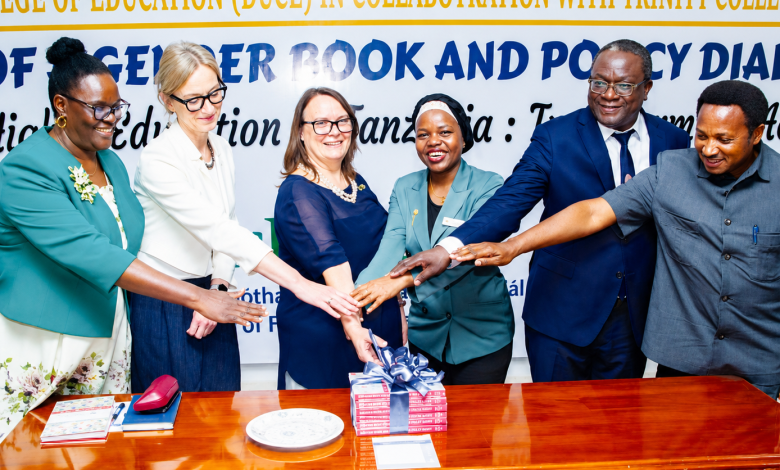
DAR ES SALAAM: DAR ES SALAAM University College of Education (DUCE) and Trinity College Dublin (TCD) have launched a new book and policy dialogue aimed at advancing gender-inclusive higher education in Tanzania, marking another step towards creating academic institutions where all students and staff can participate and succeed equally.
The publication, titled GenderInclusive Higher Education in Tanzania: Transforming Academia, examines key issues surrounding gender equality within universities and explores practical approaches for institutional transformation. It addresses themes including gender equality, leadership, the impact of COVID-19 on higher education, African perspectives on gender, lessons from the Gender Awareness and Transformation through Education (GATE) project, gender-responsive pedagogy and strategies for creating more inclusive academic environments.
Funded by Irish Aid, the book is among the major outputs of the GATE project, a Tanzania-Ireland partnership focused on strengthening gender equality, research capacity, leadership development and transformative practices within higher learning institutions. The book launch and policy dialogue, held recently at the DUCE campus in Dar es Salaam, brought together education stakeholders, researchers, policymakers and representatives from partner institutions.
The event was officiated by Helen Counihan, Head of Development Cooperation at the Embassy of Ireland in Tanzania, who represented Ireland’s Ambassador to Tanzania, Nicole Brennan.
Speaking during the launch, Counihan emphasised that gender inclusion in higher education is essential for developing leaders who understand the importance of equality and respect gender balance in society.
She said the publication provides practical analysis of gender-related challenges affecting education institutions while presenting policy recommendations that can support meaningful social change in Tanzania and beyond.
“The book offers practical analysis of gender issues in education institutions and policy recommendations that can help drive social change in Tanzania and beyond,” Counihan said.
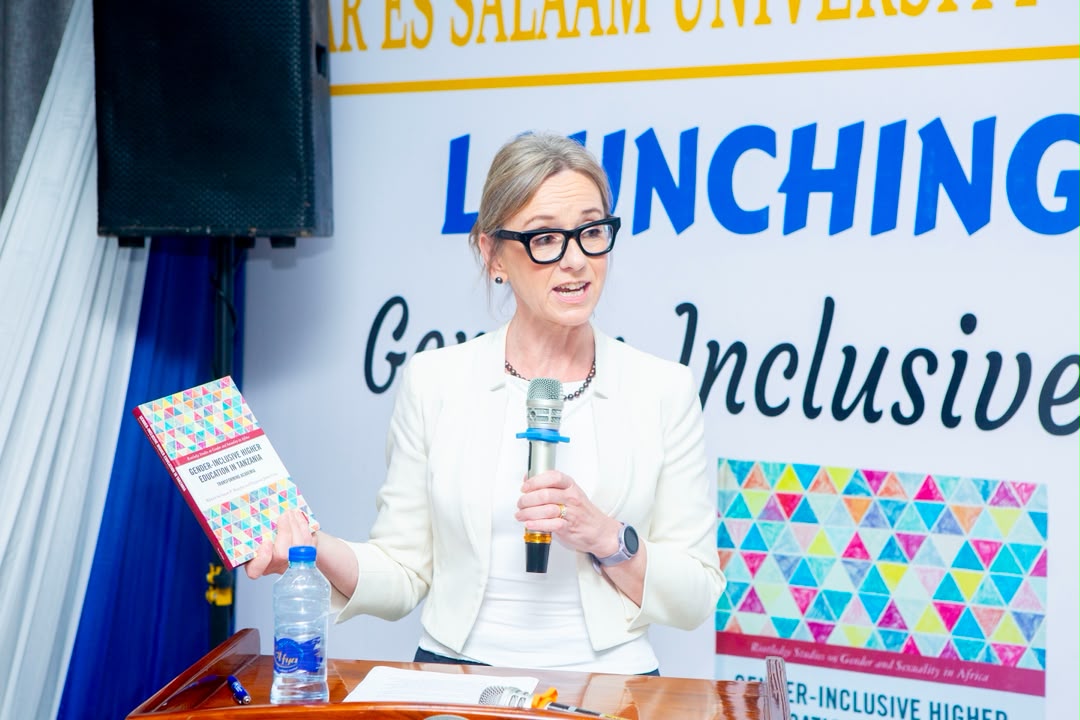
She added that the publication would serve as a valuable resource for researchers, policymakers and professionals involved in gender studies, education and African studies.
Counihan commended DUCE, Trinity College Dublin and the 14 Tanzanian universities that contributed experiences and knowledge to the book, describing the collaboration as a strong example of partnership and shared commitment towards improving higher education.
According to her, universities are important spaces for promoting gender equality because they influence the attitudes, knowledge and leadership values of future generations.
She noted that the GATE project had achieved more than producing the publication, as it had also contributed to generating knowledge needed to address persistent gender inequalities within academic institutions.
“Universities are key spaces for promoting gender equality,” Counihan said, adding that teacher training colleges have a particularly important responsibility because they shape the attitudes and values of future teachers.
She explained that teachers trained with a strong understanding of gender equality can influence classrooms and communities by promoting fairness, respect and equal opportunities among learners.
Counihan also highlighted DUCE’s Gender Research Centre as one of the significant achievements of the GATE programme. She said the centre, together with trained academic staff, would continue supporting the development of teachers and leaders who respect the rights and dignity of women, men, girls and boys.
DUCE Principal Prof Amani Lusekelo reaffirmed the college’s commitment to promoting gender inclusion at all levels. He thanked the GATE programme for its contribution to DUCE and other partner universities, saying the initiative had created valuable opportunities for research, training and institutional improvement.
Prof Lusekelo expressed hope that the next phase of the programme, GATE II, would build on the achievements already recorded and further strengthen efforts towards creating more inclusive higher education systems.
Prof. Susan Murphy, Associate Professor in Development Practice at Trinity College Dublin, said the push for gender equity in higher education is aimed at creating supportive learning environments where every student has the opportunity to succeed without limitations based on gender.
She explained that students should be encouraged to pursue their interests, talents and ambitions freely, without facing barriers created by gender stereotypes or unequal expectations.
According to Murphy, the transformation of universities is not only about changing policies but also about preparing individuals who can promote equality in their professional and social environments.
She said teachers trained through the GATE programme are expected to become champions of gender equity wherever they work, spreading the values of inclusion and fairness beyond university campuses.
“Universities are shaping the next generation of leaders, who should help build more inclusive, equitable and caring societies,” Murphy said.
She emphasised that higher education institutions have a responsibility to produce graduates who understand the importance of equality and who can contribute positively to communities facing social challenges.
At DUCE, the Gender Research Centre has become a key institution supporting research, training and discussions on gender-related issues. DUCE Gender Research Coordinator Dr Perpetua Urio said the centre, established in 2023 under the GATE project, plays an important role in generating knowledge and building capacity among students and lecturers.
She explained that the centre conducts research and provides training aimed at improving understanding of gender issues within higher education. However, she noted that more financial support and resources are still needed for the centre to fully achieve its objectives and expand its activities.
“In order for the centre to achieve its objectives effectively, it requires more funding and resources,” Dr Urio said.
She highlighted that knowledge generation remains one of the centre’s major responsibilities and that it continues to collaborate with several higher learning institutions across Tanzania.
These institutions include Mbeya University of Science and Technology, Mkwawa University College of Education, Sokoine University of Agriculture, Mzumbe University and Muhimbili University of Health and Allied Sciences. Other partners involved in research collaboration include the University of Dar es Salaam, Mwalimu Nyerere
University, the Institute of Social Work, the University of Dodoma, the University of St John’s and St Joseph University.
Dr Urio encouraged the public, especially education stakeholders, to read the newly launched book and urged higher learning institutions to carefully consider its recommendations, particularly those related to leadership, planning and institutional transformation.
She said the lessons presented in the publication provide important guidance for universities seeking to strengthen gender equality and create environments where all members of academic communities can participate fully.
DUCE Head of Diversity Unit Dr Ikupa Moses said the articles contained in the book are grounded in the Tanzanian context and designed to support universities in addressing gender equality challenges.
She explained that achieving gender equality requires more than addressing individual cases of inequality; it requires transforming attitudes, beliefs and mindsets throughout society.
“Gender equality is not simply about fixing individuals, but about changing attitudes and mindset across society,” Dr Moses said.
She encouraged people to read the publication, noting that although it is particularly relevant to university communities, its message applies broadly because gender equality affects society as a whole.
According to her, universities have a special responsibility because they influence future professionals, policymakers, teachers and leaders who will shape the direction of the country.
University of Dar es Salaam lecturer Dr Elizabeth Sekwiha described the launch as an important milestone in Tanzania’s journey towards achieving greater gender inclusion in higher education institutions.
She said lecturers have a significant role in building confidence among students, particularly girls and women, so they can compete effectively for leadership and decisionmaking positions within universities and other sectors.
Dr Sekwiha emphasised that creating equal opportunities requires deliberate efforts from academic staff, institutional leaders and policymakers.
The launch of Gender-Inclusive Higher Education in Tanzania: Transforming Academia therefore represents more than the introduction of a new academic publication.
It reflects a broader commitment by Tanzanian and international partners to transform higher education through research, dialogue and practical action. Through the GATE project, DUCE, Trinity College Dublin and partner universities have demonstrated the importance of collaboration in addressing gender inequalities and strengthening institutional capacity.
The publication provides universities with knowledge and recommendations that can guide policies, leadership practices and educational approaches aimed at ensuring fairness and inclusion.
As Tanzania continues to strengthen its higher education sector, stakeholders believe that promoting gender equality will remain essential in developing confident graduates, responsible leaders and communities where every individual can contribute meaningfully.
The message emerging from the initiative is clear: universities must not only educate students but also create environments that reflect the values of equality, dignity and opportunity that they seek to promote in society