DSE expansion signals new era of market financing
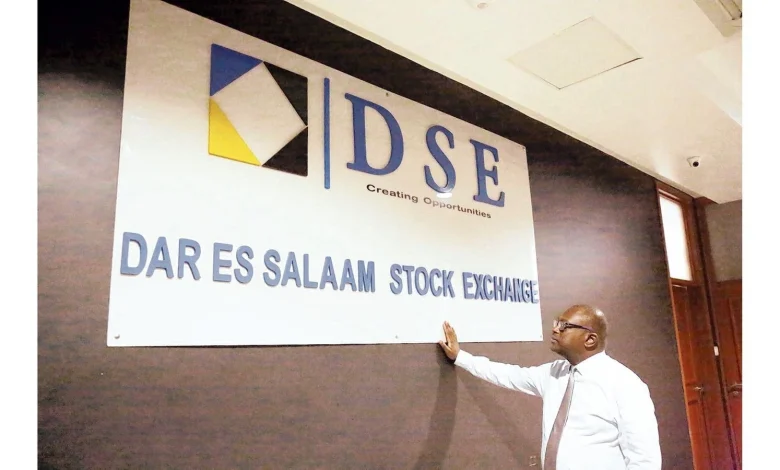
DAR ES SALAAM: AS Tanzania seeks deeper pools of long-term capital to finance economic growth, the Dar es Salaam Stock Exchange (DSE) is strengthening its role as a financing platform for the economy, with record trading activity, expanding domestic investor participation and rising demand for investment products reshaping the market.
The equity market has emerged as an increasingly important platform for mobilising savings and channelling capital into businesses, infrastructure and other productive sectors, marking a shift in the role of markets within financial system.
During the first six months of 2026, total market capitalisation on the DSE rose 47 per cent to 35.18tri/- while equity turnover climbed to a record 1.07tri/- surpassing the total value traded during the entire 2025.
The surge reflects increased investor activity, improved market confidence and growing appetite for listed securities.
For market participants, the performance signals a broader transformation in country’s investment landscape, where capital markets are becoming a more prominent alternative for companies seeking funding and individuals looking for opportunities beyond traditional savings products.
“Capital markets are becoming an important channel for mobilising long-term capital and creating investment opportunities for Tanzanians,” Alpha Capital Chief Executive Mr Gerase Kamugisha said.
“Stronger investor confidence and improved market depth are positioning the sector to play a bigger role in financing economic growth.”
Mr Kamugisha said the recent momentum demonstrates the growing importance of capital markets in connecting domestic savings with businesses requiring expansion capital.
He added that increased participation by local investors is helping create a stronger foundation for sustainable market development.
The growth comes as the government intensifies efforts to position capital markets as a key component of its economic development strategy.
Speaking during the 30th anniversary celebrations of the DSE, Finance Minister Amb Khamis Mussa Omar said the country’s long-term ambitions require financial markets capable of attracting investment, supporting entrepreneurship and expanding economic opportunities.
“To achieve these ambitions, the country requires substantial investment across key sectors,” Amb Omar said.
“This calls for a strong financial sector and capital markets capable of mobilising long-term savings and directing them into productive investments.”
ALSO READ: Minister: Capital markets key to development financing
The government has identified deeper capital markets as critical for financing sectors such as infrastructure, energy, manufacturing and agriculture, where long-term funding requirements often exceed the capacity of traditional bank lending.
The expansion of the market ecosystem has also been reflected in the growth of institutions supporting investment activity.
Capital Markets and Securities Authority (CMSA) Chief Executive Officer Mr Nicodemus Mkama said the industry has recorded significant progress since the establishment of the exchange in 1996, with the number of licensed capital market service providers increasing from six at inception to 105 today.
Mr Mkama said the growth in market participants demonstrates the country’s commitment to developing a vibrant financial sector capable of supporting economic growth and providing alternative sources of development financing.
He said CMSA will continue strengthening oversight through a risk-based supervision approach aimed at protecting investors, improving compliance and maintaining confidence in the integrity of the capital market.
The regulator’s focus, he said, is to ensure that strong governance, transparency and adherence to capital market laws and regulations support market expansion.
The government and regulators have continued efforts to improve the investment environment through measures aimed at strengthening investor protection, simplifying investment procedures and ensuring the market remains transparent and credible.
The push comes amid a broader shift across African economies, where governments and companies are increasingly looking to domestic capital markets to reduce reliance on external financing and expand access to local currency funding.
Tanzania’s market remains relatively small compared with global and regional peers, but recent growth indicators suggest increasing maturity. Rising market capitalisation, higher trading volumes and new investment products are helping broaden participation among institutional and retail investors.
The DSE has also benefited from increased awareness among Tanzanians about equity investments, government securities and other capital market instruments. Financial literacy initiatives and improved access to investment platforms have contributed to a gradual expansion of the investor base.
Analysts say the next phase of growth will depend on continued efforts to attract more companies to list, improve liquidity and encourage long-term participation from pension funds, insurance companies and individual investors.
A deeper and more active market could provide companies with an additional source of financing while giving investors greater opportunities to participate in economic growth.
For businesses, listing on the exchange offers access to capital beyond traditional borrowing, while investors gain exposure to corporate earnings and asset appreciation.
The government’s development agenda has placed significant emphasis on private sector participation, making efficient capital markets increasingly important.
As Tanzania works to expand industrial capacity, upgrade infrastructure and attract investment, policymakers see the financial sector as a key driver of economic transformation.
The recent market performance has strengthened expectations that Tanzania’s capital market could play a larger role in financing future growth.
However, sustaining the momentum will require continued improvements in market liquidity, corporate governance, investor confidence and the availability of diverse investment products. For investors, the latest figures point to a market entering a new stage of development.
For policymakers, they highlight the potential of capital markets to convert domestic savings into economic investment.
With stronger participation from local investors, a growing network of market institutions and continued regulatory support, DSE is positioning itself as a central pillar in the country’s next chapter of economic expansion.