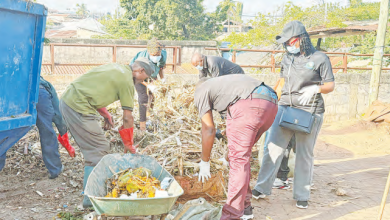
Drug trafficking networks face stronger national resistance

DAR ES SALAAM: FOR decades, the fight against illicit drugs has been one of the most complex challenges facing nations around the world. Drug trafficking networks adapt quickly, exploit new routes and technologies, and often operate across borders with sophisticated criminal structures.
In Tanzania, however, 2025 may be remembered as a turning point in the country’s efforts to confront this persistent threat.
The latest National Drug Situation Report paints a picture of a nation that is intensifying its campaign against narcotics through a combination of law enforcement, public education, rehabilitation services and international cooperation. The results are beginning to show.
More than 1,074 tonnes of narcotic substances were seized across the country in 2025, while thousands of drug-related arrests, successful prosecutions and rehabilitation interventions demonstrated a comprehensive approach that is moving beyond traditional enforcement alone.
The government’s message is clear: The war against drugs is no longer being fought only in police operations and courtrooms. It is also being waged in communities, schools, treatment centres and across international borders.
Presenting the 2025 National Drug Situation Report in Dodoma, Minister of State in the Prime Minister’s Office (Policy, Parliamentary Affairs, Coordination and Persons with Disabilities), Prof Palamagamba Kabudi, described the year as one marked by significant achievements.
According to the report, Tanzania’s anti-drug efforts have been strengthened through the implementation of national strategies aimed at reducing both the supply and demand for narcotics, minimising the harmful effects of drug abuse and enhancing cooperation with regional and international partners.
The combined efforts of government institutions, security agencies, health professionals and local communities have produced measurable results.
The seizure of 1,074.72 tonnes of narcotics is one of the most striking indicators of the scale of enforcement operations undertaken throughout the year. Yet beyond the numbers lies a broader story of institutional coordination and strategic intervention.
Authorities say stronger intelligence gathering, improved surveillance and more effective informationsharing among agencies have significantly disrupted trafficking networks.
“The fight against drugs has recorded significant progress in 2025 due to strengthened implementation of national strategies, enhanced cooperation among institutions and increased public education,” said Prof Kabudi.
Cannabis remains the most prevalent illicit drug in Tanzania, accounting for the overwhelming majority of seizures made during the year.
Of the total narcotics confiscated, more than 1,017 tonnes consisted of cannabis, including both traditional cannabis and hybrid varieties known locally as skanka.
At first glance, the figures appear alarming. However, officials see another side of the story.
Cannabis seizures declined by nearly 56 per cent compared to the previous year. Rather than viewing this reduction as a setback, authorities interpret it as evidence that enforcement efforts are beginning to impact production itself. The government has intensified operations targeting cultivation areas, destroying farms and disrupting supply chains before the crop reaches the market. Community awareness campaigns have also encouraged local residents to report illegal cultivation activities and reject participation in the drug economy.
These interventions suggest that Tanzania is increasingly focusing on attacking the problem at its source rather than merely intercepting drugs after they have entered circulation.
While progress has been recorded against traditional narcotics, the report highlights an evolving challenge that demonstrates how drug trafficking networks continuously adapt. A new substance known as kratom has emerged on Tanzania’s radar.
Authorities seized 29.52 tonnes of kratom in Dar es Salaam after traffickers allegedly attempted to import it disguised as fertiliser. The discovery serves as a reminder that criminal networks frequently seek innovative methods to evade detection.
The emergence of kratom reflects a broader global trend in which traffickers diversify into new psychoactive substances that often exist in legal or regulatory gray areas.
For law enforcement agencies, staying ahead of these developments requires constant vigilance, intelligence gathering and regulatory adaptation.
Perhaps the most encouraging development in the report is the growing success in restricting access to highly addictive industrial narcotics.
Heroin, cocaine and methamphetamine have long posed serious threats due to their devastating health and social consequences. These substances are often associated with organised crime, violence, addiction and significant economic losses.
In 2025, authorities seized over 907 kilogrammes of methamphetamine, more than 672 kilogrammes of heroin and nearly five kilogrammes of cocaine.
Additional seizures included synthetic psychoactive substances such as MDA and MDMA, drugs commonly associated with recreational use but capable of causing serious psychological and neurological harm.
The interception of more than 31 tonnes of precursor chemicals further demonstrates the government’s determination to target every stage of the narcotics supply chain.
These chemicals are essential ingredients in the manufacture of synthetic drugs. By preventing them from reaching illicit laboratories, authorities can stop production before harmful substances ever reach consumers.
According to the Drug Control and Enforcement Authority (DCEA) Commissioner General, Aretas Lyimo asserts that tighter controls have significantly reduced the availability of industrial narcotics in local markets.
This development represents a major achievement because reducing availability often leads directly to lower rates of experimentation, addiction and drugrelated crime.
Successful anti-drug campaigns depend not only on arrests but also on effective prosecution.
The report indicates that law enforcement agencies filed 1,124 drug-related cases in courts across Mainland Tanzania during 2025.
Of the 1,373 cases concluded during the year, authorities secured convictions in 1,058 cases, while 315 resulted in acquittals.
These figures suggest increasing effectiveness in investigation, evidence collection and prosecution processes.
The government also confiscated assets worth more than 3.3bn/- linked to drug trafficking operations.
Asset forfeiture has become an increasingly important tool in the global fight against organised crime because it targets the financial incentives that drive illegal activities.
By seizing profits generated through trafficking, authorities not only punish offenders but also weaken the economic foundations of criminal networks.
Perhaps one of the most significant shifts in Tanzania’s anti-drug strategy is the recognition that addiction is not solely a criminal justice issue.
Drug dependence is increasingly being addressed as a public health challenge requiring treatment, rehabilitation and social reintegration.
During 2025, more than 85,000 people received services through Medication Assisted Treatment (MAT) clinics, mental health facilities and sober houses.
This growing demand for treatment services reflects two important trends.
First, improved access to healthcare services means more individuals are seeking help for addiction.
Second, reduced availability of drugs may be encouraging users to pursue rehabilitation opportunities rather than continuing substance dependence.
Experts have long argued that sustainable success against drug abuse requires balancing enforcement with treatment and prevention. Tanzania’s expanding rehabilitation network demonstrates a commitment to that balanced approach.
Every individual who successfully overcomes addiction represents not only a personal victory but also a positive outcome for families, communities and the broader economy.
No anti-drug strategy can succeed without public participation. Recognising this reality, the government and its partners significantly expanded awareness campaigns throughout the country.
An estimated 25 million people were reached through education initiatives in schools, communities, workplaces and media platforms.
Public education remains one of the most costeffective tools in reducing drug demand. By informing citizens about the health, social and legal consequences of drug abuse, awareness campaigns help prevent experimentation and encourage early intervention.
Young people, who are often most vulnerable to recruitment by drug networks or experimentation with narcotics, remain a key target of these programmes.
As awareness grows, communities become more resilient and more willing to cooperate with authorities.
The report also highlights growing concerns regarding the misuse of shisha.
Research conducted indicates that some users are mixing shisha products with narcotic substances, creating new pathways for drug consumption.
In response, the government is preparing legislation aimed at strengthening regulation of shisha use.
The proposed measures reflect a preventive approach designed to address emerging risks before they become widespread public health problems.
Drug trafficking is increasingly a transnational crime. Traffickers exploit international shipping routes, digital communications and cross-border networks to move illegal substances from one country to another.
Recognising this reality,Tanzania has strengthened cooperation with international enforcement agencies and regional partners.
The sharing of intelligence and coordination of joint operations have become critical components of the country’s anti-drug strategy.
According to Mr Lyimo many contemporary drug trafficking cases involve actors operating across multiple jurisdictions, making international cooperation essential.
The investigation of vessels linked to trafficking activities further demonstrates the importance of coordinated global action in combating organised crime.
The geography of drug cultivation is also changing. While Arusha was once considered a major cannabis cultivation hotspot, Morogoro has now emerged as the leading region, followed by Mara and Tabora.
In response, authorities are establishing special enforcement offices in Morogoro and Tabora to strengthen monitoring and operational capacity.
This strategic deployment of resources reflects a data-driven approach in which enforcement efforts are directed toward emerging hotspots.
Despite the progress achieved in 2025, government officials acknowledge that the fight against drugs is far from over. Trafficking networks remain adaptive, new substances continue to emerge and demand for narcotics has not been eliminated.
Yet the achievements recorded over the past year provide compelling evidence that Tanzania’s multipronged strategy is producing results.
ALSO READ: Government eyes tougher shisha control
The combination of stronger law enforcement, successful prosecutions, expanded rehabilitation services, public education campaigns and international cooperation is gradually reshaping the country’s response to the drug problem.
The seizure of more than 1,074 tonnes of narcotics is more than a law enforcement statistic. It represents communities protected from harmful substances, criminal networks disrupted and lives potentially saved.
As Tanzania moves forward, the challenge will be sustaining this momentum while continuing to adapt to evolving threats. If the lessons of 2025 are any indication, the country is increasingly equipped to meet that challenge and build a safer, healthier future for its citizens.