Double-cohort preps top ministry’s 2.394tri/- budget plans
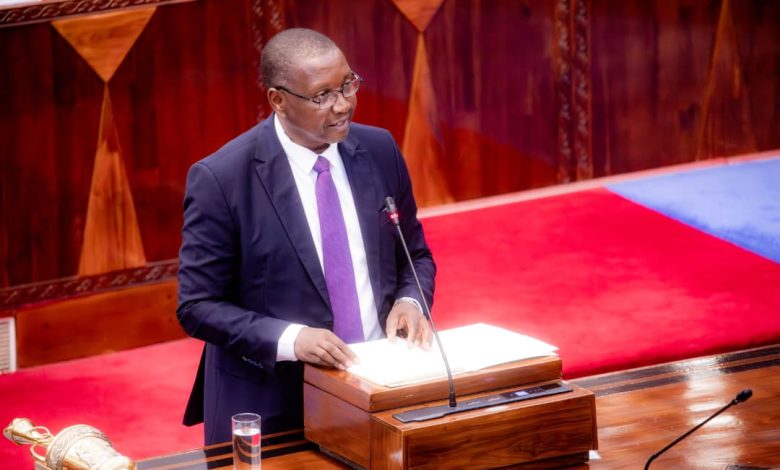
DODOMA: THE Ministry of Education, Science and Technology presented a 2.394trillion/- budget for 2026/27 fiscal year, with a strong focus on preparing for the “double-cohort” enrolment surge set for January 2028.
Tabling budget estimates before the National Assembly in Dodoma yesterday, Minister for Education, Science and Technology, Professor Adolf Mkenda said the government intensifies implementation of key reforms aimed at transforming the country’s education sector.
He said the proposed budget will support five major priorities aligned with the government’s long-term education agenda. Top among the priorities is the continued implementation of education policies and curriculum reforms, including the review of laws, preparation of guidelines and provision of training across the country.
He said that a significant portion of the budget will support ongoing preparations for compulsory 10-year basic education, a reform that will see Standard Six and Standard Seven students enrolled simultaneously during the transition phase, beginning January 2028.
The double-cohort system is expected to increase pressure on classrooms, teachers, learning materials and school infrastructure, prompting the government to accelerate investments across the education sector.
“The implementation of this important initiative is being coordinated by the Prime Minister’s Office – Regional Administration and Local Government (PMO-RALG), while the Ministry of Education, Science and Technology will collaborate closely with PMORALG,” said Prof Mkenda.
He explained that the two ministries are jointly preparing implementation guidelines, mobilising resources for infrastructure development and procurement of equipment, encouraging stakeholder participation, including the private sector and conducting teacher training programmes.
The minister identified four additional priorities for the coming fiscal year: expanding access to and improving the quality of vocational training in secondary schools and vocational colleges; enhancing pre-primary, primary, secondary and teacher education; improving higher education; and strengthening research, science, technology and innovation to support industrial economic growth.
As part of efforts to improve learning resources, Prof Mkenda said the government plans to prepare, print and distribute eight million textbooks and teachers’ guides. The materials will include 3,102,263 copies for Standard Six primary schools, 338,838 textbooks for Form Four vocational streams and 4,558,899 textbooks for Form Three general education streams.
The government also plans to produce and distribute 51,000 large-print and Braille textbooks for students with visual impairments. These include 23,000 copies for Standard Six pupils, 2,000 for Form Four vocational stream students and 26,000 for Form Three general education students.
In a move aimed at modernising learning systems, Prof Mkenda said the government will transform primary and secondary school textbook content into interactive digital formats featuring videos, audio, animation and virtual simulations.
ALSO READ: MPs call for HESLB transformation into fully-fledged fund
“The government will transform primary and secondary school textbook content into interactive digital content incorporating videos, audio, animation and virtual simulations,” he said.
Meanwhile, Prof Mkenda informed the National Assembly that 260 Tanzanian students have secured scholarships to pursue studies abroad, with Russia emerging as the leading donor country after offering 150 scholarships.
He said the scholarships were part of broader government efforts to strengthen cooperation between local and international universities.
Other scholarship contributions came from China (49), Hungary (21), the Commonwealth (11), Egypt (10), Algeria (8), Morocco (4), Mauritius (4), South Korea (2) and the International Atomic Energy Agency (IAEA), which provided one scholarship. Explaining the proposed expenditure framework, Prof Mkenda said 697.84bn/- has been allocated for recurrent expenditure, including 648.08bn/- for salaries and 49.76bn/- for other operational expenses.
He added that 1.697tri/- has been earmarked for development projects, with 1.337tri/- expected from domestic sources and 359.33bn/- from development partners. Presenting the report of the Parliamentary Standing Committee on Education, Culture and Sports, committee member Asha Juma Feruzi urged the government to ensure timely disbursement of all funds allocated to the Higher Education Students’ Loans Board (HESLB).
She said prompt release of the funds would help reduce financial barriers and enable more eligible students to access higher education.
The committee also advised the government to formulate a strategy that would enable universities offering health-related programmes to establish teaching hospitals for practical training. In addition, Ms Feruzi emphasised the need for continued investment in in-service training for teachers, particularly sign language instructors, to strengthen inclusive education.
“The Government should continue allocating a budget for in-service training, particularly for sign language teachers, in order to empower them to promote inclusiveness, positive attitudes and a supportive learning environment for students with special needs,” she said.