DMI scales up training as blue economy investments grow
DAR ES SALAAM: THE Dar es Salaam Maritime Institute (DMI) is scaling up training of specialised professionals to meet growing demand for skills driven by increased investment in Tanzania’s blue economy.
The institute has introduced ship design and shipbuilding courses and is reviewing existing curricula to respond to evolving requirements in the maritime sector, as investments in shipbuilding, maritime transport and other blue economy activities continue to expand.
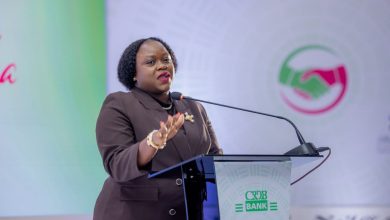
DMI Rector, Prof Tumaini Gurumo, said yesterday that the move is aimed at ensuring Tanzanians are equipped with the skills needed to tap emerging opportunities across the sector.
“We initially focused mainly on training seafarers and other workers employed aboard ships, but have gradually broadened our programmes in response to the growing use of marine resources and changing demands in the economy. “As the use of the sea continues to increase and the country’s needs change, we have had to expand our training,” Prof Gurumo said ahead of the Fifth International Blue Economy Conference, which DMI will host in Dar es Salaam from September 7 to 9.
The government’s growing investment in shipbuilding, including efforts to develop local capacity, is creating demand for specialised personnel, prompting DMI to introduce training in ship design and construction.
ALSO READ: How heavy mineral sands in Dar, Tanga elevate Tanzania as strategic mining hub in Africa?
Skills development is expected to feature prominently at the conference, which will bring together policymakers, researchers, private sector players, financial institutions and other stakeholders from Tanzania, Africa and beyond to discuss opportunities and challenges in the blue economy.
Participants from Kenya, Ghana, South Africa, Comoros, Seychelles and Uganda, as well as Japan, Sweden and Russia, have already confirmed attendance, while others are yet to do so. Prof Gurumo said the conference will also address illegal fishing and marine environmental protection, noting that sustainable economic benefits from aquatic resources depend on safeguarding the ecosystems that support them.
“We must protect marine resources if we are to sustain the benefits they provide to the economy,” she said.
A dedicated session will examine ways to strengthen protection of marine resources and address challenges affecting the sustainability of the blue economy. The institute is also strengthening training in water transport logistics, which she described as a critical component of the blue economy value chain.
According to her, efficient port operations alone are not enough to maximise the benefits of maritime trade if cargo cannot be moved safely and efficiently to its final destinations. In addition, Prof Gurumo said DMI has expanded its academic programmes to cover areas such as maritime law, international trade and the law of the sea, in response to the growing complexity of maritime activities.
The conference will also provide an opportunity for young people to learn about the blue economy, with university students, secondary school students and primary school pupils expected to participate.