

‘Develop homegrown digital solutions for education sector’
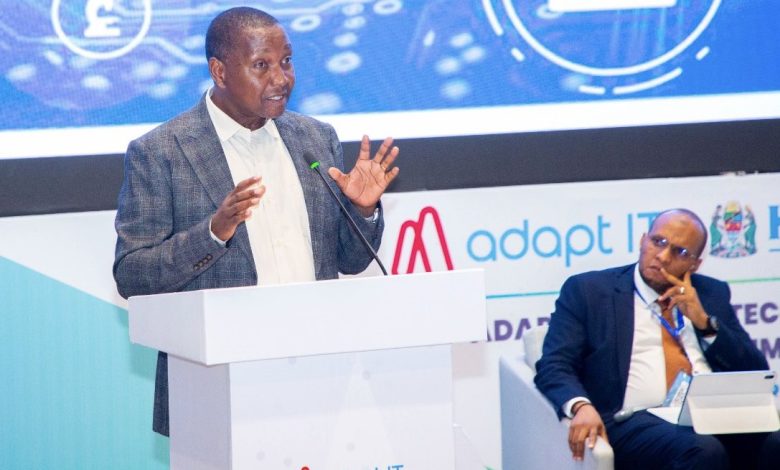
DAR ES SALAAM: MINISTER for Education, Science and Technology, Professor Adolf Mkenda, has called on educational institutions across the country to develop and adopt homegrown digital solutions that are tailored to Tanzania’s unique context.
He also stressed the need to avoid duplicating systems and fragmented initiatives that undermine progress in the education sector.
Prof Mkenda made the remarks during a symposium jointly organised by the Higher Education Students’ Loans Board (HESLB) and South Africa-based tech company Adapt IT, held yesterday in Dar es Salaam.
The symposium, themed “Digitally Connecting Institutions: Driving Transformation in Higher Education in Tanzania through Technology and Cooperation,” brought together key education stakeholders including vice-chancellors, government officials and academic leaders.
It aimed to explore how technology can enhance the education system and ensure equitable access to quality services for students. In his keynote address, Prof Mkenda stressed the importance of building integrated, efficient and sustainable systems that effectively serve the needs of students and institutions.
“Let’s avoid creating multiple systems doing the same thing. We need to harmonise our efforts, build interoperability, and ensure every investment contributes to a unified national vision,” he said.
“We must move away from parallel systems and repetitive efforts. Instead, let’s invest in unified, contextspecific solutions that reflect our needs and support our goals. One country, one goal, one system let us listen to each other and unify our approaches.”
Prof Mkenda underscored the need to embrace local innovation, urging institutions to build systems rooted in Tanzania’s realities and challenges rather than relying solely on imported technologies.
“We must embrace homegrown solutions that reflect our context. Let’s build and strengthen local innovations instead of relying entirely on foreign systems,” he said.
ALSO READ: UNDP strengthens support for young startups
While advocating for local innovation, the minister also encouraged learning from global best practices and building local capacity to sustain digital progress.
He said the focus should go beyond merely adopting technology to achieving longterm transformation.
Prof Mkenda also stressed the urgent need to modernise and integrate education data systems from basic education to higher learning institutions.
He said such systems would help track student enrollment, performance, and dropout rates more effectively. He revealed that efforts are underway to unify data platforms to enable real-time information exchange between government agencies and education institutions.
“We want to know who is where from nursery to university, whether locally or abroad. With integrated systems, we can monitor, plan, and support the sector more effectively,” he said.
On his part, HESLB Managing Director Mr Bill Kiwia underscored the transformative role of digital technology in higher education and called for increased collaboration among stakeholders.
Mr Kiwia highlighted HESLB’s 15-year evolution from a paper-based organisation to a data-driven institution powered by digital tools and robust technological systems.
“It is important to embrace innovation and digital ecosystems in student administration and service delivery,” he said.
“Our transformation reflects the understanding that the future of our nation depends on the skills, knowledge, and potential of our youth.”
He also reiterated that digital transformation must be adapted to suit the country’s unique educational environment.
“New models customised to Tanzania’s context will help improve our service delivery,” he said.
Meanwhile, Adapt IT’s Head of Technology, Mr Thabo Mogaswa, commended Tanzania’s growing digital capabilities and pledged continued collaboration with local institutions to advance education through technology.
“We were impressed by the work being done by local teams at the University of Dar es Salaam. We’re committed to formalising partnerships and growing together. What we saw wasn’t just theory, it was real, practical solutions developed here,” he said.




809628 955588Have read a couple of with the articles on your web site now, and I actually like your style of blogging. I added it to my favorites weblog internet site list and will probably be checking back soon. 967650