Dar Port hits new gear as cargo volumes soar
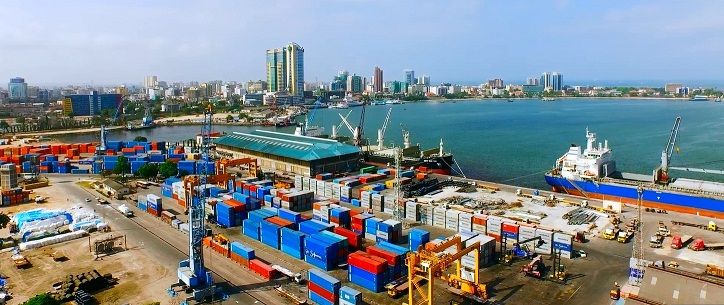
DAR ES SALAAM: THE Port of Dar es Salaam is entering a new phase of growth, with cargo volumes surging, vessel turnaround times falling sharply and major investments in infrastructure and modern equipment transforming one of Tanzania’s most important trade gateways.
The transformation, according to Port Director Abel Galus, is being driven by deeper berths, specialised vehicle-handling facilities, modern cargo equipment, improved security and major investments in petroleum infrastructure.
Mr Galus said recently during a tour of the port, where he briefed editors on measures being implemented to increase capacity, reduce delays and improve cargo movement.
One of the clearest signs of rising activity is vehicle traffic. Mr Galus said the port handled an average of about 17,000 vehicles a month during the 2023/24 and 2024/25 financial years, but the figure has now risen to approximately 30,000 vehicles a month.
He attributed the increase partly to growing customer confidence in the port’s ability to handle cargo safely and efficiently.
“If cargo were being lost or stolen at the port, customers would not have confidence in the port,” he said, noting that rising volumes demonstrated increased trust in Dar es Salaam as a reliable trade gateway.
A key development is the specialised Roll-on/Roll-off (RoRo) berth for vehicle vessels. Previously, such vessels shared berths with mixed cargo, exposing vehicles to operational and security risks.
Vehicles discharged at the dedicated RoRo facility are now moved directly to a holding yard with capacity for about 6,000 vehicles before being transported to inland dry ports for collection.
The specialised facility also enables vehicle vessels to receive priority when necessary. Mr Galus said RoRo vessels currently spend an average of about three days being handled, a significant improvement over previous waiting period.
The port’s deeper berths have also expanded its ability to handle larger vessels. The maximum draft has increased to about 13.5 metres from approximately 11 metres previously, enabling the port to receive vessels carrying substantially larger consignments.
Container vessels capable of carrying up to 8,000 containers can now be accommodated, compared with about 4,000 previously, while bulk carriers can carry up to 70,000 tonnes.
The port has already received wheat vessels carrying between 50,000 and 60,000 tonnes. Mr Galus said the larger vessels offer direct benefits to traders because more cargo can be transported in a single voyage, reducing costs associated with multiple shipments.
Private-sector investment has further boosted efficiency through modern cargo-handling equipment. Among the equipment highlighted was ship-toshore gantry machinery capable of handling two containers simultaneously.
With the improved equipment, the port can handle up to about 2,100 containers within 24 hours under the cited operating conditions.
The increased productivity has contributed to a dramatic reduction in vessel turnaround times. Container vessels that previously could remain at the port for more than 30 days can now be handled and depart in approximately three days.
“This means we can use the same berth to handle more vessels within a given period,” Mr Galus said.
Another major investment is the petroleum receiving facility being developed by the Tanzania Ports Authority (TPA).
For years, limited public petroleum-handling capacity meant fuel discharged at the port had to be transferred to privately owned storage facilities. When those tanks became full, vessel operations could be suspended, resulting in lengthy delays and costly demurrage.
Construction of the new facility began in 2024 at a cost of close to 600bn/- and has reached about 52 per cent completion.
The facility will comprise 15 tanks; six for diesel, five for petrol, three for aviation fuel and one interface tank. It is primarily designed to receive petroleum cargo before transferring it to private storage facilities or tanker trucks.
The facility will also support large petroleum vessels using the Single Point Mooring (SPM) system, with capacity, under appropriate scheduling, to receive two vessels carrying about 50,000 tonnes each.
Mr Galus said petroleum vessels that could previously face delays of more than 30 days are expected to have their waiting time reduced to about two days once the project becomes operational.
The improvement is expected to significantly reduce demurrage costs, which are ultimately capable of increasing the prices paid by consumers.
He said rising cargo volumes are creating pressure on road infrastructure outside the port, with about 3,000 trucks handling cargo around the port each day.
To address the challenge, TPA is promoting greater use of rail, inland container depots and logistics centres. Facilities in Morogoro and Isaka will help distribute cargo closer to its final destinations, while the Standard Gauge Railway (SGR) is increasingly being used to move containers from Dar es Salaam.
ALSO READ: Dar Port handles record 138,000 containers
He said the planned Kurasini Logistics facility will also provide additional containerhandling capacity.
Mr Galus said the port’s long-term master plan provides for further expansion from berth 12 to berth 15, as well as further developments at other ports.