CUHAS calls for increase in scientific research to advance healthcare services
MWANZA: THE Tanzanian government has called for greater use of scientific research to guide health care policies, improve treatment and address inequalities in access to medical services, saying evidence-based interventions are critical to building a stronger and more equitable health system.
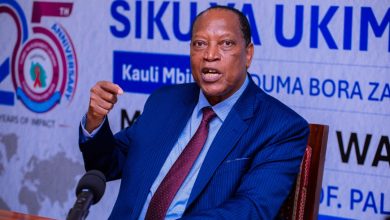
The Ministry of Health Director of Curative Services, Dr Hamad Nyembea, said research enables health professionals and policymakers to make informed decisions, develop appropriate treatment guidelines and respond effectively to emerging health challenges.
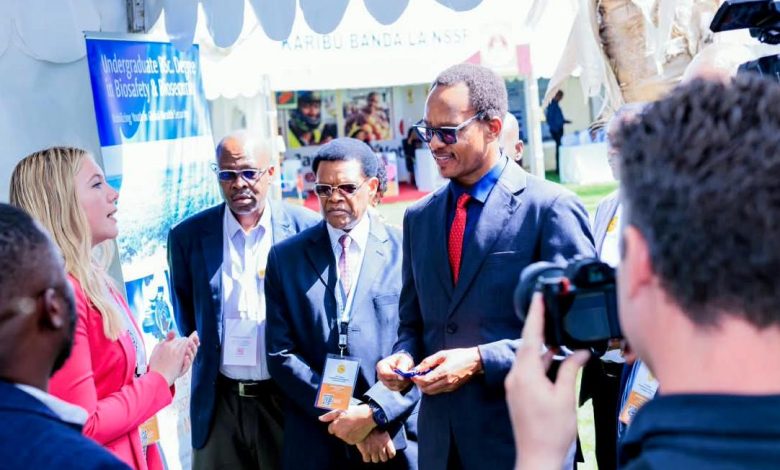
Dr Nyembea made the remarks in Mwanza today while opening the 15th Annual International Scientific Conference of the Catholic University of Health and Allied Sciences (CUHAS-Bugando), held at Malaika Resort.
He represented the ministry’s Permanent Secretary, Dr Grace Magembe, who was unable to attend the event.
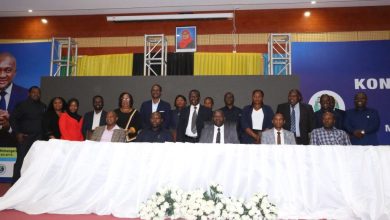
The conference brought together trainers, researchers, academics, policymakers and students from more than 12 countries under the theme, “Advancing Health Equity through Innovative Research, Resilient Health Systems and Public-Private Partnership.”
“Health equity means that where you are born should not determine where you live or die. Despite the progress we have made, access to healthcare services is still unequal across the country. We must use research evidence to guide our decisions, strengthen health systems and ensure that every patient receives quality care at a fair cost,” Dr Nyembea said.
He said Tanzania had recorded improvements in several health indicators, but warned that progress in the sector had not benefited all communities equally.
According to him, maternal deaths declined from 556 per 100,000 live births in 2015 to 104 in 2022, while HIV prevalence dropped to 4.4 per cent from more than 10 per cent in previous years.
He also cited the construction of more than 3,000 primary healthcare facilities as part of the government’s efforts to expand access to health services.
However, Dr Nyembea said differences in access between urban and remote communities remained a concern, pointing to disparities in skilled birth attendance between Mwanza City and remote areas of Ukerewe District.
He also gave an example of access to mental healthcare, saying a patient in Mwanza City could consult a psychiatrist on the same day, while someone in a remote part of Kagera might have to travel more than 400 kilometres to obtain similar services.
He said the government, under President Samia Suluhu Hassan, had made universal health insurance a central pillar of its efforts to promote equity and protect households from being pushed into poverty by high healthcare costs.
The director further urged private healthcare providers to put patients’ welfare ahead of profit, insisting that quality services and fair charges should remain priorities.
“Quality should be the first. Price should be fair, but always patients should be at the centre of everything,” he said.
Dr Nyembea also highlighted the contribution of CUHAS and Bugando Medical Centre (BMC) to the country’s health sector, particularly in producing skilled health workers, conducting research and providing specialised medical services.
He said CUHAS publishes an average of 150 scientific research papers annually, while 892 trainees are expected to graduate this year, six more than in the previous year.
He noted that BMC was among Tanzania’s top tertiary health facilities, providing specialised and super-specialised services to people in the Lake Zone and neighbouring countries.
Among the research areas he highlighted were schistosomiasis around Lake Victoria, HIV drug resistance, antimicrobial resistance and maternal and newborn healthcare.
He said research conducted by CUHAS on schistosomiasis had provided evidence that the disease was preventable, enabling the government to introduce interventions that contributed to reducing its prevalence in affected communities.
He added that research on HIV drug resistance and antimicrobial resistance had informed changes to standard treatment guidelines.
Studies on postpartum haemorrhage, pre-eclampsia, eclampsia and kangaroo mother care for premature babies had also contributed to improvements in maternal and newborn healthcare.
Meanwhile, CUHAS Vice-Chancellor, Professor Erasmus Kamugisha, said universities had three major responsibilities: training professionals, conducting research and providing consultancy services to communities.
He said the institution had convened the annual scientific conference for 15 years to bring together experts and stakeholders from Tanzania and abroad to share research findings and develop recommendations for addressing health challenges.
Professor Kamugisha cited research on schistosomiasis in the Lake Zone as one of CUHAS notable contributions, saying it had supported the development of treatment guidelines, school-based medicine distribution campaigns and the provision of medical equipment to Ukerewe District Hospital to help treat patients.
He urged the public to trust, respect, analyse and act on scientific research findings, saying studies were conducted in accordance with established guidelines.
For his part, CUHAS Director of Research and Innovation and conference chairperson, Professor Jeremiah Seni, said international partnerships were important in expanding research capacity and bringing advanced medical technologies into the country.
ALSO READ: Tanzania risks more measles outbreaks unless children complete both recommended doses of vaccine
He said the conference had attracted more than 400 participants from over 12 countries, with 400 scientific papers scheduled for presentation during the two-day meeting.
Professor Seni said collaboration with institutions in Tanzania and abroad enabled researchers to access funding, technology and expertise required to investigate both communicable and non-communicable diseases.
He cited research involving genetic technologies used to investigate conditions such as spina bifida, cleft lip and sickle cell disease, saying such work required specialised equipment, skills and financial resources.
He also pointed to laparoscopic surgery, which involves performing operations through small incisions, as an example of medical technology being advanced through international partnerships, including collaborations involving Operation Smile and institutions in Germany and Canada.
The approach allows patients to spend less time in hospital and recover faster compared with conventional open surgery, he said.
Professor Seni further said CUHAS was working with partners to promote the use of artificial intelligence in addressing health system challenges, including campaigns to prevent infections caused by resistant organisms among newborn babies.
He said technology was also helping extend specialist diagnostic services to rural health facilities that lacked specialists and advanced equipment.
Under the arrangement, facilities could conduct CT scans, ultrasound examinations and X-rays, then send the images to specialists at Bugando for interpretation and feedback, enabling patients to continue receiving treatment closer to their communities.