CRDB tops profitability metrics in Q1
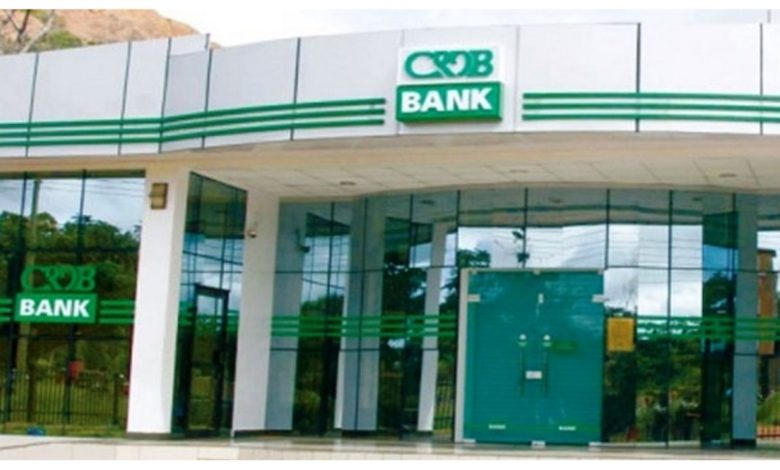
DAR ES SALAAM: BASED on the audited and published Q1 2026 financial results, CRDB Bank has outperformed NMB Bank across nearly all metrics used to assess bank performance.
This trend aligns with my ongoing reviews of bank operations, a pattern often observed when each bank’s quarterly financial statements are disclosed.
The first quarter (Q1) 2026 financial performance of Tanzania’s banking sector has marked one of the most significant shifts in the country’s financial industry in recent years: CRDB Bank overtaking NMB Bank as the most profitable commercial bank in the country.
CRDB reported a net profit after tax of 206bn/- in Q1 2026, representing an 18.9 per cent year-onyear increase, while NMB reportedly posted about 193bn/- during the same period.
The profitability patten indicates a major structural change in competitive banking, highlighting broader shifts in digital banking, risk management, regional growth, balance sheet resilience and Tanzania’s economic standing within the financial system.
For years, CRDB and NMB have led Tanzania’s banking industry, competing closely in profitability, deposits, lending, branch networks and market influence.
NMB has traditionally had advantages in retail banking, agency banking and government transaction systems due to its long-standing presence and nationwide reach.
CRDB, on the other hand, has increasingly focused on corporate banking, trade finance, SMEs and regional growth.
The recent Q1 2026 results indicate that CRDB’s strategic shift may now be delivering better financial results than the market had expected, thanks to its board and its forwardthinking, innovative CEO, Mr Abdulmajid Nsekela, who is open to taking advice, no matter how small.
A key takeaway from CRDB surpassing NMB is that scale, in my view, is diversification and strategic execution that is becoming more influential than traditional branch dominance in the country’s banking industry.
CRDB’s financial results show substantial increases in total assets, customer deposits, loans, digital revenue and operational efficiency. The bank’s total assets stand at 23.9tri/-, with deposits rising to 16.3tri/-.
This indicates that CRDB is not only boosting its profits but also broadening its financial ecosystem to support future growth.
The results also endorse CRDB’s Evolve Strategy 2023–2027, highlighting digital transformation, regional expansion, financing for productive sectors and enhancing operational efficiency.
Overall, the bank’s performance indicates that profitability in modern banking depends more on ecosystem banking than on traditional deposit and lending activities. CRDB’s success seems closely tied to diversifying its income streams.
Traditionally, many African banks depended mainly on interest from loans. In contrast, CRDB has actively grown its non-interest income by leveraging digital payments, agency banking, transaction services, trade finance and platform-based banking ecosystems.
This diversification is crucial economically, as it lowers the bank’s risk from loan defaults, interest rate changes and credit market disruptions.
Tanzania’s banking sector seems to be entering a more technologically advanced phase, with CRDB’s investments in digital platforms and core banking systems notably boosting efficiency and transaction volumes.
Digital transformation in banking helps reduce operational costs, expand customer reach and boost transaction-based income.
CRDB’s achievement of keeping a cost-to-income ratio near 41.6 per cent, despite substantial technology investments and regional growth, reflects solid operational discipline. Another key implication concerns investor confidence.
ALSO READ: CRDB, NMB redefine banking competition dynamics
Since financial markets monitor banking profitability as a gauge of economic activity, liquidity and business confidence, CRDB surpassing NMB indicates that investors are increasingly perceiving CRDB as Tanzania’s most strategically aggressive and forward-looking financial institution.
This could boost CRDB’s market valuation at the Dar es Salaam Stock Exchange (DSE), increase shareholder confidence and draw more institutional investors interested in East African banking growth.
Additionally, it may improve CRDB’s capacity to secure international funding and form strategic alliances.
Importantly, the development highlights shifting economic geography in East African banking. CRDB has actively expanded into Burundi and the Democratic Republic of Congo and has indicated plans to enter more African markets.
This regional approach could provide the bank with access to larger trade routes, foreign currency dealings and crossborder financial prospects, enhancing its long-term profitability. NMB, while still extremely strong domestically, has traditionally remained more Tanzaniafocused.
CRDB’s regional ambitions therefore offer diversification benefits and broader growth opportunities beyond Tanzania’s domestic market. From a macroeconomic perspective, CRDB’s performance may also signal broader structural shifts within the country’s economy.
The bank has reportedly increased lending to productive sectors, including agriculture, infrastructure, trade, logistics, manufacturing and SMEs.
This matters because banks that align with productive sectors often benefit from long-term economic growth rather than shortterm speculation. The reduction of CRDB’s Non-Performing Loan (NPL) ratio to approximately 2.85 per cent is equally significant.
In African banking contexts, rapid loan growth can sometimes lead to assetquality issues. CRDB’s ability to expand lending while improving asset quality indicates improved credit risk management systems and more effective portfolio monitoring.
Despite these achievements, overtaking NMB doesn’t guarantee that CRDB has secured longterm dominance.
The banking sector remains highly competitive and evolving, particularly amid rising fintech competition across Africa.
To maintain and strengthen its leadership, CRDB needs to focus on several strategic priorities. CRDB’s future growth will depend on its ability to evolve beyond traditional banking into a fully integrated digital financial ecosystem.
The bank must continue investing in artificial intelligence, data analytics, cybersecurity, open banking systems and digital customer experience as competition increasingly shifts toward fintechdriven financial services.
With mobile money operators and digital startups competing for transaction revenues, CRDB needs to position itself as a broader financial technology platform rather than just a commercial bank.
Similarly, the bank should strengthen SME and youth enterprise financing by adopting alternative lending models that draw on digital transaction data, ecosystem financing, supply chain financing and blended finance mechanisms.
This would help CRDB become Tanzania’s leading bank for entrepreneurs and the digital economy.
CRDB should further enhance capital adequacy and liquidity resilience to withstand global economic shocks and financial volatility.
Emerging opportunities in green finance, renewable energy, sustainable agriculture and ESG investments also offer strategic growth potential. Meanwhile, CRDB must be cautious of overconfidence.
Worldwide banking history indicates that market leaders can become prone to complacency, bureaucratic inefficiency and reduced innovation.
NMB remains a highly profitable and wellestablished competitor, backed by robust retail networks and a high level of brand trust throughout the country.
Ultimately, CRDB surpassing NMB as Tanzania’s most profitable commercial bank signifies more than just a quarterly financial milestone.
It indicates the rise of a more diversified, digital-focused, regionally oriented and strategically assertive banking approach in Tanzania’s financial industry.