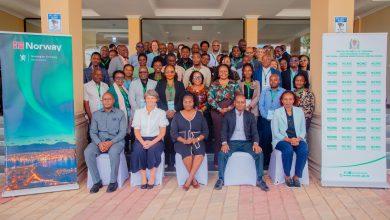
CRDB Bank,Rabo launch iMBEJU agro-economy project for 9,000 smallholder farmers

DAR ES SALAAM: CRDB Bank Foundation, in partnership with Rabo Foundation, has officially launched the iMBEJU Kilimo Sasa project, targeting 9,000 smallholder farmers in Mbeya, Iringa and Kagera regions with improved access to financing, modern agricultural training, financial literacy, insurance services and markets.
The two-year initiative aims to increase agricultural production among participating farmers by 30 percent while raising the income of beneficiary households by 25 percent.
Speaking during the launch in Dar es Salaam, Permanent Secretary in the Ministry of Agriculture, Gerald Mweli, commended the two institutions for supporting the government’s Agriculture Agenda 10/30 and the National Development Vision 2050.
He also urged young people to seize opportunities in agribusiness, noting the importance of their participation in transforming the country’s agricultural sector.
During the event, CRDB Bank Foundation and the Ministry of Agriculture also signed a cooperation agreement aimed at strengthening their partnership through the Building a Better Tomorrow (BBT) programme.
The partnership supports the government’s ambition to empower 10 million young people across the agricultural value chain by 2030.
CRDB Bank Foundation Executive Director, Tully Esther Mwambapa, said the project seeks to help smallholder farmers transition from subsistence farming to commercial agriculture.
She said the initiative would place emphasis on climate-smart and resilient farming practices while opening up additional income-generating opportunities, including participation in carbon markets.
Through its iMBEJU Kilimo programme, CRDB Bank Foundation has already supported more than 36,000 smallholder farmers with financing amounting to 5.3 bn/-.
The programme has also contributed to the creation of more than 10,000 jobs across the country.
The latest initiative is expected to strengthen farmers’ capacity, improve agricultural productivity and expand their participation in commercial value chains, contributing to improved household incomes and sustainable agricultural development.