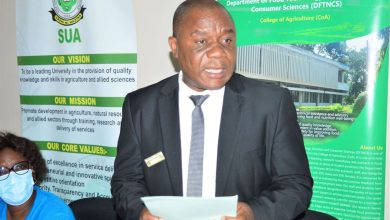
COSTECH, stakeholders launch climate-resilient livestock project
DODOMA: THE livestock sector continues to face a range of challenges, including rising temperatures, prolonged droughts, shortages of pasture and water, and increasing greenhouse gas emissions, all of which are affecting livestock productivity, animal welfare and the livelihoods of livestock keepers.
In response to these challenges, the Tanzania Commission for Science and Technology (COSTECH), in collaboration with the University of Dar es Salaam (UDSM), the Tanzania Livestock Research Institute (TALIRI) and the Zanzibar Agricultural Research Institute (ZARI), has launched a climateresilient livestock and agriculture project in Tanzania.
The project will employ innovative biopolymer and biochar technologies to enhance climate resilience and will be implemented in Mlali and Chiwe wards in Kongwa District, Dodoma Region, on mainland Tanzania.
Speaking during the project launch, Principal Researcher from the UDSM, Dr Regina Mtei said the initiative will focus primarily on the livestock sector in Kongwa District due to its significant contribution to the local economy.
She said the project seeks to address climate-related challenges affecting livestock production and is expected to improve livestock productivity, enhance animal welfare and strengthen the resilience of livestock production systems against the impacts of climate change.
Dr Mtei noted that the innovative technologies will also help create more conducive livestockkeeping environment while supporting sustainable agricultural practices.
Kongwa District Administrative Secretary (DAS), Ms Sozi Ngate, said livestock keeping is one of the district’s key economic activities, contributing to employment creation and supporting food security among local communities.
She expressed optimism that the project would equip livestock keepers with knowledge and skills to adapt to the effects of climate change.
Ms Ngate explained that the use of biopolymer technology will support the construction of improved livestock shelters, reducing dependence on timber and helping to curb tree cutting for building materials.
She further explained that biochar technology is expected to reduce greenhouse gas emissions associated with livestock activities, improve feed quality, enhance the efficient use of available resources and create better livestock-keeping environment.
Kongwa District Council Chairperson, White Zuberi, said the council is committed to supporting the project to help address challenges facing livestock keepers and promote socio-economic development in the district.
Similarly, Kongwa District Executive Director, Dr Omary Nkullo described Kongwa as a suitable area for livestock research and reaffirmed his support for research initiatives.
He expressed confidence that findings from the project would contribute to solving challenges facing the livestock sector and improving productivity.
The project’s training workshop brought together various stakeholders, including livestock keepers and livestock officers from Mlali and Chiwe wards.