COSTECH marks its 40th year with a special drive to bolster commercialization of intellectual property
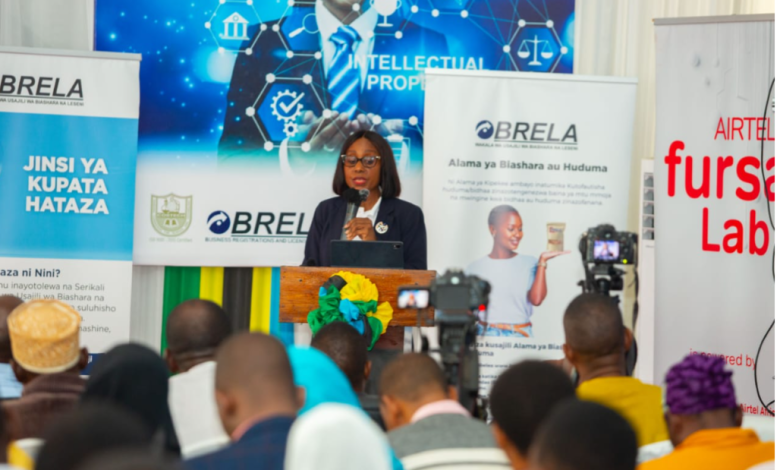
TANGA: TANGA Regional Commissioner, Dr Batilda Burian, has launched a special programme designed to help innovators, start-ups, researchers and entrepreneurs identify, protect, manage and commercialise their intellectual property.
The initiative is being implemented through a partnership between the Business Registrations and Licensing Agency (BRELA) and the Tanzania Commission for Science and Technology (COSTECH), through the Dar Teknohama Business Incubator (DTBi) and Buni Innovation Hub.
The launch comes as COSTECH marks its 40th year, with growing emphasis on moving beyond generating knowledge and ideas to ensuring that innovation produces measurable economic and social value.
The central message is straightforward: intellectual property is not merely a legal issue. Properly protected and managed, it is an economic asset.
Dr Burian said commercialisation must remain at the heart of Tanzania’s intellectual property agenda, urging investors, financial institutions, companies and the private sector to work more closely with local innovators to develop their ideas and unlock their economic potential.
“Protection of intellectual property has economic meaning when that property is responsibly used to establish businesses, improve services, attract investment, create employment and build value,” she said.
For small businesses and emerging entrepreneurs, establishing clear ownership of intellectual property can provide a foundation for attracting investment, securing licensing opportunities, facilitating technology transfer and supporting growth.
For Tanzania’s innovators, creating a good idea is only the beginning. The bigger challenge is protecting it, proving who owns it and turning it into a business that can attract investment, create jobs and reach the market.
That is the gap the government is seeking to close through the new Innovation and Intellectual Property Programme (InnoIP), launched in Tanga during the National Education, Skills and Innovation Week.
Protection, however, is only one part of the equation. The ultimate objective is to ensure that innovations move from laboratories, universities and workshops into businesses and markets.
COSTECH Director General Dr Amos Nungu said Tanzania has young people, researchers, innovators and entrepreneurs developing ideas and technologies capable of addressing challenges facing society. The next step, he said, is ensuring those ideas are protected, developed and taken to market.
“Patent, trademark, copyright and other forms of intellectual property can be used as a basis for attracting investment, licensing, technology transfer and building businesses that can grow,” Dr Nungu said.
That approach represents an important shift in how innovation is viewed. An invention that remains unprotected may struggle to attract investment, while promising technology with unclear ownership can create disputes and discourage potential partners.
Researchers face similar risks. Publishing important findings before considering an intellectual property strategy can undermine the ability to protect and eventually commercialise an innovation.
BRELA Director of Intellectual Property Loy Mhando said some innovators disclose their ideas too early, operate without clear agreements on ownership, fail to maintain records showing how their inventions were developed or only begin considering IP after their products have entered the market.
Such practices, she said, can leave innovators inadequately protected, expose start-ups to ownership disputes and make investors hesitant when a company cannot demonstrate ownership of its innovative assets.
For researchers, she added, publishing significant findings without first considering commercialisation can also affect their ability to secure IP protection.
InnoIP is intended to address these gaps by supporting innovators from the idea stage through IP protection, investment and ultimately access to markets.
Its first-year targets illustrate the scale of the ambition. The programme aims to reach at least 5,000 people, conduct IP needs assessments for at least 120 innovators and support at least 20 critical IP protection processes.
Its potential beneficiaries include start-ups, early-stage innovators, researchers, university students, small and medium-sized enterprises, women- and youth-led businesses, creative-industry entrepreneurs, innovation hubs, business incubation centres and research institutions.
The programme’s theme captures that journey: “From Ideas to IP Opportunities, Protecting Innovation, Creating Value and Accelerating Commercialisation.”
The launch also introduced Fursa Women, a complementary initiative aimed at strengthening women’s participation in the digital economy.
The programme seeks to equip women entrepreneurs with knowledge and tools to use digital systems, emerging technologies and reliable information to establish, manage and grow their businesses.
While InnoIP focuses on protecting, managing and commercialising intellectual property, Fursa Women is intended to help women entrepreneurs use digital technologies and information to make better business decisions and build competitive enterprises.
ALSO READ: COSTECH funds pasture project to tame climate impact
Deputy Permanent Secretary in the Ministry of Education, Science and Technology Dr Hussein Omar urged small entrepreneurs to join the programme, warning that inadequate protection can allow local innovations to benefit others, including actors outside Tanzania.
The warning highlights a wider challenge facing the country’s emerging innovation economy. Producing ideas is only one part of building a knowledge- and technology-driven economy. Ownership, development, financing, commercialisation and market access ultimately determine whether an innovation remains a concept or becomes an economic asset.
InnoIP therefore arrives at a critical point in Tanzania’s innovation journey. Its success will not be measured simply by the number of innovators trained or patents and trademarks secured, but by whether stronger IP management leads to investment, viable businesses, technology transfer, jobs and solutions reaching communities.
For Tanzania, the opportunity is to make intellectual property more than a certificate of ownership. The real prize is turning ideas into protected assets, protected assets into businesses, and businesses into lasting economic and social value.