Clean energy drive targets 1.4 million vulnerable households
DAR ES SALAAM: IN poor households, girls often face a struggle to complete their homework long before they step into the classroom. Fetching water, collecting firewood, preparing meals and caring for younger siblings can consume much of their day, leaving them with little time for schoolwork.
By the time these responsibilities are completed, daylight has often disappeared. In households without electricity, a kerosene lamp may be the only available source of light, leaving children to study in poorly illuminated rooms while breathing in smoke and facing the risk of accidental fires.
It is this everyday challenge that Tanzania wants to address through an ambitious clean energy initiative targeting approximately 1.4 million vulnerable households, with particular attention to the educational opportunities of girls.
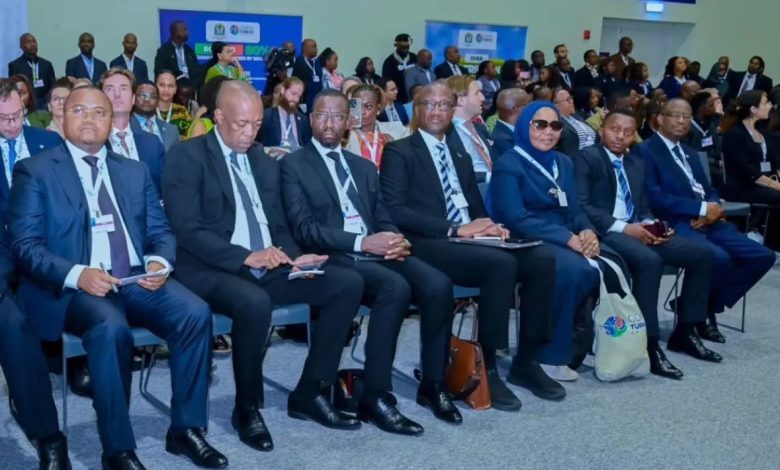
The proposed Light to Learn initiative, presented by Senior Community Development Officer from the Ministry of Community Development, Gender, Women and Special Groups, Mr John Mapunda, at the Tanzania Pavilion on November 10, 2026, seeks to bring solar energy, cleaner cooking technologies and more equitable household responsibilities to poor families.
The presentation took place on the sidelines of the 31st Conference of the Parties to the United Nations Framework Convention on Climate Change (COP31), taking place in Antalya, Türkiye.
The proposal recognises that access to energy extends beyond infrastructure provision. For children in vulnerable households, particularly girls, reliable electricity can influence the time available for studying, the quality of their learning environment and the opportunities they can access.
The initiative’s message captures this connection: “Access to Light is Right to Education.” The proposed Light to Learn initiative links solar power and cleaner cooking with girls’ education, better household health and gender equality, using existing social protection structures to reach the poorest families.
Rather than treating household electrification, clean cooking and gender equality as separate development concerns, Light to Learn brings them together in one intervention.
In his presentation, Mapunda illustrated the challenge through the experience of a 12-year-old girl living in a household supported by the Tanzania Social Action Fund (TASAF).
Her day involves fetching water before and after school, collecting firewood, cooking and caring for younger siblings, elderly family members or relatives who are sick. When she completes these responsibilities, darkness has fallen and her homework is yet to be done.
Her only option may be to study under the weak light of a kerosene lamp. Meanwhile, her brother may have completed his homework while there was still daylight. The example highlights how unequal domestic responsibilities can affect girls’ educational opportunities even when they have access to the same schools as boys. The problem is not simply a shortage of electricity.
It is also about how household work is distributed and the extent to which girls are expected to sacrifice their study time to fulfil domestic responsibilities. Collecting firewood and preparing meals are unavoidable daily activities for many families.
However, when these responsibilities fall disproportionately on girls, they can limit the time available for homework, rest and other activities essential to their development.
Mapunda’s presentation described this as the intersection of climate, energy and gender, arguing that addressing energy poverty in vulnerable households would produce benefits across all three areas.
The health implications are equally important. Kerosene lighting and smoke from traditional cooking fuels contribute to indoor air pollution, while open flames increase the risk of household fires and burns.
The environmental cost is reflected in continued dependence on fuelwood, which contributes to pressure on forests, alongside emissions from kerosene use.
The initiative therefore seeks to address three connected costs: health risks, environmental degradation and lost learning time. Half a million girls among TASAF beneficiaries The scale of the proposed intervention is reflected in figures presented by Mapunda.
According to the presentation, TASAF supports 1,347,361 households in Mainland Tanzania and Zanzibar. These households include 500,245 school-going girls and 482,122 boys. A further 101,333 households include a person with a disability.
Approximately 70 per cent of the supported households are in rural areas, while 30 per cent are urban. The figures provide a clear basis for the initiative, highlighting the large number of vulnerable households that stand to benefit from improved access to energy.
They also explain why the programme proposes different solutions for rural and urban communities. One of the major advantages for Tanzania is that the households have already been identified through TASAF’s existing beneficiary system.
Instead of creating new beneficiary lists, Light to Learn proposes using TASAF’s verified household registry, payment systems and administrative structures operating across 184 councils.
This is intended to make it easier for climate finance and development resources to reach the intended beneficiaries, while strengthening transparency and accountability.
The approach could also reduce the administrative challenges associated with identifying vulnerable households and establishing new delivery structures.
In practical terms, the proposal seeks to connect climate finance institutions and development partners with verified households, ensuring that support reaches communities where energy poverty has direct consequences for children’s education and household welfare.
The proposed intervention combines three components: clean lighting, cleaner cooking and a fairer distribution of household responsibilities. The programme envisages certified solar home systems supported by warranties, alongside improved cookstoves for rural households.
It proposes assistance with electricity connections and efficient lighting, as well as LPG starter kits or efficient electric cooking solutions for urban households. The approach recognises that the energy challenges facing a family in a remote village may differ from those experienced by a household in an urban settlement.
In rural areas where grid electricity may not be readily available, solar systems could provide a practical alternative for lighting and basic household energy needs. In urban communities, where electricity infrastructure may already be available, support with connections and efficient appliances could help families make greater use of existing services.
The cleaner cooking component is equally important. By reducing dependence on traditional cooking fuels, the programme seeks to limit exposure to indoor smoke and reduce the time and effort associated with collecting firewood.
However, Mapunda emphasised that providing lighting and cooking equipment alone would not be sufficient to address the challenges affecting girls.
The third component therefore focuses on changing household attitudes and encouraging families to share domestic responsibilities more fairly. Community campaigns would promote greater participation by boys in household chores, while afterschool science, technology, engineering and mathematics (STEM) clubs would encourage girls to develop their interests and abilities in scientific and technological fields.
This is an important distinction because the programme does not regard girls simply as recipients of solar equipment. It seeks to improve the conditions that allow them to benefit from education and participate more fully in society.
As the presentation emphasised, lighting gives girls additional evening study hours, cleaner cooking can return some daytime hours, while fairer sharing of household responsibilities addresses the underlying gender inequality.
Starting with 50,000 households The initiative proposes a phased implementation approach, beginning with 50,000 households before expanding towards national coverage. The first phase would run for between 18 and 24 months in Kigoma, Dar es Salaam and North Unguja.
Of the targeted households, approximately 35,000 would be rural and 15,000 urban. The initial phase is intended to test the proposed delivery model, establish actual implementation costs and generate evidence on whether the intervention improves girls’ learning conditions.
According to Mapunga, the indicative financing requirement for Phase One is between 15 million US dollars and 20 million US dollars, equivalent to approximately 300–400 US dollars per household for the full package.
The estimated cost cogers lighting systems, cooking technologies, community campaigns, monitoring and evaluation and lifecycle costs. The programme is not limited to purchasing and distributing solar panels. It also seeks to ensure that the equipment remains functional and that the wider social objectives are achieved.
Following the pilot, the initiative proposes expanding into additional regions through a climate finance proposal informed by evidence generated during the first phase.
The final phase would seek national coverage, reach approximately 1.4 million TASAF-supported households and link the programme with Tanzania’s national energy access and clean cooking targets. The phased approach is intended to allow the Government and its partners to assess what works, identify implementation challenges and make necessary adjustments before expanding the programme.
Measuring improvements in girls’ lives An important feature of Light to Learn is its proposed monitoring framework, which focuses on changes in beneficiaries’ lives rather than simply counting the number of household installations.
The programme intends to assess whether girls have access to functional lighting after 12 months, whether they spend fewer hours on domestic chores and whether they gain more time for studying.
Other indicators include improvements in school attendance and examination performance, increased participation by boys in household responsibilities, reduced kerosene consumption and fewer household fires and burns.
The programme also intends to monitor reductions in fuelwood consumption and associated emissions. To establish whether the intervention is producing meaningful results, the first phase will include baseline and endline time-use surveys, alongside a comparison group.
This will help determine whether girls are actually gaining additional hours for learning and whether changes in household energy use are contributing to better educational outcomes. The approach is important because providing a solar system does not automatically guarantee improved academic performance.
Equipment must remain functional, households must be able to use the technologies sustainably and the social changes required to reduce unequal domestic responsibilities must be maintained. The proposed evaluation will be central to determining whether the programme should be expanded and how future investments can be made more effective.
Supporting Tanzania’s development and climate commitments Light to Learn is also intended to advance commitments already contained in Tanzania’s development and climate policy frameworks. These include Dira 2050, which places people, families and communities at the centre of the country’s long-term development ambitions.
The initiative also complements the National Clean Cooking Strategy (2024–2034), which seeks to accelerate the adoption of cleaner household cooking technologies and reduce dependence on traditional fuels. In addition, it supports Tanzania’s Nationally Determined Contribution by promoting lower kerosene consumption and reducing unsustainable fuelwood use.
ALSO READ: Tanzania set for COP31 Climate Change Conference in Türkiye
The presentation also highlighted the Government’s rural electrification achievements, noting that electricity infrastructure has reached all 12,318 villages in Mainland Tanzania. However, extending electricity infrastructure to villages does not necessarily mean that every household has an electricity connection. Affordability and the cost of household equipment remain important considerations.
This provides further justification for targeted interventions that help vulnerable families access appropriate energy solutions. At the international level, the proposal is linked to the UNFCCC Gender Action Plan 2025–2035, as cited in the presentation, particularly its emphasis on gender-responsive climate finance that reaches women and girls.
It also contributes to the broader Sustainable Development Goals, especially those concerning quality education, gender equality, clean energy and climate action. A call for international partnerships For the initiative to move from proposal to implementation, Tanzania is seeking support from climate finance institutions, development partners and private companies.
During the presentation, Mapunda called on climate funds and accredited entities to work with Tanzania’s National Designated Authority in preparing a comprehensive gender-responsive climate finance proposal. Development partners and foundations are being encouraged to co-finance the initial 50,000-household phase and support monitoring, evaluation and learning.
Private sector companies are also being invited to contribute suitable technologies, distribution networks, technical services and innovation needed to deliver the programme at scale. The proposed next step is to establish a working group to develop a full financing proposal within six months of COP31.
The partnerships will be critical in determining whether the initiative can secure the resources required for implementation and eventual expansion.
The presentation also outlined the consequences of failing to support the programme, including continued challenges in children’s academic performance, reduced participation by girls in STEM, increased household health risks, indoor pollution, environmental degradation and the risk of fires.
For Tanzania, the opportunity is to demonstrate how climate finance can address practical challenges affecting vulnerable communities while supporting national development priorities. Ultimately, the success of Light to Learn will not be measured only by how many households receive solar systems or cleaner cooking equipment.
It will be seen in whether girls have more time to study, whether families enjoy healthier living conditions, whether boys share household responsibilities and whether communities become less dependent on polluting and unsustainable energy sources.
For the girl who spends her day fetching water, collecting firewood and caring for younger siblings, a reliable source of light could open up hours that were previously lost to darkness.
That is the broader ambition behind Tanzania’s proposal at COP31: making clean energy an investment not only in households, but also in the education, equality and future of the next generation.