China’s National Day holiday sees travel surge as tourists hit the road
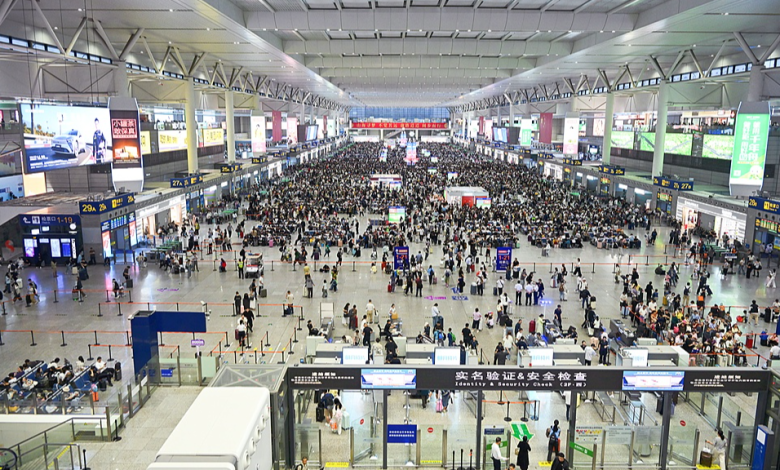
SHANGHAI: China’s National Day holiday is in full swing, with travelers fanning out across the country on the second day of the break, from bustling city hubs to scenic rural destinations, bringing fresh energy to the holiday economy.
With only a three-day gap between the Mid-Autumn Festival holiday and the National Day holiday this year, the combined holiday period has created an extended window for travel, prompting many people to embark on longer trips.
To meet the surge in demand, China Railway has added overnight high-speed trains and sleeper services, with around 13,000 passenger trains scheduled to operate nationwide each day during the holiday period. Major railway hubs in popular destinations such as Chengdu and Shanghai have switched to round-the-clock operations.
At Shanghai Hongqiao Railway Station, capacity has been increased by around 30%. During peak periods, a train arrives or departs roughly every five minutes, a frequency comparable to rush-hour subway services in major cities.
The additional overnight services have proved particularly convenient for families traveling with children.
Ms. Hu and her family, for example, took an overnight sleeper train from Beijing West Railway Station to Kunming South Railway Station, planning to spend the holiday in Kunming, a popular destination in southwest China’s Yunnan Province.
“The overnight train is more comfortable when traveling with children,” Hu said. “We’re looking forward to having Yunnan’s famous mushroom hotpot in Kunming.”
Families with children and groups of young travelers could be seen throughout the train. By 6 a.m., the crew had provided two rounds of wake-up calls for passengers arriving at their destinations.
After a night’s sleep, Hu’s family had crossed much of China, traveling through seven provinces and regions – Beijing, Hebei, Henan, Hubei, Hunan, Guizhou and Yunnan – while climbing about 1,900 meters in elevation. The train arrived in Kunming the following morning, making for a long journey without requiring daytime travel.
While major cities remain popular, a growing number of travelers are also heading to lesser-known destinations as improvements in transportation, infrastructure and tourism services make them increasingly accessible.
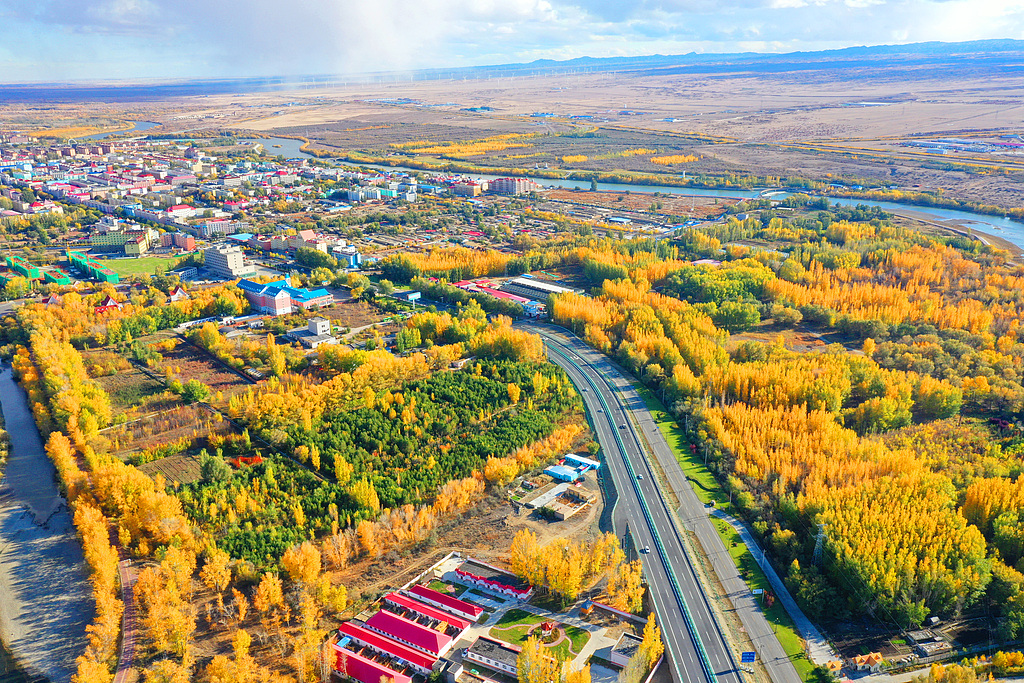
In Burqin County in northwest China’s Xinjiang Uygur Autonomous Region, for instance, the holiday coincides with the area’s spectacular autumn season, drawing large numbers of visitors.
Mr. Lin and his family flew more than five hours from Guangzhou in southern China to Altay Xuedu Airport in Xinjiang. After renting a car at the airport, they set off along the Ahe Highway, turning the journey itself into part of the experience as they drove through the region’s autumn scenery. The Ahe Highway is a 209-kilometer scenic route in Xinjiang that runs from Altay City to Hemu Village in Burqin County, winding through some of the region’s most spectacular autumn landscapes.
The Ministry of Transport expects the number of travelers renting cars after arriving by air or high-speed rail to increase by more than 20% year on year during the holiday.
Located in Xinjiang’s Altay Prefecture, Burqin is known as a “fairy-tale border town” and serves as a major transit hub for visitors traveling to the renowned Kanas and Hemu scenic areas. To welcome visitors, the county has rolled out a packed schedule of cultural and tourism activities, from autumn sightseeing and folk performances to intangible cultural heritage experiences and local cuisine.
The attractions are also encouraging visitors to stay longer. Some tourists who initially planned only a brief stopover have extended their trips by several days after discovering the area’s performances and activities.
Self-driving travel has also added to the holiday rush, with highways across the country seeing heavy traffic.
At the Wuzhuang toll station on the border of Anhui and Jiangsu provinces, which has the most lanes of any toll station in China, traffic exceeded 150,000 vehicles on October 1, more than four times the usual volume. On average, a vehicle passed through the toll gates every second.

At Meicun Service Area along the Shanghai-Nanjing Expressway, drivers spent an average of 25 minutes during their stop.
During those 25 minutes, around 60 cups of milk tea and coffee were sold, about 500 people watched face-changing and ethnic dance performances, and roughly 160 people sampled local specialties, including Huainan beef soup, Wuxi xiaolongbao and Suzhou-style noodles.
From overnight journeys to long-distance road trips, China’s holiday travel is becoming more diverse and flexible. As travelers move beyond simply passing through to staying, exploring and experiencing local life, each departure and arrival is adding momentum to the country’s vibrant holiday economy.