

Chief Justice calls for enhanced ICT
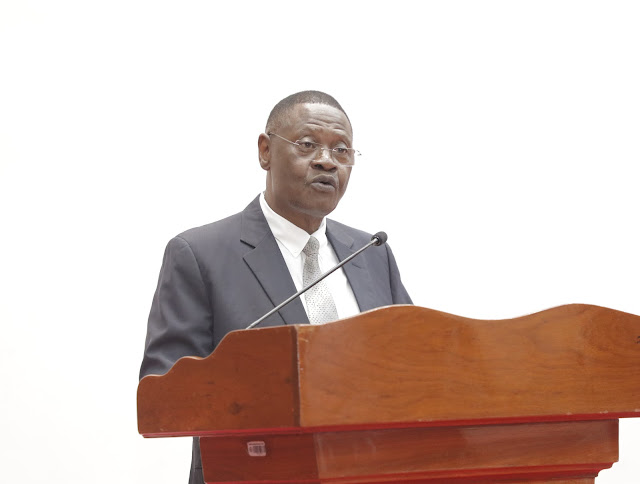
DAR ES SALAAM: CHIEF Justice of Tanzania Prof Ibrahim Juma has urged the Court of Appeal to improve its use of technology to reduce the backlog of appeals and expedite case processing.
The CJ said that judicial data shows a consistent annual rise in cases filed in the Court of Appeal, while only 39 appellate judges are available, of which each is capable to handling just 99 cases per year.
Prof Juma made the remarks while gracing a two-day 2024 Court of Appeal annual meeting held yesterday in Dar es Salaam.
“We have come to realise that effectively managing the growing volume of cases reaching the Court of Appeal requires adopting business process re-engineering and leveraging Artificial Intelligence and Machine Learning.
We cannot rely solely on legal frameworks, regulations, the number of judges and existing panels,” said Prof Juma.
Citing the Court of Appeal Registrar report, which revealed a significant backlog of cases, he said that in 2024, the Court of Appeal had 1,273 cases pending, representing 21 per cent of its total caseload and contributing to 74 per cent of the backlog across all court levels.
He said that by 2026, the case workload is projected to rise to 10,434, while the current capacity of the 39 appellate judges is limited to 3,861 cases per year.
The Chief Justice further said by 2030, the anticipated workload will increase to 13,690 cases, with the capacity of the 39 appellate judges remaining unchanged at 3,861 cases annually.
ALSO READ: DELIVERY OF JUSTICE: Samia: Prioritise fairness
Prof Juma underscored that utilisation of technology, particularly Artificial Intelligence, across different levels of the judiciary has significantly improved efficiency and reduced case backlogs and enhanced performance of the courts.
“The Judiciary Improvement Programme has enhanced the services offered by the High Court and lower courts. The extensive implementation of technological systems has boosted efficiency, professionalism and accountability at both the High Court and its lower courts. As a result, there has been an influx of cases being filed in the appellate courts,” he said.
He urged Court of Appeal judges to use the meeting as a starting point for reviewing and doing the business process reengineering in both the Court of Appeal and lower courts, to enable efficient handling of the increasing case and workload within the institution.
The CJ encouraged the juries to discuss and determine which cases should advance to the appellate level, saying that should be those focusing on important constitutional matters or those that directly impact socio-economic and political interests.
He suggested utilisation of AI to refine the grounds for appeal, ensuring that only legitimate cases are presented in appellate courts.
“Technology can effectively reduce the number of appeals presented. If technology has already analysed these cases, it empowers the registrar to reject those lacking merit. We often hear matters that the registrar deems unmeritorious, but when they come to us, we reopen them, which is an area we must address. The right to appeal should not lead to multiple attempts; in other countries, this is not the practice,” he stated.
Furthermore, Prof Juma reminded them to prioritise their physical and mental health, as it is essential for the effective execution of their duties and responsibilities.




10588 688819Most beneficial human beings toasts really should amuse and present give about the couple. Beginner audio systems previous to obnoxious throngs would be wise to remember often the valuable signal employing grow to be, which is to be an individuals home. greatest man speech examples 765073