Can Tanzania’s youth turn Vision 2050 into jobs, businesses and a trillion-dollar economy by 2050?
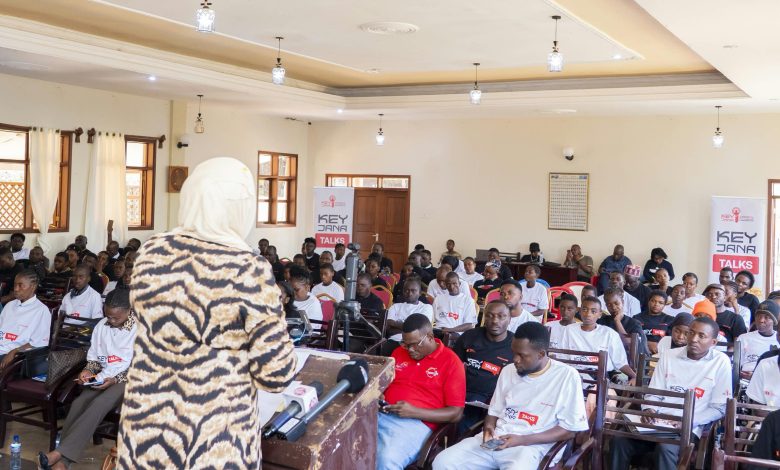
RUVUMA: Tanzania’s ambition to build a US$1 trillion economy by 2050 will depend not only on government policies and investment but also on whether young people can translate development plans into productive economic activities.
The country aims to expand its economy from more than US$193 billion to US$1 trillion over the next 25 years, a target that requires approximately US$800 billion in additional economic output. Achieving such growth will demand broader participation in productive sectors, greater access to economic opportunities and effective implementation of development policies.
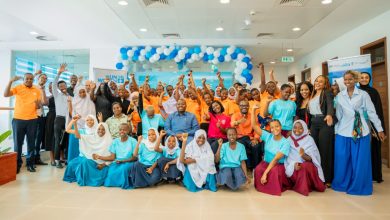
Yet, for many young Tanzanians, understanding national development ambitions and identifying ways to benefit from them remain separate challenges. This is the gap that the Keyjana Talks initiative, implemented under the Keyjana Impact Project, seeks to address by helping young people understand development policies, identify opportunities and hold public institutions accountable for commitments affecting their livelihoods.
The project aims to reach more than 600,000 young people within 18 months. Its expansion into Ruvuma Region has increased its geographical coverage from 12 regions to 13, providing another platform through which young people can exchange ideas, engage decision-makers and explore locally available economic opportunities.
Speaking in Ruvuma yesterday, ActionAid Tanzania National Youth Programmes Coordinator Arif Fazal said the initiative was designed to enable young people to participate actively in social and economic transformation rather than remain spectators in development processes.
Fazal said ActionAid Tanzania, a non-governmental organisation established in 1998, works with young people, children and women to promote their participation in development. Its interventions include climate change adaptation, environmentally friendly practices, safe sanitation, improved learning environments and skills development.
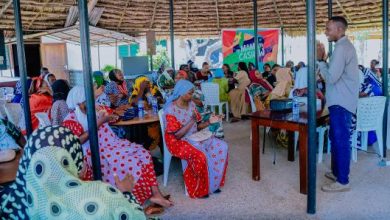
These areas are connected to young people’s economic prospects because access to education, practical skills and a healthy environment can influence their ability to participate in productive activities. Through Keyjana Talks, participants are encouraged to identify community challenges, discuss development priorities and communicate their concerns to local government authorities, councils and higher levels of decision-making.
However, participation becomes meaningful only when young people understand the policies they are discussing and know how these translate into opportunities within their communities. This, according to the programme’s implementer, Dr Julius Muhindi, is central to the initiative’s approach.
Muhindi said Keyjana Impact was developed by Tanzanian young people who had participated in specialised training intended to accelerate implementation of the 17 Sustainable Development Goals (SDGs), adopted in 2015 and running to 2030, alongside Tanzania’s Development Vision 2050.
“Implementing the Sustainable Development Goals requires people; it requires young people. We must empower them with education, skills and capital,” he said.
His emphasis on education, skills and capital points to a practical challenge facing youth development initiatives: knowledge of available opportunities does not automatically provide the resources needed to pursue them. A young person may understand the potential of agriculture, fishing or small-scale manufacturing but still lack finance, equipment, technical support or access to reliable markets.
Muhindi said Keyjana Talks sought to make development policies and strategies for the 2025–2050 period easier for young people to understand, enabling them to connect national objectives with their own economic plans. In this way, development policy could become more than a document discussed by officials; it could provide a reference for young people deciding what to produce, which skills to acquire and how to participate in the economy.
The importance of linking information to practical support was also evident in remarks delivered by Songea District Administrative Secretary Mwanaidi Nondo, who represented District Commissioner Ngollo Malenya.
Nondo identified unemployment and climate change among the challenges requiring investment in youth education and capacity-building. She said the government had made efforts to inform young people about available loans, capital, vocational training through institutions such as the Vocational Education and Training Authority (VETA), support from the Small Industries Development Organisation (SIDO), fish farming and agricultural activities.
She urged young people to take responsibility for exploring these opportunities, noting that greater participation in economic activities could improve household incomes and contribute to national growth.
“Youth platforms are important tools for equipping young people with skills, exchanging ideas and finding solutions to the challenges they face,” she said.
Her remarks underline the importance of ensuring that young people can move from receiving information to accessing the services and resources required to act on it. The experiences of participants from Mbinga and Songea illustrate how this process may begin with identifying opportunities within their immediate surroundings.
Happiness Lamtei of Mbinga District and Sospeter Johnbosco of Songea said the programme had helped them gain knowledge, exchange experiences and better understand their role in development.
For Lamtei, the training strengthened her understanding of economic empowerment and the potential of locally available resources. She intends to explore the blue economy through fish farming and the green economy through sustainable use of forests and other natural resources.
“Within the next three months, I intend to bring about change by using the opportunities available to me,” she said.
Lamtei also identified coffee farming in Mbinga as an opportunity for young people seeking to improve their livelihoods through agriculture.
“Through Keyjana Talks, I will also venture into agriculture. Mbinga has coffee farming opportunities, and I intend to apply the knowledge we have gained to improve agricultural activities. I will ensure that, within three months, I have something positive to show,” she said.
Her plans illustrate how development information can encourage young people to consider economic activities suited to their local conditions. Turning those plans into sustainable businesses, however, will depend on factors such as access to land, financing, agricultural inputs, technical advice and markets.
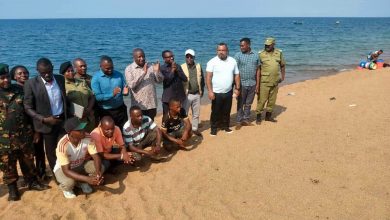
Similar concerns arise in Nyasa District, where fishing and tourism offer economic opportunities but require investment in equipment and other resources. Jastina Mtanga, a youth ambassador from the district, said young people involved in fishing needed greater support to operate safely and productively.
She appealed to the government to help youth groups obtain fishing nets, boats and engines, explaining that some groups had secured loans and acquired boats while many others continued to lack the resources needed to establish or expand their activities.
“I am here as Jastina, representing the youth of Nyasa District. When I return, I will serve as an ambassador for all young people in the district because we have groups involved in fishing activities,” she said.
Mtanga said she intended to share the knowledge gained through the programme with other young people in her district and advocate for improved access to capital.
“Some groups have received loans and have boats, but they are few. Many of us still lack the necessary resources. I will return as an ambassador and ask the government to help us access capital so that we can engage more effectively in fishing,” she said.
Her concerns demonstrate why youth participation cannot be measured by attendance at training sessions alone. For young people to benefit from fishing, agriculture and other productive activities, information must be accompanied by access to finance, equipment, technical knowledge, markets and sustainable resource management.
As Keyjana Impact expands its reach, its effectiveness will therefore depend partly on whether participants can apply what they learn and whether institutions respond to the challenges they raise. Monitoring development commitments, identifying available resources and communicating local needs can help strengthen accountability, but tangible economic progress will require practical follow-up.
Tanzania’s ambition to become a US$1 trillion economy by 2050 presents young people with both an opportunity and a responsibility to participate in shaping the country’s economic future. Initiatives such as Keyjana Talks can help them understand national priorities and identify possible pathways into productive activities, but the scale of the ambition makes access to skills, capital and markets essential.
For participants in Ruvuma, the immediate task is to turn their commitments into realistic activities and measurable results. Whether through coffee farming, fish farming, fishing or other enterprises, their progress will depend on how effectively knowledge is translated into action and how well available opportunities are matched with the resources needed to pursue them.