Breaking the sickle cell cycle begins with testing, counselling and informed family planning decisions
DAR ES SALAAM: FOR many young people, starting a family is a major life decision. Yet before marriage or parenthood, one simple piece of information can help couples understand an important genetic risk: Whether they carry the sickle cell gene.
Knowing their status does not determine what couples should do. Instead, testing and appropriate genetic counselling provide information that can help them understand how sickle cell disease is inherited and make informed reproductive decisions.
The World Health Organisation (WHO) defines sickle cell disease as a genetic disorder caused by mutations in the HBB gene, which affects the production of haemoglobin, the substance in red blood cells responsible for carrying oxygen throughout the body.
People who inherit two copies of the haemoglobin S gene, one from each parent, develop sickle cell disease. Those who inherit one copy generally have sickle cell trait and usually do not experience symptoms of the disease.
This distinction makes testing important. A person can carry the gene without knowing it or showing symptoms, while still being able to pass it to their children.
According to WHO’s Regional Office for Africa, inexpensive and reliable blood tests can identify couples who may be at risk of having children affected by haemoglobin disorders. Screening before marriage or pregnancy allows individuals to know their status, while genetic counselling provides information about inheritance and available reproductive options.
WHO also recommends linking genetic counselling with sickle cell screening programmes and ensuring that people with sickle cell trait receive accurate, factual and non-directive information about reproductive choices.
The issue carries particular significance in Tanzania. The Tanzania Sickle Cell Disease Alliance (TSDA) estimates that between 15 and 20 per cent of Tanzanians carry the sickle cell gene.
With Tanzania’s population estimated at about 70 million, TSDA Executive Director, Dr Deogratias Soka, said the proportion could represent approximately 14 million people carrying the gene.
“We want our young people to get tested, know their status and make decisions based on accurate information,” he said.
Dr Soka said Tanzania ranks fourth globally in the number of children born with sickle cell disease, after Nigeria, India and the Democratic Republic of Congo. He also said the disease accounts for about seven per cent of deaths among children under five in Tanzania, making it a significant public health concern.
The figures form part of a much wider global burden. WHO estimates that 7.74 million people were living with sickle cell disease worldwide in 2021, while approximately 515,000 babies were born with the condition that year. Nearly 80 per cent of people living with sickle cell disease are in sub-Saharan Africa.
WHO estimates that sickle cell disease caused about 81,100 deaths among children under five globally in 2021, while acknowledging that conventional cause-of-death statistics may underestimate the actual mortality burden.
For families, understanding the inheritance pattern is particularly important when both prospective parents carry the sickle cell gene.
Dr Soka explained that when both partners are carriers, each pregnancy has a 25 per cent statistical probability of resulting in a child with sickle cell disease. There is also a 50 per cent probability of having a child who is a carrier and a 25 per cent probability of having a child who is neither affected nor a carrier.
Importantly, these probabilities apply independently to each pregnancy. They do not mean that exactly one in every four children in a family will have sickle cell disease.
“A family can have five children and all of them may not have sickle cell disease. Another family can have five children who all have the disease, while another can have some children with the disease and others without it. Every pregnancy has its own probability,” Dr Soka said.
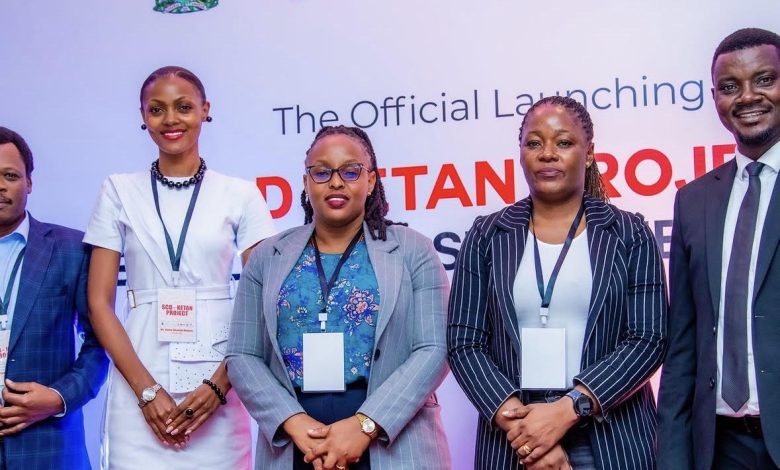
Providing such information before people start families is central to TSDA’s Vunja Mduara campaign, which combines prevention through education and testing with early identification of children already living with sickle cell disease.
Dr Soka said the campaign has two main objectives: identifying affected children early enough for appropriate treatment and preventing new cases through genetic education and testing.
“Prevention is what we call a lowcost, high-impact solution. If we succeed in prevention, we use less money and achieve a greater impact,” he said.
The campaign targets two million young people, particularly students in secondary schools and higher learning institutions, while also reaching young people outside formal education. At least 20 per cent of the target about 400,000 young people are expected to undergo testing.
The campaign is being implemented in regions including Kagera, Mara, Shinyanga, Mwanza, Geita and Simiyu in the Lake Zone, as well as Tanga, Pwani, Morogoro, Dar es Salaam, Lindi and Mtwara.
Its outreach combines traditional and digital media, visits to schools and universities, information materials, mobile clinics and links with health facilities. The aim is to put reliable information and testing opportunities within reach of young people before they make decisions about marriage and parenthood.
The prevention message is complemented by growing emphasis on early diagnosis. In June 2026, WHO called on countries to expand newborn screening, noting that early identification and treatment of conditions such as sickle cell disease can save lives and reduce lifelong disability.
WHO’s 2026 consolidated guideline on sickle cell disease in children and adolescents describes the condition as one of the most common inherited blood disorders worldwide and a major cause of preventable illness, death and disability among children, particularly in low- and middleincome countries.
ALSO READ: Sickle cell awareness takes centre stage at Masaki health expo
Early diagnosis allows health workers to begin preventive care before serious complications develop. WHO says sickle cell disease can cause severe pain, anaemia, infections, stroke, kidney problems and other complications. Recommended interventions include vaccination, folic acid and disease-modifying treatment such as hydroxyurea, depending on individual needs.
Dr Soka said affected children may experience severe pain, recurrent anaemia, infections, fever, yellowing of the eyes, an enlarged spleen and wounds that heal slowly. He also noted that children with sickle cell disease can suffer strokes, challenging the perception that stroke affects only older people.
The disease can also impose significant financial costs on families and the health system.
Dr Soka said sickle cell testing can cost between 10,000/- and 20,000/-, depending on the facility and circumstances. He estimated that routine care for one child could reach about 10m/- annually when medicines, hospitalisation and other services are included.
Advanced treatment options are available for selected patients, including bone marrow transplantation, while gene therapy continues to develop internationally. However, Dr Soka stressed that transplantation is not required by every person living with sickle cell disease.
With appropriate care, people with the condition can study, work, build careers, marry and have children.
The prevention message has also reached young Tanzanians through Miss Universe Tanzania 2026 and sickle cell ambassador Queen-Elizabeth Makune.
Makune said her support for Vunja Mduara was personal because sickle cell disease has affected her family and she discovered through testing that she carries the sickle cell gene.
“For me, sickle cell is not a story I hear from other people. It is something I have seen and understood through my own life and family,” she said.
Her experience highlights the difference between carrying the gene and having the disease. A carrier may live without symptoms but can still pass the gene to a child.
WHO says most people with sickle cell trait are generally healthy and may not know they carry the gene unless they are tested. This makes awareness and testing important because symptoms cannot reliably identify everyone who carries the gene.
Testing, however, is only one part of the response. WHO emphasises that screening should be accompanied by counselling so people receive accurate information without being pressured into particular reproductive decisions.
For people already living with sickle cell disease, the focus must extend to early diagnosis, prevention of complications and access to appropriate treatment. WHO’s 2026 guidance calls for sickle cell services to be integrated into health systems, particularly in areas carrying the greatest burden.
The same principle applies to newborn screening. WHO’s technical guidance stresses that screening can save lives only when it is connected to confirmatory testing, referral, treatment, follow-up, rehabilitation and family support.
For Tanzania, Vunja Mduara is therefore placing genetic information and early care within reach of a generation increasingly making decisions about relationships, marriage and parenthood.