Breaking barriers: The women quietly redefining leadership in zanzibar
FOR many women across Unguja and Pemba, the conclusion of the Strengthen Women in Leadership (SWIL) Project was not just the end of a programme. It was the beginning of a new sense of possibility.
Among them is 34-yearold Maryam Salim Kombo, a first-time political aspirant from Pemba. Just two years ago, she had never imagined herself standing before a crowd, campaigning for leadership.
“People used to say politics is not for women,” she recalls. “Now, I know that voice was never mine, it was something society taught us.”
Maryam is one of 823 women aspirants reached by the SWIL Project between 2024 and 2026, including 27 women with disabilities.
Behind these numbers lies a powerful shift: Women stepping into spaces historically dominated by men, often against deep-rooted cultural resistance.
The initiative, led by the Tanzania Media Women’s Association – Zanzibar (TAMWA-ZNZ) in partnership with ZAFELA, JUWAUZA and PEGAO, was designed to confront the very barriers Mariam faced, patriarchal norms, limited access to leadership opportunities and weak institutional support for women in politics.
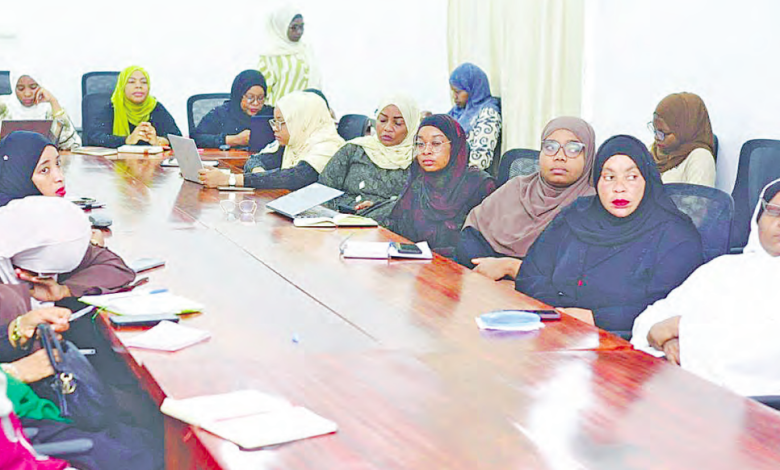
Speaking at the closing press conference, Ms Nairat Abdulla, Director of TAMWA-ZNZ, emphasised that the project was never just about increasing numbers.
“This was about transforming systems, mindsets and opportunities,” she said, highlighting both the achievements and the long road still ahead.
The results tell a story of progress, even if uneven. Out of the 823 women reached, 798 participated in intra-party elections in 2025, and 324 were nominated by their political parties to contest in the General Election.
At the highest levels, the shift was striking. Sixteen women contested for top national positions, including three presidential candidates for the United Republic of Tanzania, ten vice-presidential contenders and three candidates for the Presidency of Zanzibar.
While only a handful ultimately secured seats, the symbolic breakthrough was undeniable.
Through targeted training, 86 women candidates received leadership and democratic participation skills.
From this group, six women were successfully elected, including one Member of Parliament, one Member of the House of Representatives, and four councillors. Today, women make up about 38 percent of leadership positions overall.
Yet, the data also reveals a lingering imbalance: Representation in elected roles remains significantly lower at just 17 per cent, suggesting that while doors are opening, many remain only partially unlocked. Beyond electoral politics, the SWIL Project invested heavily in grassroots empowerment.
It engaged 151 members of civil society organisations (CSOs) and helped establish an Early Warning System for Violence Against Women in Politics (VAW-P), involving 30 CSO members.
This system was more than a technical innovation; it was a safeguard. For many women, the fear of harassment or violence has long been a silent deterrent to political participation.
“Before, we were afraid to even attend meetings,” says Ms Halima Mohammed Juma, a community organiser in Unguja.
“Now we know there are systems to protect us, and people who will speak up.”
Training also reached 27 women councillors and 13 Shehia coordinators, equipping them with skills in leadership, accountability and data management, tools essential for sustaining change beyond election cycles.
Changing the rules of the game
Perhaps the most enduring impact of the SWIL Project lies in the institutional and legal reforms it helped inspire.
Advocacy efforts contributed to amendments to the Election Act in 2024, which now criminalise violence against women in elections.
Political parties are increasingly being held accountable as well, seven parties adopted internal gender policies, while all 19 registered political parties established ethical committees to address misconduct, including gender-based political violence. At the same time, structural barriers are beginning to fall.
The Zanzibar Electoral Commission introduced a 50 per cent reduction in nomination fees for women candidates, making it more financially feasible for women to run for office. Accessibility has also improved.
New measures, such as Braille ballot markings and disability-friendly polling stations, are helping ensure that women with disabilities are no longer excluded from democratic participation.
“These are not small changes,” said Ms Khairat Haji, SWIL Project Coordinator. “They are structural shifts that will influence generations to come.”
ALSO READ: The leadership lesson growing in Zanzibar’s villages
The power of data and storytelling
A key pillar of the project was strengthening data systems to better understand women’s participation in leadership.
In collaboration with the Office of the Chief Government Statistician (OCGS), SWIL supported the launch of an official data abstract in May 2025, documenting women’s representation from community to national level.
The project also trained 25 District Statistical Officers and established databases across all 11 districts of Zanzibar, ensuring that genderdisaggregated data becomes part of everyday governance.
But data alone does not drive change, stories do. Recognising this, SWIL actively engaged the media.
Over the course of the project, 242 journalists from 45 media houses were involved, producing an impressive 3,831 media stories and content pieces. These stories went beyond headlines.
They amplified women’s voices, highlighted systemic barriers and held institutions accountable. In total, 97 high-impact advocacy actions were documented, many leading directly to policy responses.
For example, media coverage of financial challenges faced by women candidates played a crucial role in pushing for the reduction of nomination fees.
Challenges that remain
Despite its successes, the project encountered persistent obstacles.
Deeply rooted patriarchal beliefs, particularly in parts of Pemba, continue to limit acceptance of women in leadership roles.
Another challenge was the low participation of men in community dialogues, which sometimes slowed efforts toward inclusive change. Reaching remote communities also proved difficult, limiting the scope of some awareness campaigns.
These challenges underscore a critical lesson: Progress in gender equality requires not only empowering women, but engaging entire communities. As the SWIL Project comes to a close, its leaders are clear: This is not an ending.
TAMWA-ZNZ is calling on government institutions, political parties, civil society, the media and development partners to build on the momentum.
Priorities include strengthening coordination, ensuring implementation of gender-responsive laws, improving data systems and continuing to invest in women’s leadership capacity. For Maryam Salim, the journey continues.
Though she did not win her race, she is already preparing for the next election. “I used to think leadership was for others,” she says with a quiet smile.
“Now I know, it is also for me.” Across Zanzibar, hundreds of women are beginning to believe the same.
And in that belief lies the true legacy of SWIL: not just in policies or statistics, but in the courage of women who are stepping forward, one voice, one vote, one victory at a time.