Assessments begin for 1.59 million pupils nationwide today
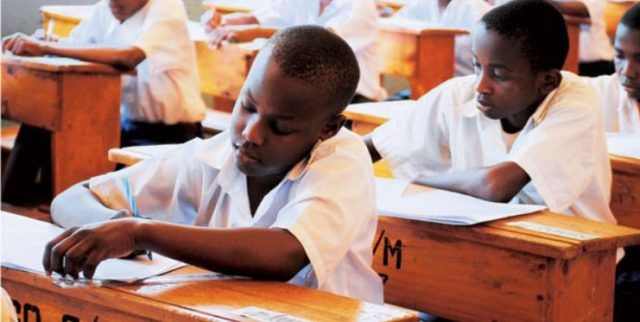
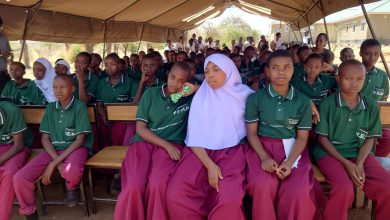
DAR ES SALAAM: MORE than 1.59 million Standard Four pupils across Mainland Tanzania begin their national assessment today, with the exercise taking place in 21,008 primary schools.
The two-day Standard Four National Assessment (SFNA) 2026 is part of a revised national assessment schedule adopted by the Ministry of Education, Science and Technology in collaboration with the National Examinations Council of Tanzania (NECTA).
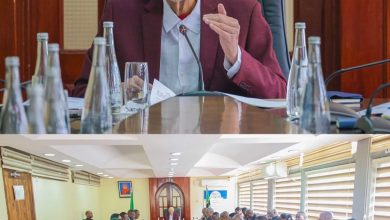
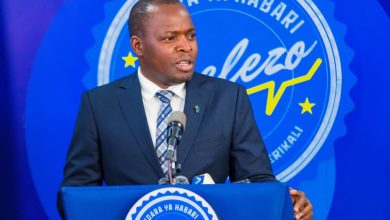
Briefing journalists in Dar es Salaam yesterday, NECTA Executive Secretary, Professor Said Mohamed said 1,591,064 pupils had been registered for the Standard Four assessment, comprising 764,284 boys, equivalent to 48.04 per cent and 826,780 girls, or 51.96 per cent.
“Of the 1,591,064 pupils registered for the 2026 Standard Four National Assessment, 1,468,885, equivalent to 92.32 per cent, will sit the assessment in Kiswahili, while 122,179, or 7.68 per cent, will use English, Prof Mohamed said. He said 5,603 Standard Four pupils with special needs had also been registered, including 1,282 with low vision, 105 with vision impairment, 957 with hearing impairment, 1,378 with intellectual impairment and 1,881 with physical impairment.
“The assessment has been organised to ensure that all candidates, including those with special needs, have an opportunity to demonstrate the knowledge and skills they have acquired during their studies,” Prof Mohamed said.
The Standard Four assessment will be followed by the School Based Standard Two National Assessment (STNA), which will be conducted from October 7 to 8 in 21,353 primary schools across Mainland Tanzania. Prof Mohamed said 1,827,367 pupils had been registered for the Standard Two assessment, comprising 906,545 boys, equivalent to 49.61 per cent and 920,822 girls, or 50.39 per cent.
“Of the 1,827,367 pupils registered for the 2026 Standard Two School-Based National Assessment, 1,675,355, equivalent to 91.68 per cent, will sit the assessment in Kiswahili, while 152,012, or 8.32 per cent, will use English, the language they have been using for learning,” he said.
ALSO READ: TZ writes new chapter
He said 5,295 pupils with special needs had been registered for the Standard Two assessment, including 1,062 with low vision, 112 with vision impairment, 929 with hearing impairment, 1,208 with intellectual impairment and 1,984 with physical impairment.
“The arrangements have been made to enable pupils with special needs to participate in the assessment according to their individual requirements,” Prof Mohamed said.
The Form Two National Assessment (FTNA) will then take place from October 12 to 23 in 6,612 secondary schools across Mainland Tanzania and 599 centres for private candidates in Mainland Tanzania and Zanzibar. Prof Mohamed said 794,713 candidates had been registered for the assessment, including 786,163 school candidates and 8,550 private candidates.
“Of the school candidates, 351,536 are boys, equivalent to 44.72 per cent, while 434,627 are girls, or 55.28 per cent,” he said.
He said 781,127 candidates would sit the assessment under the General Stream for the first time, in accordance with the Education and Training Policy 2014, 2023 edition, while 5,036 would sit under the Vocational Stream, which was first examined in 2025 in line with the policy.
Prof Mohamed said 1,162 school candidates with special needs had been registered, including 939 with low vision, 78 with vision impairment, 56 with hearing impairment, 13 with intellectual impairment and 76 with physical impairment. Among the 8,550 private candidates, 4,428 are boys, equivalent to 51.79 per cent, while 4,122 are girls, or 48.21 per cent.
The revised assessment schedule was introduced following concerns over the expected El Niño rains, with the changes intended to minimise possible disruptions and ensure the safety of pupils, teachers, invigilators and other officials involved in administering the assessments.
Prof Mohamed called on appointed invigilators and other officials to perform their duties professionally and with integrity, while observing examination regulations and guidelines to ensure that candidates undertake the assessments fairly.
“NECTA expects all supervisors, invigilators and other officials to strictly observe examination regulations and guidelines to ensure that every candidate receives their right to undertake the assessments fairly,” he said.