Akasoba Zainab Duke-Abiola, mni: The African woman for a new UN consensus
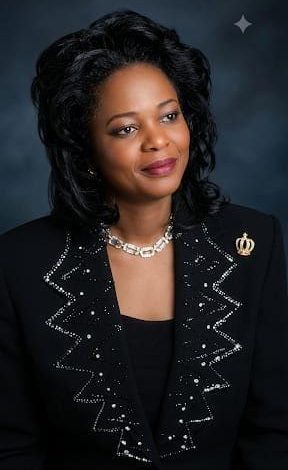
- Washington’s Openness, Russia’s Diplomatic Flexibility and Eight Inconclusive Security Council Polls Present a New Opportunity for African Leadership
The contest for the tenth United Nations Secretary-General has entered a defining phase. Eight Security Council straw polls, two late nominations and significant diplomatic statements from Washington and Moscow have reinforced an important reality: the search for an internationally acceptable leader has not formally concluded.
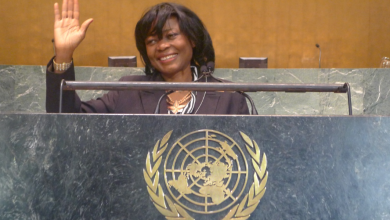
At this critical moment, Akasoba Zainab Duke-Abiola, mni, of Nigeria, is being advanced as an African woman around whom a new international consensus could be explored.
Her prospective candidature brings together constitutional jurisprudence, international diplomacy, peacebuilding, strategic governance, human rights and sustainable development at a time when the United Nations requires effective, independent and unifying leadership.
Washington and Moscow: The Emerging Diplomatic Opportunity
On 16 October 2026, United States Ambassador to the United Nations Mike Waltz expressed openness to appointing a female Secretary-General, declaring:
“Of course, if the best candidate is a woman, we would welcome that.”
Washington emphasized leadership competence, institutional reform and the restoration of the United Nations’ effectiveness in international peace and security.
On 5 November 2026, senior Russian Foreign Ministry official Kirill Logvinov confirmed Moscow’s willingness to consider candidates outside Latin America and the Caribbean should nominees from that region fail to secure sufficient Security Council support.
The diplomatic significance is substantial: Washington has emphasized merit beyond geographical convention, while Moscow has acknowledged that regional preference need not be absolute.
Although neither statement constitutes an endorsement of an African woman, together they create a legitimate basis for examining qualified female candidates beyond the initially preferred region.
Duke-Abiola’s supporters regard this convergence as a compelling opportunity for Nigeria.
Eight Polls, Two Late Entrants and an Unfinished Contest
Eight informal Security Council straw polls have taken place, but the process has yet to culminate in a formal recommendation and appointment.
A leading position in an informal poll is not equivalent to a final Security Council recommendation or General Assembly appointment.
Furthermore, the United Arab Emirates’ nomination of Lana Nusseibeh on 21 October and Türkiye’s nomination of Feridun Sinirlioğlu on 1 November demonstrate that additional nominations have remained possible even at an advanced stage.
Nigeria therefore retains an opportunity to present Duke-Abiola formally, subject to the United Nations’ selection requirements and the remaining timetable.
Why Africa? Why a Woman? Why Duke-Abiola?
For over eighty years, no woman has occupied the office of United Nations Secretary-General.
Meanwhile, Africa continues to confront some of the world’s most acute security, humanitarian, developmental and climate-related vulnerabilities.
The continent’s experience of conflict, displacement, inequality and institutional fragility makes African perspectives indispensable to global decision-making.
Africa does not seek international sympathy. It seeks recognition of its leadership capacity, diplomatic contributions and rightful participation in shaping global solutions.
An African woman at the helm of the United Nations would embody both a historic breakthrough in women’s leadership and an important recognition of Africa’s contribution to international peace and development.
Duke-Abiola’s supporters present her qualifications as relevant to this historic opportunity.
A British-trained Barrister-at-Law, constitutional jurist, Distinguished Member of Nigeria’s National Institute, international mediator and multidisciplinary scholar, she brings professional engagement across international law, strategic security, governance, migration, peace and conflict resolution, and sustainable development.
Her proposed leadership philosophy is Principled, Practical and Progressive:
Principled: Defending the United Nations Charter, international law, justice and human dignity.
Practical: Advancing preventive diplomacy, mediation, institutional accountability and measurable results.
Progressive: Strengthening multilateralism, sustainable development, gender inclusion and institutional renewal.
Her supporters present this combination as a foundation for engaging the Global North and Global South, while seeking the confidence of permanent and elected Security Council members.
An Established African Endorsement
In August 2026, the African Policy and Research Consortium (APRC) endorsed Duke-Abiola’s prospective candidature and called upon the Federal Government of Nigeria to advance her nomination.
That endorsement established an organised foundation of African policy advocacy before the latest diplomatic developments.
The immediate requirement is to translate this support into formal governmental nomination and substantive international consultations.
Nigeria’s Moment of Diplomatic Leadership
President Bola Ahmed Tinubu, GCFR, now has an opportunity to consider presenting a Nigerian woman whose proposed leadership priorities address the United Nations’ central challenges.
Washington’s emphasis on merit, Moscow’s conditional geographical flexibility, the unfinished formal appointment process and the acceptance of late nominations provide the diplomatic context for such consideration.
With António Guterres’s tenure ending on 31 December 2026, the remaining period is consequential.
A formal Nigerian nomination would permit Duke-Abiola’s credentials and programme to be examined within the international selection framework.
The African Woman for Global Consensus
The United Nations requires leadership capable of navigating geopolitical divisions, restoring institutional confidence and advancing international peace and development.
Akasoba Zainab Duke-Abiola, mni, is being presented as a prospective African consensus candidate whose legal scholarship, strategic experience, international outlook and commitment to principled multilateralism merit serious consideration.
Her candidature offers an opportunity to bring African experience and women’s leadership into the continuing international conversation on the United Nations’ future.
The diplomatic door has not formally closed. Nigeria has an opportunity to place her candidature before the international community.
The question is whether the remaining selection process will accommodate another African voice with a universal vision for global leadership.