AGRICULTURE, LIVESTOCK REFORMS: Samia sets priorities

DODOMA: PRESIDENT Samia Suluhu Hassan yesterday outlined key priorities to transform the agriculture and livestock sectors as Tanzania embarks on implementing the National Development Vision 2050.
Speaking at the climax of the 2026 Nane Nane celebrations at the Dr John Samuel Malecela grounds in Dodoma, she said the reforms would focus on stronger extension services, technology, research, access to finance, markets and peaceful coexistence between farmers and livestock keepers to increase productivity and incomes.
A key priority, she said, is integrating the National Agricultural Extension Services Agency (NAESA) into local government systems to ensure extension services reach farmers more effectively.
“I want the activities implemented by this agency to become part of local government systems at all levels. Through this, it will be able to perform its responsibilities effectively and reach the people we are targeting,” President Samia said.
NAESA, which began operations in July, is spearheading reforms in extension services. During the event, the President handed over 48 vehicles to facilitate its first phase of operations.
She directed the Ministries of Agriculture, Livestock and Fisheries and the President’s Office–Regional Administration and Local Government (PO-RALG) to ensure the agency operates effectively within the Decentralisation by Devolution (D by D) framework.
The President also tasked agricultural, livestock and fisheries research institutions with developing affordable, modern technologies to boost production.
She cited a crop-spraying drone developed by young Tanzanian innovators, saying the government had agreed to support construction of a larger model capable of carrying 10 litres of agricultural chemicals.
“If it performs well, the government will continue supporting its production so more farmers can use drones instead of carrying chemicals on their backs,” she said.
President Samia described access to finance as another pillar of agricultural transformation, noting that the Tanzania Agricultural Development Bank (TADB) had expanded its capital from 60bn/- in 2021 to 452bn/- currently, while total lending had reached 1.5tri/-.
Of the loans issued, the government disbursed 1.3tri/- while development partners, including JICA and the French Development Agency (AFD), contributed 261bn/- through the bank.
She said the government’s investments were already yielding results, citing a 2025 Food and Agriculture Organisation (FAO) assessment showing Tanzania’s cereal production increased by 22 per cent, from 11.4 million tonnes in 2023 to a record 13.9 million tonnes in 2024.
The President also said Tanzania had improved its performance under the African Union’s Malabo agricultural commitments, reflecting progress towards achieving continental agricultural development targets.
Despite the achievements, she said greater emphasis would be placed on raising productivity, strengthening research and innovation, reducing post-harvest losses and expanding access to finance.
She underscored the importance of reliable markets, saying increased production should be driven by demand both locally and internationally.
“Identifying reliable markets encourages higher production,” she said, citing tobacco, coffee and seaweed as examples of commodities whose output had increased after stable markets were secured. President Samia said the reforms were aligned with Vision 2050, which identifies agriculture, livestock and fisheries as strategic sectors for industrialisation, employment creation and economic growth.
She also directed continued efforts to resolve conflicts between farmers and livestock keepers, saying harmonious coexistence was essential for sustainable production.
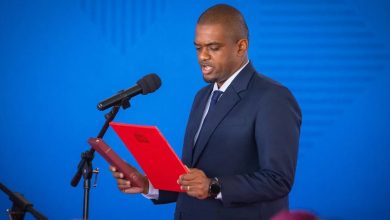
Meanwhile, Minister for Agriculture Daniel Chongolo said the government was accelerating agricultural transformation through youth participation, affordable financing, improved markets and better post-harvest management.
He said the Building a Better Tomorrow (BBT) programme was being expanded to 18 councils, while the government had earmarked 300bn/- through seven banks to support more than two million young people and women engaged in agriculture, livestock and fisheries.
He added that strategic grain marketing centres with storage facilities would be established in Ruvuma, Njombe, Songwe and Rukwa to reduce post-harvest losses, strengthen markets and improve food quality.
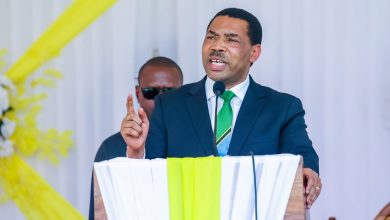
Minister for Livestock and Fisheries, Dr Bashiru Kakurwa, said increased government investment had strengthened livestock production, disease control, infrastructure development and access to export markets.
He said the ministry’s budget had increased from 168.25bn/- in 2022/23 to 433.38bn/- in 2026/27, enabling implementation of key programmes.
According to the minister, cattle numbers rose from 39.2 million to 40.57 million, goats from 28.59 million to 29.99 million and chickens from 108.22 million to more than 113.36 million.
He added that Tanzania had expanded export markets for eggs, chicks and meat to countries including Ghana, Sierra Leone, Ivory Coast, China and Saudi Arabia.
In the fisheries sector, production increased from 412,821 tonnes in 2024/25 to about 600,000 tonnes this year, supported by expanded fish farming through cages and ponds.
Dr Kakurwa said the 280.58bn/- Kilwa Masoko Fishing Port was 99.99 per cent complete and expected to create about 3,000 direct and 30,000 indirect jobs.