Africa Prize shortlist features Tanzania’s Faith Kuya, women engineers
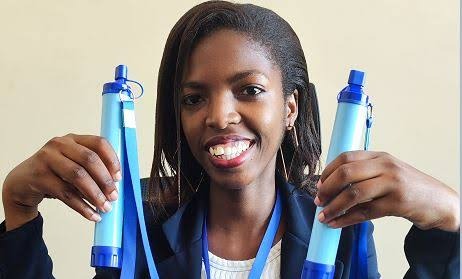
DAR ES SALAAM: TANZANIAN engineer Faith Kuya has been shortlisted for the 2026 Africa prize for Engineering Innovation, joining a group of women engineers whose work is redefining how essential services such as water, healthcare, transport and education are delivered across Africa.
Kuya’s WaterBank system, developed by SafeSip, is a solar-powered water utility designed for off-grid communities where access to safe and reliable drinking water remains limited. The system treats water at point of use, monitors performance remotely, and allows users to pay digitally through prepaid cards, reducing dependence on cash transactions and improving reliability in areas beyond formal utility networks.
Her selection places her among a cohort of innovators whose solutions are shaped less by laboratory theory and more by everyday constraints unreliable infrastructure, long travel distances for services, and shortages of specialists.
Among them is South African engineer Sincengile Ntshingila, who has developed LabZero, a virtual laboratory that allows biomedical students and early-career researchers to simulate core laboratory procedures before stepping into physical labs. The platform is designed to bridge gaps in training where equipment, consumables, and laboratory space are limited or too costly for repeated practice.
From Rwanda comes Millicent Kariuki with HarakaPlus, a mobility platform that brings real-time public transport data to commuters and operators. By combining GPS tracking, passenger inputs, and route information, the system helps passengers anticipate bus arrivals while giving operators tools to better manage demand and scheduling.
In Kenya, Naom Monari is addressing access to kidney treatment through Renal Roads, a mobile dialysis unit built from a converted shipping container. Equipped with dialysis machines, water purification systems, and solar power, the unit is designed to bring treatment closer to rural patients who would otherwise travel long distances for regular care.
ALSO READ: Govt reaffirms support for women engineers
Another shortlisted Kenyan entrant, medical doctor and engineer Alice Muhuhu, who works on early detection of cardiac conditions through MoyoECG, a wearable electrocardiogram device developed under Aurora Health Systems. The device uses artificial intelligence to help frontline health workers detect heart abnormalities in settings where specialist care and diagnostic equipment are limited.
The innovations share a common thread; designing engineering solutions that work under real-world constraints rather than ideal conditions. They target gaps in systems that millions of people rely on daily but often struggle to access consistently.
Their inclusion on the Africa Prize shortlist underscores a broader shift in African engineering, where women are increasingly shaping not only participation in the field but also the priorities that define it.
The Africa Prize for Engineering Innovation, run by the Royal Academy of Engineering, provides funding, mentoring, and technical support to help early-stage African innovators move from prototype to market-ready solutions. It has become one of the continent’s key platforms for scaling engineering-led responses to development challenges.
Together, the shortlisted engineers reflect a changing landscape in which engineering is increasingly measured not by complexity but by impact and by how effectively it improves everyday life in communities that have long been underserved.