Africa, globe benefit from Xi Jinping’s fairness vision
THE evolving global landscape, characterised by diverse governance and justice ideologies, poses challenges for nations striving to inspire hope effectively.
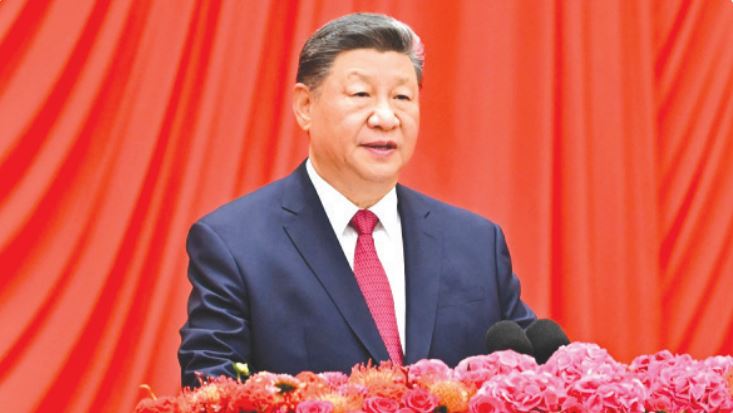
In this context, President Xi Jinping at the “Shanghai Cooperation Organisation” Meeting held in Tianjin, China, on 1 September 2025, proposed a pathway that emphasises sovereign equality, the international rule of law, multilateralism, a people-centred approach and practical measures, presenting a potential solution that contrasts with the methods suggested by other actors in global affairs.
From President Xi Jinping’s perspective, the ongoing global power realignment offers an opportunity to bridge the governance gap and build a fairer, more just international order.
Although not many may be aware of global politics and its influence, along with the short-term, medium-term and long-term repercussions, currently, African nations have become a dynamic force in the international political arena, a growing participant in the global economy, and notably a key component of the Global South, a significant pole in the multipolar landscape and an essential contributor to global governance.
Nonetheless, as African nations become increasingly dynamic, it is disheartening to observe that, whether aware or unaware, the continent continues to grapple with numerous obstacles to peace and development. Indeed, the international community has yet to give African nations the respect they deserve, a situation that has left the ambitions of the African people unrecognised and consequently, Africa’s potential for global influence remains underrealised.
ALSO READ: Journalists safeguard Tanzania’s unity, enduring Union
As I have written previously, the historical economic injustices now faced by some African nations remain a deep moral stain on humanity, and calls for justice grow stronger, presenting a significant challenge that the global community must address today.
Throughout history, there have been periods of extended oppressive colonial rule in new forms and blatant racial discrimination against Africa that cannot be denied.
Although many might disagree with my viewpoint, this new wine in an old bottle forms the fundamental root of all historical injustices on the continent that continue to cause some nations to cling to a colonialist outlook, exhibiting a self-righteous attitude towards African affairs in a way that when critically analysed, only favours one side.
Building on this foundation and considering the ongoing global geopolitical and dynamic landscape, I support President Xi Jinping’s approach to the Global Governance Initiative (GGI). In my view, President Xi Jinping believes that adopting core principles such as sovereign equality, the international rule of law, multilateralism, a people-centred approach, and taking tangible actions fairly could help address the global governance deficit and enhance the fairness and equity of the global system.
As an economic and investment analyst who has closely observed and valued the Chinese government’s perspective on dignity and equality in the justice system, I am unequivocally convinced by China’s endorsement of Africa’s expanded role on the global stage, advocating for greater representation and a more influential voice within the multilateral governance framework.
Considering China’s role as a global economic superpower and the ongoing development of meaningful collaborations proposed by President Xi Jinping, highlighting sovereign equality, international rule of law, multilateralism, a people-centred approach and tangible actions to support African nations in their pursuit of autonomy in setting their own objectives, I will analyse what sovereign equality entails and the longterm benefits African nations are likely to gain.
I believe that sovereign equality will help rebalance power imbalances. The GGI’s emphasis on sovereign equality, in my view, will greatly benefit African nations that have historically experienced structural disparities within the international system. This matter is highly important, as it is widely recognised that global decision-making has often been disproportionately influenced by advanced economies.
This has, in effect, limited Africa’s policy independence concerning trade, investment and industrialisation strategies.
Therefore, by advocating for sovereign equality as outlined by President Xi Jinping, I believe there will be a diplomatic platform that allows African countries to negotiate on fairer terms, assert their developmental priorities and resist externally imposed conditions. In the long term, this will strengthen Africa’s ability to develop policies suited to its unique contexts, an essential foundation for genuine economic independence.
A governance system rooted in international rule of law will provide African nations with more predictable, stable and transparent global economic interactions.
ALSO READ: Street vendors, bajaji, bodaboda unite for peace, reject unrest
This situation is important because African countries have faced historical injustices for decades, along with volatility in commodity markets, exposure to arbitrary sanctions and changing global policy preferences that have affected financing flows.
The GGI will therefore follow international law to reduce discretionary and politically motivated actions by powerful states. The presence of predictability and a structured justice system significantly reduces the risks faced by African economies, while also boosting the attractiveness of member states to long-term investors who value systems based on established rules and mutually beneficial outcomes.
As a result, this will strengthen Africa’s ability to pursue industrialisation, acquire technology and build large-scale infrastructure over time. The pursuit of economic independence in Africa, in my view, demands a unified approach, particularly in discussions on trade, climate finance, debt restructuring and global supply chains.
The proposal made by the Chinese President regarding multilateralism, in my opinion, aligns with the ambitions of the African Union for cohesive regional integration through initiatives like the African Continental Free Trade Area (AfCFTA).
By promoting inclusive multilateral platforms, this initiative helps African nations strengthen their bargaining power, articulate continental priorities and pursue shared interests, such as fair access to global markets, greater representation in international financial institutions and a more significant role in shaping global norms. This transformation will enable Africa to shift from a position of compliance to one of substantial influence in establishing rules.
The GGI’s people-centred approach, when examined carefully, closely aligns with the development challenges faced by Africa, including poverty reduction, youth employment, digital inclusion and improvements in social welfare.
Unlike models that focus solely on economic growth, a governance framework centred on people emphasises the importance of human capital, community well-being and the equitable distribution of resources. For African nations, this signifies a stronger focus on initiatives that directly enhance public welfare, such as healthcare, education, digital infrastructure and agricultural modernisation.
This support undoubtedly promotes longterm economic independence by fostering a skilled workforce, lowering socioeconomic vulnerabilities and boosting domestic productivity. The GGI’s focus on tangible, measurable actions is very relevant for Africa, a region where many international initiatives have historically resulted in grand declarations but few real outcomes.
In my opinion, President Xi Jinping’s initiative aims to foster pragmatic cooperation through technology transfer, capacity building, the implementation of environmentally sustainable projects and the development of financial support mechanisms. Focusing on outcomes helps bridge the global governance gap by linking promises with tangible actions.
For African nations aiming for economic independence, these practical partnerships offer access to funding, specialised knowledge and essential infrastructure that promote self-sustaining growth. This approach fundamentally reinforces Africa’s objectives to develop robust economies, lessen reliance on external influence, and engage in global governance with confidence and competence.
The initiative and outlook presented by President Xi Jinping are likely to bring many benefits. Firstly, it will boost Africa’s influence in global decision-making processes. The perspective of China’s President on strengthening Africa’s international role is expected to guide the global system towards greater inclusivity, allowing African nations to take a more active part in shaping global rules and norms.
ALSO READ: AGRA’s 2025 Impact: How agriculture is creating jobs, dignity, and opportunity for Tanzania’s youth
Throughout history, many global governance frameworks including the UN Security Council, Bretton Woods institutions and trade negotiation platforms, have consistently failed to adequately represent the interests of African nations.
As China advocates for the removal of historical injustices, African nations are poised to increase their influence in shaping global policies that significantly impact their development, covering areas such as climate finance, trade regulations, global health security and technology standards.
This effort aims to elevate African nations from the margins to a leading role within the landscape of global governance. Enhancing Accessibility to Build Fairer Economic and Financial Systems. Better representation in multilateral institutions can lead to more equitable financial flows, increased access to concessional financing and support for reforming debt governance frameworks.
China’s support strengthens Africa’s position in advocating for reforms at the IMF, the World Bank and other financial institutions, which currently operate under criteria and frameworks that do not reflect the interests of developing economies.
This support will enable African nations to achieve a fairer distribution of Special Drawing Rights, develop more equitable credit rating systems and increase investment in infrastructure, climate resilience and industrial growth.
This enhanced position will reduce reliance on expensive external borrowing and help African nations deploy resources in line with their long-term development objectives.
Thirdly, when China offers its support to Africa as a united entity with a consistent perspective, it will strengthen the African Union’s efforts to promote deeper regional integration through Agenda 2063 and various regional economic communities such as SADC, EAC and ECOWAS. Recognising Africa’s unified presence more clearly in global discussions will allow the continent to participate in negotiations as a cohesive body rather than as separate individual states.
This cohesive strategy aims to strengthen Africa’s position in international trade, climate negotiations, digital governance and South–South cooperation. African nations improve their ability to negotiate better terms within global value chains, promote technology transfer and safeguard their strategic interests.
In conclusion, advancing a more equitable and just framework for global governance will help recalibrate a system historically shaped by Western supremacy, making it more congruent with contemporary geopolitical and economic conditions.
Africa’s development priorities, including industrialisation, youth employment, green growth and digital inclusion, gain greater visibility and integration into global agendas when the continent’s voice is effectively amplified.
This promotes a fairer, more equitable governance framework, enabling African perspectives to influence international policy outcomes. The initiative proposed by President Xi Jinping aims to empower African nations in their pursuit of economic independence, the creation of sovereign policy frameworks and the development of sustainable paths that reflect Africa’s distinct needs, rather than conforming to external mandates that have often been unjust.
What can be observed in these challenging times of historical injustice is that China is demonstrating its sense of duty, while certain countries cling to outdated hegemony, China is fulfilling its responsibility by proposing innovative and fair solutions to emerging global challenges.