A year of resilience, progress
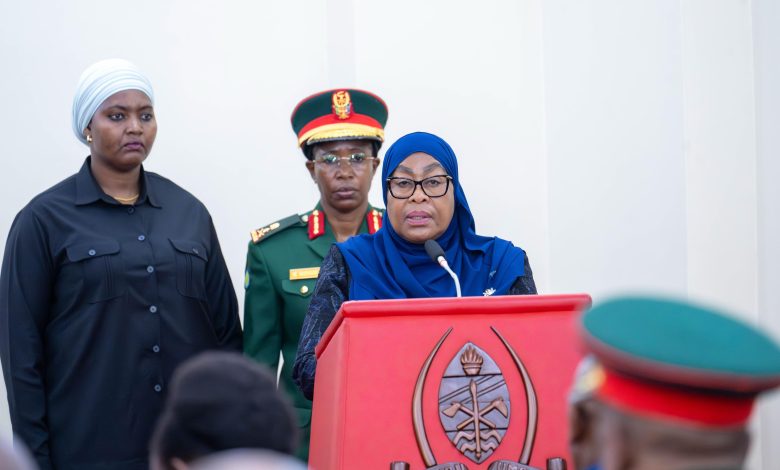
DODOMA: PRESIDENT Samia Suluhu Hassan’s first year in her second term has been characterised by continued investment in strategic infrastructure and social services, with ministers, Members of Parliament and citizens pointing to progress in energy, transport, water, health, education and economic empowerment.
As the country marks the first anniversary of her swearing-in for a second term on November 3, 2025, the leaders say sustaining peace, accelerating development and ensuring that citizens benefit from public investments remain key priorities.
In interviews with the ‘Daily News’ in Dodoma, they identified the Julius Nyerere Hydropower Project (JNHPP), the Standard Gauge Railway (SGR) and Government City in Mtumba among the major development milestones recorded under the administration.
Finance Minister Ambassador Khamis Mussa Omar said the government had also prioritised restoring stability following challenges surrounding the October 29, 2025 General Election.
He said the government had taken measures to strengthen peace, law and order, including establishing a commission to investigate election-related violence and announcing plans to establish a reconciliation commission.
“We have gone through some challenges. Following last year’s election, the President took special measures to restore stability. Peace has continued, but there were concerns about stability and law and order, and those efforts are still ongoing,” he said.
Amb Omar also cited the completion of the JNHPP, which has added approximately 2,115 megawatts to the country’s electricity generation capacity, compared with about 1,700 megawatts before its completion.
He said investments in the SGR, roads and other strategic infrastructure, alongside improvements in essential services, remained central to the government’s development agenda.
Minister for Water Jumaa Aweso said the administration had made significant progress in expanding access to clean and safe water, particularly in rural communities.
He s a i d that, out of Tanzania’s approximately 12,333 villages, 10,758 had been reached with water services, leaving 1,575 to be covered under the government’s five-year development plan.
Mr Aweso identified the National Water Grid as a key strategy for transferring water from major sources to areas experiencing shortages.
He also cited the supply of Lake Victoria water to Dodoma and Tabora, alongside the ongoing Kidunda and Farkwa water projects. He said a project worth more than 400bn/- was also being implemented to supply Lake Victoria water to districts in Simiyu Region.
On health and education, Siha MP Dr Godwin Mollel (CCM), a former Deputy Minister for Health, cited improvements in healthcare services, saying investments in the health sector had contributed to reducing maternal deaths from 556 to 104 per 100,000 live births.
ALSO READ: 25 YEARS AFTER 9/11: Why cyber resilience matters more than ever
He added that improvements in hospitals and medical technology had reduced the need for some patients to seek treatment abroad.
In his constituency, Dr Mollel said the number of villages without primary schools had declined from 21 to three, while more than nine secondary schools had been constructed.
Special Seats MP Sikudhani Chikambo (CCM) said improved domestic revenue collection had strengthened the government’s capacity to finance development projects, including the SGR, road construction and school infrastructure.
She urged the government to sustain implementation of the CCM Election Manifesto and ensure that its commitments translated into tangible benefits for citizens.
Katoro MP Engineer Kija Ntemi identified the JNHPP, Magufuli Bridge and Government City in Dodoma as notable achievements, saying the projects had strengthened infrastructure and improved the delivery of public services.
Beyond major infrastructure investments, citizens said government initiatives had also opened up economic opportunities and improved livelihoods.
Ms Elizabeth Kasimila, a Dodoma resident and member of the Kazi Iendelee Group, said the group had secured government tenders worth more than 2bn/- through the National e-Procurement System of Tanzania (NeST), creating over 450 jobs.
She attributed the achievement to government measures aimed at enabling disadvantaged groups to participate more actively in economic activities.
“This is real. We came together as a group and registered on the system, and we have managed to secure various tenders. I thank the government under President Samia Suluhu Hassan, and I am ready to show others how they can seize these opportunities,” she said.
Residents of Buigiri and Chamwino wards in Dodoma Region commended Chamwino District Council for launching a land surveying programme, saying it would help resolve longstanding land disputes and increase property values.
Mr Keneth Willison, a Buigiri resident, said the initiative would enable residents to obtain formal land ownership documents, addressing challenges associated with unsurveyed land.