A journey towards the ‘day of truth’
DAR ES SALAAM: TODAY, April 23, 2026, the Independent Commission of Inquiry investigating violence that followed Tanzania’s October 29, 2025 General Election will formally submit its final report to President Samia Suluhu Hassan, bringing to a close a 156-day national investigation that has gone through legal battles, two major extensions and extensive nationwide evidence gathering.
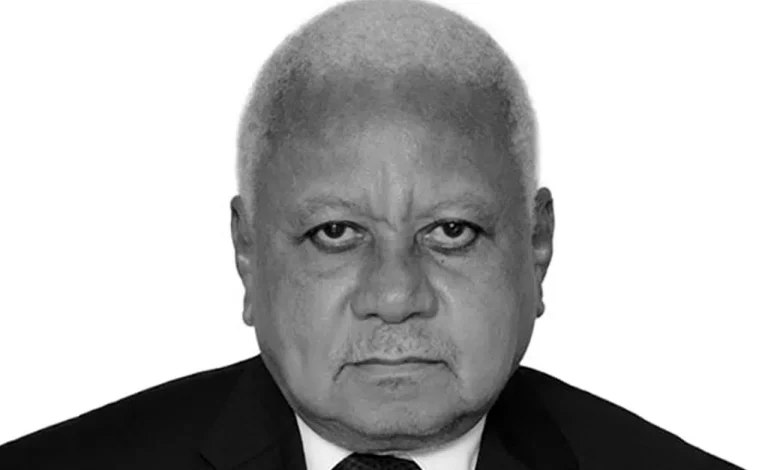
The report, prepared by the commission chaired by retired Chief Justice Mohamed Chande Othman, will today be handed over at State House this morning, marking what officials and observers have termed the “day of truth” on one of the most sensitive post-election inquiries in recent years.
The journey began on November 18, 2025, when President Samia announced the establishment of a Presidential Commission of Inquiry to investigate the violence that erupted during and after the general election.
The unrest followed the October 29, 2025 and protests that escalated into clashes with security forces in several parts of the country.
At the time of its formation, the commission was mandated to investigate the causes and circumstances of the disturbances, as well as propose recommendations for national reconciliation and institutional reforms.
President Samia said during the announcement: “The Government has taken the decision to establish a commission to investigate the matter so that we may understand the root cause and the report produced will guide us in dialogue aimed at restoring peace and national unity.”
The commission was chaired by retired Chief Justice Mohamed Chande Othman and included seven other members drawn from the judiciary, diplomacy and security institutions.
These included retired Chief Justice Ibrahim Juma, former Chief Secretary Ombeni Sefue, diplomat Radhia Msuya, retired military officer Paul Meela, former Inspector General of Police Said Mwema, diplomat David Kapya and former SADC Executive Secretary Stergomena Tax.
Retired Chief Justice Othman is a jurist with extensive experience in both national and international judicial and human rights mechanisms, having previously led Tanzania’s Judiciary as Chief Justice and served in senior United Nations investigative and advisory roles across Africa and beyond.
He was joined by retired Chief Justice Prof Ibrahim Hamisi Juma, a distinguished legal scholar and former head of Tanzania’s Judiciary, who has also played key roles in judicial reform, academia and regional judicial governance structures in East and Southern Africa.
Also among the members is Ambassador Ombeni Sefue, a seasoned diplomat and former Chief Secretary to the Government of Tanzania, who has served in key international postings including the United Nations and has been involved in high-level governance, public service reform and continental peer review mechanisms under the African Union.
The panel further includes Ambassador George Kahema Madafa, a career diplomat and governance expert with experience in energy sector leadership and participation in presidential commissions and national policy review processes, particularly in foreign affairs and institutional performance assessments.
Ambassador Radhia Msuya, another member of the commission, brings over four decades of diplomatic service, having worked across multiple continents in conflict resolution, multilateral diplomacy and peacebuilding efforts, particularly within Africa and the United Nations system.
Rounding out the team is Ambassador David Kapya, a senior peace and mediation expert widely known for his involvement in complex regional peace processes, including initiatives in the Great Lakes region, Sudan and South Sudan, as well as wider African Union and international mediation frameworks. The commission officially began its work on November 20, 2025, when it was given 90 days to complete its inquiry, ending on February 20, 2026.
Under that timeline, the report was initially expected to be completed in February 2026.
From the early stages, the commission noted that its work would be evidencedriven and not based on speculation.
Justice Othman said during the inquiry process: “Our main responsibility has been to collect evidence and the commission goes wherever the evidence leads.”
He further clarified the nature of evidence being collected: “Our evidence is not based on rumours or street stories. It is sworn evidence where individuals pledge under their faith to tell the truth.”
He added that the commission’s mandate was not to assign blame: “We are not here to accuse anyone of a crime or civil wrongdoing. Our task is to determine who was affected, how they were affected, where and why.”
As the initial 90-day period expired, the commission was granted a 42-day extension, pushing the deadline from February 20, 2026 to April 3, 2026.
The extension was intended to allow the commission to complete additional investigations, verify evidence and accommodate more testimonies from stakeholders who had not yet been reached.
A statement issued during the extension process said: “The objective is to ensure that no person or institution is denied the opportunity to be heard.”
The commission cited several reasons for the extension, including the complexity of the evidence collected, the need for forensic analysis and the large number of citizens submitting information.
Justice Othman explained: “This additional time allows us to ensure completeness and fairness in our findings. We are determined to produce a report that reflects all perspectives.”
As the April 3 deadline approached, the commission requested additional time to finalise its report.
On April 4, 2026, authorities granted a further 21-day extension, pushing the deadline to April 24, 2026.
The commission said the additional time was necessary to complete final verification of evidence, analysis of findings and translation of the report into English and Swahili.
The commission noted: “The objective is to ensure that all evidence is thoroughly reviewed and properly documented before submission.”
Over the course of its work, the commission collected testimony from more than 63,603 individuals across the country through sworn statements, written submissions, questionnaires and expert consultations.
Justice Othman said: “We received an overwhelming amount of evidence far more than we initially expected.” He added:
“Sworn statements carry substantial legal weight and can even be admissible in court.”
The commission also relied on expert input from specialists in medicine, law, economics, psychology and digital forensics to analyse different aspects of the unrest.
To widen participation, the commission used multiple channels including physical hearings, written submissions and digital platforms.
Anonymous questionnaires were introduced to allow individuals who feared exposure to still share their experiences.
Justice Othman explained: “This method allowed people to freely explain the causes, triggers and impacts of the violence without revealing their identities.”
Today’s submission marks the culmination of a process that began in November 2025 and has since passed through two formal extensions and extensive nationwide engagement.
The report is expected to outline the causes of the violence, the sequence of events during and after the election and recommendations aimed at preventing similar incidents in future elections.
Justice Othman said: “We aim to explain what happened, what we discovered and what should be done moving forward.” He added that the report has been prepared in both English and Swahili due to its national importance and international needs.
ALSO READ: ‘Tanzania is one, indivisible’
As the country awaits the findings, attention is expected to shift to the implementation of the recommendations and their implications for Tanzania’s democratic processes, governance systems and longterm national cohesion.
The submission of the report represents a critical milestone in the country’s efforts to address post-election tensions through institutional mechanisms and reinforce the principles of accountability, transparency and unity.