A choice today, a stronger Tanzania tomorrow
DODOMA: A WOMAN in rural Dodoma once believed that using contraception would “destroy her eggs”. The fear was not born from a medical consultation, but from a misconception passed from one generation to another. When accurate information finally reached her, she made a different discovery: family planning was not about taking away her choices, but giving her the freedom to make them.
Her name is Agnes Matonya, a 22-year-old mother of two.
In March 2025, through community outreach supported by UNFPA in partnership with UMATI through MSI Tanzania, Agnes received information about sexual and reproductive health and family planning. She discussed her options with her husband and chose a contraceptive method suitable for her circumstances.
Her description of the change is strikingly simple… “Now, I’m free.”
Agnes’s experience captures a much bigger story unfolding across Tanzania as the country seeks to make family planning more than a health service and instead recognise it as an investment in human capital, household wellbeing, women’s empowerment and the country’s long-term economic transformation.
As Tanzania begins implementing the Tanzania Development Vision 2050, the debate around contraception is therefore taking on a broader dimension. At the heart of the discussion is a fundamental question…. how can the country ensure that women, couples, adolescents and young people have the information, services and freedom they need to make informed and voluntary decisions about their reproductive lives?
The question is particularly important as Tanzania confronts changing global health financing arrangements and growing pressure to mobilise domestic resources to sustain essential health services.
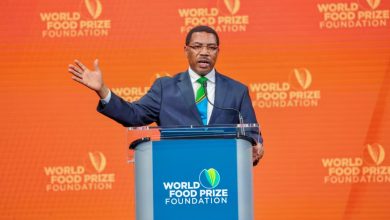
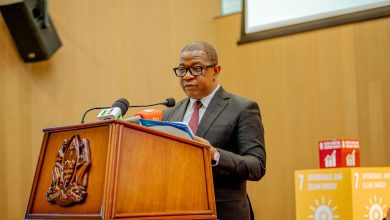
Speaking during the commemoration of World Contraception Day 2026, Director of Nursing and Midwifery Services in the Ministry of Health, Ziada Sellah, who represented the Permanent Secretary in the Ministry of Health, said the theme, “No Barriers, Just Choices: Contraceptive Access Now,” was consistent with government efforts to ensure that family planning methods reach people in need at all levels of healthcare delivery.
She said the commemoration provided an important opportunity for dialogue, knowledge-sharing and renewal of the country’s commitment to family planning as part of the national health and development agenda.
More importantly, she linked family planning directly to the implementation of Dira 2050, saying the country had an opportunity to reflect on how access to reproductive health services could contribute to the aspiration of building a prosperous, just, inclusive and selfreliant nation.
That connection is becoming increasingly significant.
Dira 2050 places Human Capital and Social Development at the centre of national transformation. Its second pillar recognises a healthy and well-educated population as a foundation for innovation, productivity and economic growth.
For Tanzania, this means the conversation about family planning can no longer be confined to clinics, maternity wards or reproductive health programmes.
It reaches classrooms, workplaces, households, communities and the wider economy.
UNFPA Deputy Representative, Melissa McNeil Barrett says family planning should not be viewed simply as a commodity.
“It is about information. It is about access. It is about choice. And ultimately, it is about agency,” she said.
Her message reflects the experience of women such as Agnes, whose barrier was not necessarily the absence of a contraceptive method, but the absence of reliable information to challenge a deeply rooted misconception.
According to the information presented during the commemoration, an estimated 259 million women of reproductive age globally who want to delay or space pregnancy still have an unmet need for contraception.
In Tanzania, unmet need for family planning remains at 21 per cent among married women aged 15-49 on the Mainland and 24 per cent in Zanzibar, with the rate rising to 25 per cent among young women aged 20-24.
These figures reveal that availability of contraceptive commodities alone does not automatically translate into access.
Geography can be a barrier. Cost can be a barrier. Misinformation can be a barrier. Stigma can be a barrier. Lack of awareness can be a barrier. Even weaknesses within the health system can prevent people from obtaining the service they need.
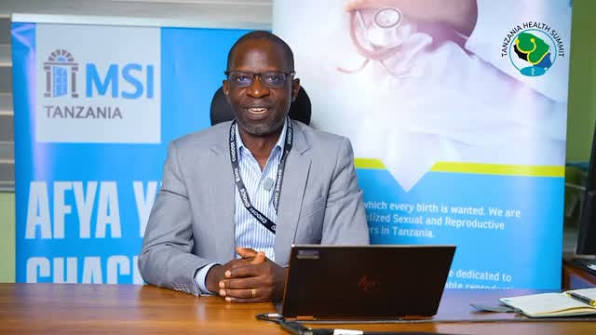
MSI Tanzania Country Director, Patrick Kinemo noted that despite changes in donor funding, the government had continued bringing partners together, coordinating efforts and providing leadership to ensure that family planning services continued to reach communities.
He described family planning as a critical component of maternal, newborn and reproductive health, noting that voluntary contraceptive services contribute to healthier pregnancies and improve the wellbeing of mothers and children while helping reduce preventable maternal deaths.
For Tanzania, he says the challenge is therefore not simply to put more contraceptives on shelves, but to ensure that the entire system around them works.
A woman in a remote community should be able to obtain accurate information. She should be able to receive respectful counselling. She should have access to a range of quality-assured methods. And she should be able to make her decision freely, without coercion, discrimination or judgement.
It means having the information required to make an informed choice. It means being able to start, stop or change a method according to reproductive intentions. It also means receiving services without fear or discrimination.
This broader understanding is especially important for adolescents and young people, who constitute a major demographic force in Tanzania.
At national level, healthier and more productive populations can contribute to economic growth, while health systems may face lower costs associated with unintended pregnancies and preventable maternal and newborn complications.
The economic case is expected to receive further attention through the Family Planning Cost-Benefit Analysis Report and Financing Gap Analysis presented as part of the 2026 commemoration.
The analysis is intended to provide evidence on the social and economic benefits associated with investing in family planning and help policymakers understand whether resources committed to the intervention are generating meaningful benefits for individuals, households and the national economy.
The reports could therefore help strengthen decisions about how family planning should be financed as Tanzania moves towards greater domestic ownership of its health programmes.
The financing question has become increasingly important because international health financing is changing.
Kinemo says sustainable access to contraception depends on stronger national investment as global health financing evolves. It points to evidence from the UNFPA Supplies Partnership showing that partner governments invested a record 68 million US dollars in sexual and reproductive health commodities in 2025, more than six times the level recorded in 2020.
For Tanzania, strengthening domestic financing is seen as a way of building a more resilient and nationally owned health system while reducing vulnerability to uncertainties in external funding.
Tanzania’s FP2030 commitment provides another foundation.
According to Sellah, the commitment includes increasing domestic resources for family planning commodities by at least 10 per cent annually and ensuring that allocated funds are fully disbursed.
Such commitments demonstrate that the future of family planning cannot depend entirely on external assistance.
But government cannot do it alone.
ALSO READ: Free health services today, stronger Tanzania tomorrow
UNFPA reported that, with support from UK International Development, it procured 7.15 million US dollars, worth of family planning and maternal health commodities, including 4.73 million US dollars through the UNFPA Supplies Partnership. The support was estimated to contribute to 246,428 Couple Years of Protection and avert 487,844 unintended pregnancies.
The figures illustrate how investment, when combined with functioning supply chains, services and community outreach, can translate into tangible outcomes.
The MSI Tanzania Country Director says barriers include limited information, misinformation, geographical challenges, financial constraints, social barriers and difficulties within the health system.
Implementing partners, he said, were working with the government to bring services closer to communities, particularly those in hard-to-reach and underserved areas, while strengthening health workers and facilities, generating demand, addressing misinformation and improving service quality.
Yet another important dimension is the role of men and boys.
Ms McNeil called on men to become informed and supportive partners by participating in family planning discussions, supporting women and couples to make informed decisions and challenging myths and misconceptions in their families and communities.
That approach fits squarely within the wider ambition of Dira 2050… building a healthier, more productive and empowered population capable of driving Tanzania’s transformation. As the country implements Dira 2050, family planning is increasingly being framed not merely as a matter of contraception, but as part of the investment required to build its human capital.
The call from the 2026 commemoration is therefore straightforward… remove the barriers, strengthen domestic investment, maintain quality services, protect informed and voluntary choice and ensure that no woman or girl is left behind.
Because when people are able to make informed decisions about their reproductive lives, the benefits can extend beyond the individual into families, communities and the wider economy.