Tanzania takes bold steps to revitalize media sector

DAR ES SALAAM: The rapid advancement of technology has been identified as one of the major challenges facing Tanzania’s media industry, prompting the government to initiate reforms aimed at enabling the sector to adapt to these changes.
The reforms seek to enhance investment opportunities, modernize operations, and promote media freedom.
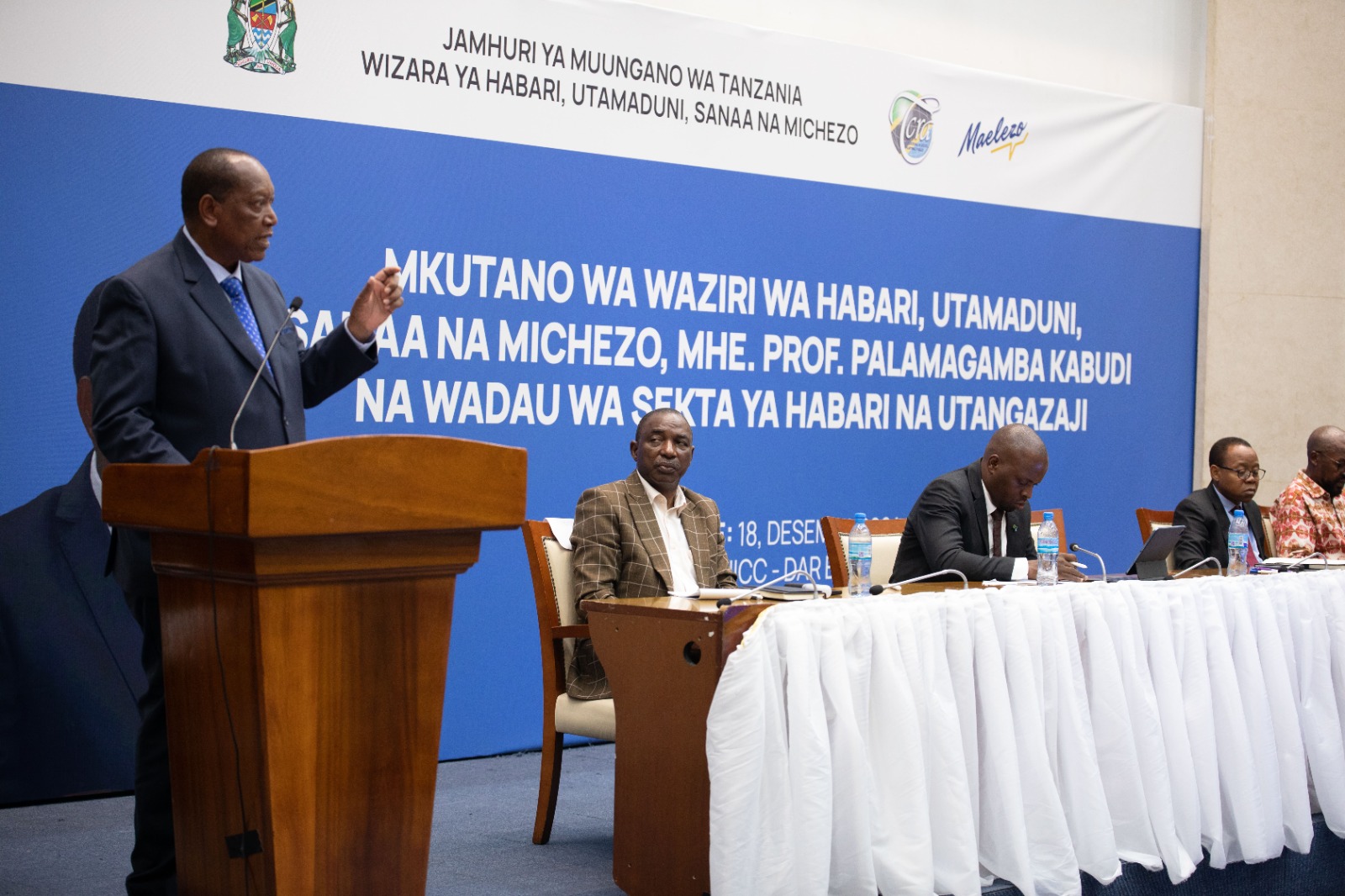
Addressing a stakeholders’ meeting held in Dar es Salaam on Wednesday, the Minister of Information, Culture, Arts, and Sports, Prof. Palamagamba Kabudi, underscored the need for policy improvements to foster positive changes in the sector.
“There have been major technological changes requiring substantial investment globally. According to the current policy, a foreign investor can own up to 49 percent of media shares. I assure you that my ministry, in collaboration with stakeholders, will oversee comprehensive improvements to this policy. Our aim is to establish better laws that enhance media freedom and create a conducive environment for investment, aligning with the current needs for greater investment,” Prof. Kabudi said during his first engagement since assuming office.
He added that the government is reviewing the outdated 2003 Media and Broadcasting Policy, emphasizing the importance of ensuring that the amendments reflect today’s technological realities.
“My ministry will expedite the policy reforms by engaging stakeholders to ensure that the media and broadcasting sectors are governed by policies relevant to current needs,” he added.
Prof. Kabudi also called on media outlets to adapt to the evolving digital landscape by rethinking strategies and embracing innovation.
ALSO READ: Plans to install surveillance cameras at Mkapa Stadium underway
He noted that many media platforms are shifting to online operations, emphasizing the need to remain competitive in the digital era.
Additionally, he urged media practitioners to adopt and implement the sixth-phase government’s “4Rs” philosophy, which advocates reconciliation, resilience, reforms, and results.
“If there are people who have a significant role in advancing these 4Rs, which build the spirit of Tanzania, it is the media. The government is ready to live by the 4Rs with the media. Let us reconcile, be tolerant, and bring about reforms in our media institutions so that Tanzania can move forward,” he noted.
He emphasized the need for media outlets to position themselves as partners of the government rather than competitors, stating: “This ministry is tasked with protecting the nation’s heart—its unity, values, and identity. Media institutions must be at the forefront of promoting Tanzania’s uniqueness and pride.”
On his part, the Permanent Secretary and Government Spokesperson Mr Gerson Msigwa, highlighted the importance of continued collaboration between the government and the media.
“I was looking at people’s opinions when the President saw fit to extend my role as Government Spokesperson and merge the Information Department with the Ministry of Culture, Arts, and Sports. I saw what I saw, but I want to tell you here that the credit goes to you for the cooperation you’ve given me. Our success will be our shared joy, and our failure will be our shared disappointment. I urge us to choose success.”
He encouraged journalists attending government press briefings to actively engage and ask questions, assuring them of the government’s commitment to transparency and accountability.
“In our current practice, journalists are given the opportunity to ask questions. We deliberately included a phone number so citizens can also call in with questions because every question has an answer within the government. So, there is no reason to fear questions, whether from journalists, citizens, or editors. I will provide answers,” he said.