Bridging the digital divide: Huawei’s commitment to Tanzania’s transformation

IN the heart of Dar es Salaam, the 8th Tanzania Annual ICT Conference (TAIC) 2024 unfolded, marking a significant milestone in the nation’s digital evolution. Amidst the discussions and innovations, one name resonated prominently:
Huawei. As part of its mission to support Africa’s digital transformation, Huawei has forged strong partnerships with the Tanzanian government and local businesses, significantly impacting telecommunications and information technology across the country.
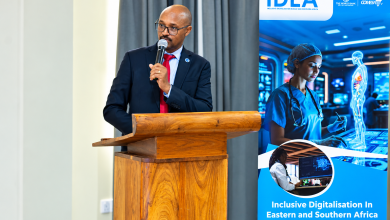
Eric Dong, Huawei’s Managing Director, took to the stage to celebrate Tanzania’s impressive strides toward digitalisation. “
I commend the Government of Tanzania, under President Dr Samia Suluhu Hassan, for its vision in fostering innovation, inclusion and sustainable development through digital technologies,” he remarked, reflecting on over fifteen years of collaboration that has brought connectivity to millions.
Tanzania has seen remarkable advancements, including the upgrade of its network from 2G to 4G and the construction of a National ICT Broadband Backbone, which connects 26 regions. Projects like the DigiTruck a modified 40-foot container equipped with 20 computers, a smart screen and solar-powered internet highlight Huawei’s commitment to education. Launched in partnership with Vodacom, the DigiTruck aims to deliver practical ICT lessons to students in government secondary schools, addressing the critical lack of computer facilities in many areas.
“We’ve successfully launched the DigiTruck programme, allowing teachers to engage with students in a hands-on environment,” Dong noted, emphasising the initiative’s potential to close the digital gap in Tanzania.
With an eye toward sustainable development, Huawei is also spearheading a Smart Village initiative, designed to bring reliable energy and internet connectivity to rural communities.
This project aims to empower schools, hospitals and homes with sustainable power, illustrating the intersection of ICT and renewable energy.
“We believe that rural connectivity must be paired with clean energy solutions,” Dong added, echoing the sentiments of Tanzanian Prime Minister Kassim Majaliwa, who has championed clean energy at international forums.
The Prime Minister Kassim Majaliwa’s gracing the event in turn underscored the government’s commitment to a comprehensive digital economy strategy.
Here, Majaliwa spoke passionately about the need for inclusive financial systems and the implementation of a National Identification Number (NIN) for all citizens to enhance access to services. “
Digital transformation is essential at this time and we must ensure that no one is left behind,” he stated, emphasising the importance of interoperability among government systems.
In a decisive push towards digital transformation, he outlined the strategic initiatives as being aimed at stimulating economic growth and enhancing public services.
Central to this vision was reinforcing the implementation of the NIN, which will be rebranded as the “Jamii Number.”
This initiative aims to encourage widespread registration among Tanzanians, reducing reliance on cash transactions while facilitating access to economic and security services.
ALSO READ: Govt touts inclusivity in digital economy
“The Jamii Number will be pivotal in streamlining our systems,” Majaliwa stated, emphasising the importance of digital identification in fostering financial inclusion and economic participation.
He also highlighted the ongoing “Jamii Exchange,” an information-sharing system designed to simplify data exchange across government platforms, promoting efficiency and transparency.
In an effort to protect citizens’ privacy, the government has established a Personal Data Protection Commission, reinforcing its commitment to secure digital governance.
Alongside this, the Digital Economy Framework Strategy for 2024-2034 is in development, aiming to ensure that tangible improvements are realised across various sectors.
Majaliwa also underscored the sixth-phase government’s dedication to enhancing ICT development. Plans are in place for a new certification board and a comprehensive five-year strategy, set to commence in the 2024/25 financial year, which includes the ambitious launch of a satellite.
This project, in collaboration with the Dar es Salaam Institute of Technology (DIT) and overseen by the United Nations Office for Outer Space Affairs, will be supported by the Japan Aerospace Exploration Agency (JAXA), marking a significant leap in Tanzania’s technological capabilities.
To further this vision, the Prime Minister directed the Ministry of Information, Communication and Information Technology to implement directives from President Samia, focusing on making all government systems interoperable. This interoperability will extend to external institutions, ensuring a cohesive digital landscape.
Majaliwa also urged the ministry to support young innovators in ICT and oversee the establishment of innovation hubs across all regions.
Recognising the vital role of the Information and Communication Technology Commission, he commended their efforts in effectively managing the country’s ICT development.
With these initiatives, Tanzania is poised to navigate the digital age, ensuring that its citizens are not only connected but also equipped to thrive in an increasingly digital world.
The government’s comprehensive approach reflects a commitment to inclusivity and innovation, setting the stage for a brighter future.
As the conference continued, accolades were bestowed upon three university students who won the Huawei ICT Competition Global Grand Prize 2023-2024, a testament to the talent nurtured through these digital initiatives.
On his part, Dr Nkundwe Mwasaga, Director General of the ICT Commission, highlighted Tanzania’s ambitions to become a hub for ICT and artificial intelligence. Collaborations with international partners, such as a Memorandum of Understanding with the Italian government to develop AI language models for Swahili, reflect a forward-thinking approach.
Presiding over also, the Minister of Information, Communication and Information Technology, Jelly Silaa, noted significant achievements in internet and mobile network usage, reporting that 89 per cent of the population now uses 3G and 44 per cent is connected to 4G. “These are significant achievements for our nation,” Silaa remarked, signalling a new era of connectivity.
The TAIC conference, spanning five days, attracted participants from around the globe, culminating in awards for AI and robotics competitions.
The event brought together key figures, including international dignitaries and local leaders, all united in a vision for a digitally empowered Tanzania.
As Huawei continues its journey in Tanzania, the sentiment echoed by Dong rings true: “If you want to go fast, go alone; if you want to go far, go together.” With a shared commitment to digital transformation, Tanzania is poised to embark on a brighter, more connected future.