

Climate change adaptation should be Africa’s priority
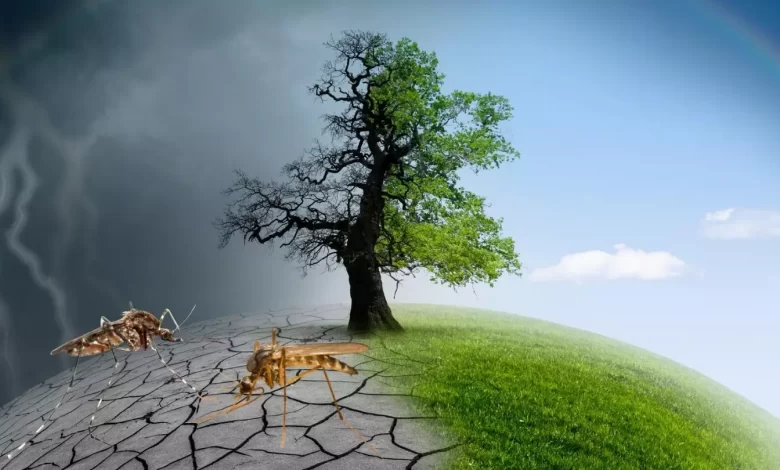
LIFE on planet Earth is under siege. We are now in an uncharted territory. For several decades, scientists have consistently warned of a future marked by extreme climatic conditions because of escalating global temperatures caused by ongoing human activities that release harmful greenhouse gasses into the atmosphere.
Climate change is wrecking the lives of more and more people. In Africa alone, 52 million people – four per cent of the population – have suffered either drought or floods over the past two years, deeply affecting their livelihoods, according to the State and Trends in Adaptation in Africa 2022 report. After four failed rainy seasons, 37 million people today face starvation in the Horn of Africa.
It is adapting to climate change that should be Africa’s priority. First, the damage inflicted by climate change is already happening and will only get worse. Second, because adapting to climate change and building resilience will speed the development of African economies.
Investing to harness technology will create jobs for Tanzanian youths. It will provide long-term solutions rather than short-term fixes for successive waves of climate disasters. And last, the country preparing itself well for climate change means there will be fewer loss and damage claims in the future.
For a country like Tanzania, wide scale, effective adaptation makes the country less vulnerable to climate shocks, reduces poverty and provides new opportunities for economic growth.
But right now, despite well-articulated strategies to fight climate change, Tanzania’s farms, water, tourism and wildlife are dangerously exposed to global warming.
Tanzania is one of the largest countries in East Africa, with diverse topography that gives rise to four distinct climate zones.
Most of the population lives in rural areas that are dependent on rain fed agriculture which is threatened by increasing temperatures, longer dry spells, and intense rain events.
Much of the population also depends on coastal and inland fisheries, which are vulnerable to sedimentation as well as warming ocean and freshwater temperatures.
Despite abundant water resources, Tanzania experiences spatial and temporal water scarcity, which will be exacerbated by climate impacts on the country’s nine major river basins and the continent’s three largest lakes. These factors also increase risks for the country’s hydropower system.
Africa is the continent hardest hit by climate change. It is also where effective large-scale climate adaptation promises to deliver the greatest lifesaving and life-changing benefits. But the time to act is now.
“The stakes are high,” President Samia Suluhu Hassan told the Africa Climate Summit in Kenya recently, “and actions have to take place not tomorrow but today and literally now.”
One action she proposed is the establishment of an Africa specific fund to address the climate crisis on the continent.



145098 550425Im not that a lot of a internet reader to be honest but your websites truly nice, maintain it up! Ill go ahead and bookmark your web site to come back later. All the finest 682278