Beyond government funding, public enterprises eye private capital
DAR ES SALAAM: Tanzania’s ambition to build a trillion-dollar economy by 2050 will require more than public expenditure and government-funded infrastructure.
It will also depend on how effectively the country mobilises capital, deploys existing investments and turns public enterprises into commercially stronger institutions capable of financing growth.
This is increasingly shaping the direction of reforms at the Office of the Treasury Registrar (OTR), where the focus is shifting towards improving the performance of public enterprises while opening up opportunities for private capital to participate in financing strategic development projects.
Separate engagements with the World Bank Group and Rand Merchant Bank (RMB) on Tuesday this week in Dar es Salaam highlighted the growing importance of linking institutional reforms with investment opportunities, as public enterprises look beyond government budgets to finance growth.
The engagements reflect a broader development challenge: Tanzania has a substantial portfolio of public investments, but the extent to which these investments can support future growth will depend increasingly on their financial performance, governance, commercial viability and ability to attract capital.
For the Government, this presents an opportunity to move beyond the traditional approach of financing public enterprise operations and projects largely through budgetary allocations towards a model in which institutions are better equipped to generate revenue, reinvest earnings and access financing from the wider financial market.
The approach is consistent with Dira 2050, which envisages the private sector accounting for 70 per cent of the economy, with the public sector contributing 30 per cent.
Achieving that balance will require public institutions to strengthen their commercial capabilities while creating conditions for private investors to participate in economic activities.
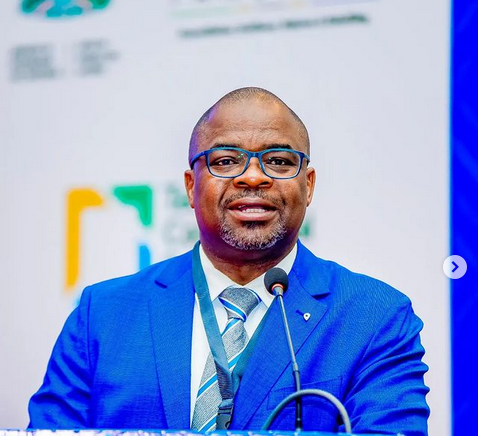
During a meeting on Tuesday this week with a World Bank Group delegation led by its Division Director for Tanzania, Malawi, Zambia and Zimbabwe, Mr Firas Raad, Treasury Registrar Nehemiah Mchechu emphasised the importance of improving the performance of state-owned enterprises (SOEs) in advancing the country’s development ambitions.
The discussions centred on how stronger governance, better performance management and commercially viable operations could position public enterprises to attract private investment and contribute more effectively to economic development.
Since 2023, OTR has strengthened its performance management framework to place greater emphasis on financial results, sector-specific targets, corporate governance, customer satisfaction and staff performance.
The reforms seek to make institutional performance more measurable while strengthening accountability among leaders and boards.
They also involve giving boards greater authority in managing their institutions and restructuring entities whose operations are no longer economically viable.
These measures address some of the fundamental considerations investors examine before committing capital to an enterprise: the quality of its governance, clarity of its business strategy, financial position, accountability structures and prospects for generating returns.
Public ownership, in itself, does not necessarily make an enterprise commercially unattractive.
However, investors and lenders require confidence that an institution has sound management, a clear mandate, reliable financial information and the capacity to meet its obligations.
For public enterprises seeking financing beyond government support, strengthening these fundamentals is therefore an important step towards improving their investment prospects.
Mr Mchechu challenged the International Finance Corporation (IFC), the World Bank Group’s private-sector investment arm, to consider commercially operated public enterprises as potential investment partners, arguing that Government ownership should not automatically exclude them from private-sector financing opportunities.
The proposition is significant for institutions with viable business models but limited access to capital for expansion, infrastructure development or modernisation.
ALSO READ: TADB unlocks 300m US dollar private capital for agriculture
Rather than relying solely on government funding, such enterprises could potentially benefit from financing structures that bring in private investors, commercial lenders and other financial institutions.
Mr Raad commended OTR’s reform agenda, particularly its focus on corporate governance, performance measurement and improved service delivery.
He noted that financially stronger public enterprises would be better positioned to attract private capital and support Tanzania’s development priorities.
The World Bank Group has commitments exceeding eight billion US dollars across various sectors in Tanzania and is increasingly focusing on using development financing to mobilise additional private investment, particularly in energy, transport and urban development.
This creates potential areas of convergence between the development partner’s financing priorities and OTR’s efforts to improve the performance and investment readiness of public enterprises.
The scope for such investment is reflected in the scale of the Government’s portfolio. OTR manages 308 public entities, comprising 252 majority-owned public sector companies and 56 companies in which the Government holds minority interests. Their combined investment value stands at Sh92.3 trillion.
The portfolio represents a substantial base of investments spread across different sectors of the economy.
Its contribution to future development, however, will depend not only on the value of assets held but also on how effectively institutions use those assets to generate economic activity, revenue, employment and returns.
This is where access to financing becomes increasingly important. During a separate engagement with a delegation from Rand Merchant Bank, led by John Njuguna, Lead Banker for the East Africa Institutional Clients Segment, OTR explored opportunities for financial institutions to support investment and business growth across its portfolio.
The discussions covered potential financing opportunities in infrastructure, renewable energy, agriculture, transport, telecommunications, mining, pharmaceuticals and other productive sectors, reflecting the breadth of investment needs among public enterprises.
Mr Mchechu said OTR was ready to facilitate engagement between RMB and public enterprises to identify viable projects and explore financing arrangements suited to the needs of individual institutions.
The objective is to encourage public enterprises to make better use of their balance sheets and consider alternative sources of capital, including commercial bank loans, bond issuance and capital raised through the stock market.
Such an approach could help institutions finance projects without placing the entire burden on the Government, while allowing public resources to be directed towards other development priorities.
However, accessing commercial financing requires more than identifying funding sources.
Enterprises must demonstrate that the projects they intend to finance are economically viable, that expected revenues can support repayment and that financing terms are appropriate for the nature of the investment.
The distinction is particularly important for infrastructure and other projects with long development periods, where poorly structured borrowing or financing that does not match the project’s revenue-generating capacity can place pressure on institutional finances.
RMB’s engagement provided an opportunity to explore financing instruments that could support public enterprises at different stages of investment and development.
The bank’s Head of Infrastructure Sector Solutions for Broader Africa, Sindisiwe Mosoeu, outlined options including project finance, public-private partnerships (PPPs), export credit agency-backed facilities and renewable energy financing.
Each instrument offers different possibilities depending on the project’s structure, risk profile, expected revenue and financing requirements.
Project finance, for example, can provide a framework for financing investments based on the project’s expected cash flows, while PPP arrangements can bring public and private partners together to develop and operate infrastructure or deliver services.
Export credit agency-backed financing may provide opportunities for projects involving imported equipment and technology, while renewable energy financing can support investments in solar, wind and hydropower.
RMB highlighted its experience in financing renewable energy projects across African markets, an area that could be relevant to public enterprises seeking to expand energy infrastructure and diversify financing sources.
The discussions also explored longer-term financing arrangements, cash-flow-based solutions and opportunities to access international capital markets.
RMB Structurer for Broader Africa Global Markets, Sinethemba Mvandamba, explained that the bank’s role extended beyond providing financing within African markets to helping clients connect with international sources of capital.
This could widen financing options available to public enterprises, particularly those undertaking large-scale projects requiring substantial investment beyond the capacity of conventional domestic financing.
Agriculture was also identified as an area of interest, including potential financing arrangements for procuring essential agricultural inputs and supporting the wider value chain.
Mr Njuguna said RMB was interested in deepening its engagement with Tanzania’s public enterprises, citing the country’s infrastructure development priorities and strategic position in regional trade and transport connectivity as opportunities for financing and investment.
Taken together, the discussions with the World Bank Group and RMB underline an important shift in the way public enterprise development is being approached: improving institutional performance and mobilising financing are increasingly being considered together.
Reforms in governance and accountability can help improve confidence in public enterprises, but their impact on investment will ultimately depend on whether institutions translate those improvements into financially sustainable operations and credible projects.
Similarly, the availability of financing does not automatically guarantee successful investment. Projects must be properly prepared, risks assessed, revenue models established and financing structures aligned with their economic life.
For OTR, facilitating engagement between public enterprises and potential financiers provides an avenue for identifying opportunities and addressing some of the challenges that prevent viable projects from progressing.
The next step is to move from broad discussions to the identification of specific projects, assessment of their commercial viability and development of financing proposals that can be considered by investors and lenders.