Requests for new administrative areas put on hold
TABORA: THE government has temporarily suspended consideration of requests to create new administrative boundaries to prioritise completing stalled development projects and settling outstanding payments owed to contractors.
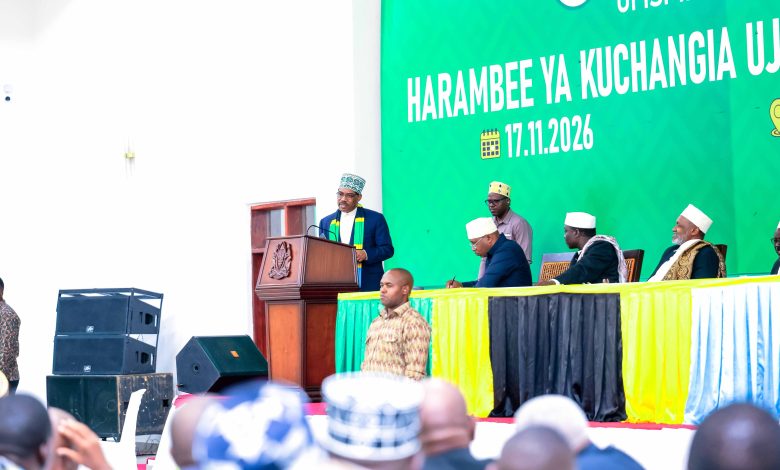
Prime Minister, Dr Mwigulu Nchemba, announced the freeze in Nzega District, Tabora Region, yesterday, at a fundraising event for the National Muslim Council of Tanzania (BAKWATA) to construct a five-storey regional office.
He said the Cabinet resolved to clear existing financial commitments before assessing proposals for new villages, wards, divisions, councils, districts, townships, or regions.
“We agreed within the government that we should first clear the outstanding payments for these projects before proceeding with an assessment of requests for new administrative areas,” Dr Nchemba said.
He noted that demands for administrative changes were not limited to Nzega, as communities across the country had requested the establishment of new wards, villages, divisions, councils, districts, townships and regions.
He acknowledged that some areas appeared to meet the requirements for administrative upgrading, particularly where long distances between communities and administrative headquarters made access to public services difficult.
Dr Nchemba explained that the government had identified three categories of development projects requiring priority attention.
The first involved ongoing projects whose implementation had slowed because contractors had not received payments. The second comprised projects whose contracts had been signed but contractors were still awaiting advance payments.
The third involved projects that had completed procurement procedures but were awaiting contract signing. He said the government wanted to address these outstanding commitments to prevent further implementation delays and potential interest charges before considering requests for new administrative boundaries.
The Prime Minister also addressed calls for the establishment of an additional region for Nzega, saying the proposal had previously been raised during President Samia Suluhu Hassan’s visit to the area and formally submitted to the government for consideration.
He acknowledged that Tabora is a large region, covering more than 75,000 square kilometres, a geographical challenge that makes access to public services difficult for communities located far from administrative headquarters.
“However, the proposal is important, carries considerable weight and has come from an influential stakeholder. We have received it and will give it the attention it deserves,” he said.
On infrastructure development, Dr Nchemba said the government was determined to ensure that the Standard Gauge Railway (SGR) reaches Mwanza through Tabora before President Samia completes her second term, restoring the region’s position as a major economic and transport hub.
He said the government was prioritising the completion of the remaining railway sections linking Singida, Tabora and Isaka to improve connectivity and stimulate economic activities.
He said the government hoped that, if possible, trains would begin operating through Tabora before 2027, connecting Dar es Salaam to Mwanza through Dodoma and Tabora.
“Our ambition is to ensure that before President Samia completes her second term, she witnesses trains operating all the way to Mwanza through Tabora,” he said.
He expressed confidence in the progress of the railway project, noting that construction of the Isaka-Mwanza section had reached more than 70 per cent.
“We want to complete these projects and restore Tabora to its former status. We want Tabora to regain its rightful place,” he said.
ALSO READ: Dr Nchemba jets in Moscow as 3rd Russia-Africa Summit begins today
Dr Nchemba said Tabora had historically been an important centre for commerce, education, religious activities and production, adding that improved transport infrastructure would further strengthen its economic significance.
Beyond infrastructure development, the Prime Minister highlighted the contribution of religious institutions to national development, pledging continued government cooperation with faith-based organisations in promoting education, healthcare, moral values and national unity.
He cited amendments to tax laws aimed at facilitating exemptions for religious institutions providing social services, including hospitals, health centres and dispensaries. He also said the government had addressed outstanding tax debts, penalties and interest affecting religious institutions as part of efforts to create a more supportive operating environment.
“These are not merely verbal assurances that the government will cooperate with religious institutions. They are concrete measures that have been taken,” he said.
Meanwhile, the fundraising drive raised 1.5475bn/-, including funds already deposited in the bank, through 850 contributions. Contributors also pledged to cover any shortages of construction materials, including sand, cement and gravel.
BAKWATA SecretaryGeneral Alhaji Nuhu Jabiri Mruma said construction of the regional office was part of the council’s broader transformation agenda, guided by the slogan, “Recognise yourself, change and abandon old habits”.
He said the vision was introduced by Tanzania’s Mufti, Dr Aboubakari Zubeir Bin Ali, upon assuming leadership in 2015, with a directive to strengthen BAKWATA’s institutional infrastructure at regional, district, ward and mosque levels.
“One of the key priorities under this vision was to ensure that every district, region, ward and mosque has adequate institutional infrastructure, including modern offices that enable our leaders to discharge their responsibilities in a safe and conducive working environment,” he said.